
Multi-Chimney Masonry Restoration in Tower Lakes
By Chimney Monkey · Updated October 2026 · Tower Lakes, IL
Quick answer
This multi-chimney masonry restoration in Tower Lakes shows why several chimneys on the same property may need very different repairs. The documented project included full concrete crown rebuilds, tuckpointing, a partial chimney rebuild, crown resurfacing, masonry washing and waterproofing, and specialized roof access. Instead of applying one repair package to every chimney, the project separated the structures by condition. As a result, some areas received targeted mortar or crown work while another chimney required reconstruction from the roofline upward.Project scope at a glance
- Full concrete chimney crown rebuilds
- Partial chimney rebuild from the roofline up
- Tuckpointing and mortar-joint repair
- Crown resurfacing
- Masonry cleaning and waterproofing
- Specialized safe-access setup
| Location | Tower Lakes, Lake County, Illinois |
|---|---|
| Property | Home with multiple masonry chimneys |
| Main service | Multi-chimney masonry restoration |
| Repair approach | Each chimney scoped by its own condition |
| Roof access | Specialized safe-access setup at several chimney locations |
Why a Multi-Chimney Property Needs a Chimney-by-Chimney Plan
A property with several masonry chimneys presents a different maintenance challenge from a home with one simple stack. Although all of the chimneys experience the same seasons, each structure can age differently based on its location, exposure, construction, and previous repairs.
For example, one crown may deteriorate enough to justify complete replacement while another can remain in place and receive resurfacing. Likewise, deteriorated mortar joints may call for tuckpointing without requiring the surrounding brick to be rebuilt.
This project followed exactly that type of condition-based approach. Therefore, the broader restoration was really a collection of individual masonry scopes across the property.
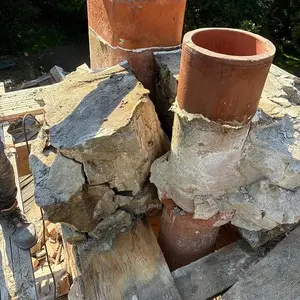
Before: cracked crown material around the flue tiles.
When the Damage Goes Beyond Surface Cracks
The first project photo shows significant deterioration around the flue tiles and upper crown material. From ground level, that type of detail would be difficult for a homeowner to evaluate accurately. Once technicians reach the chimney top, however, the difference between limited surface wear and more substantial deterioration becomes much easier to document. That closer evaluation helps determine whether resurfacing or full reconstruction better fits the condition.Full Crown Rebuilds Were Part of the Restoration
More than one chimney in this project required complete crown replacement. The documented scope called for removal of the existing crown and construction of a new concrete crown for a large masonry chimney.
The new crown design included slope, an expansion joint around the flue tile, and an overhanging drip edge. Together, those details help direct water away from the masonry below instead of allowing precipitation to collect at the chimney top.
For broader information about this service, homeowners can review Chimney Monkey’s chimney crown repair and replacement service.
A New Concrete Crown With Defined Water-Shedding Geometry
The second project photo shows one of the completed concrete crowns. Instead of a thin repair layer over the previous top, the finished chimney has a newly formed crown extending beyond the brickwork. Meanwhile, the flue terminations remain separated from the crown itself. This finished view helps illustrate the difference between rebuilding a crown and simply sealing cracks on an existing one.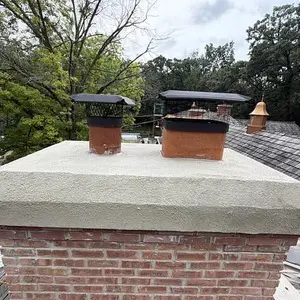
After: a newly formed concrete crown that sheds water past the brick.
Tuckpointing Addressed Deteriorated Mortar Joints
Other portions of the project required chimney tuckpointing. This repair removes deteriorated or loose mortar from affected joints and replaces it with new mortar to restore the joint depth and finish.
That distinction matters because mortar can deteriorate while much of the surrounding brick remains serviceable. Consequently, technicians may be able to renew the joints without dismantling sound masonry unnecessarily.
In addition, matching the repaired joints to the surrounding masonry helps the work blend more naturally with the established chimney.
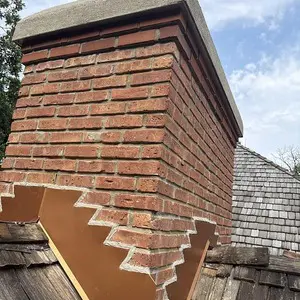
Tuckpointing renewed worn joints while keeping sound brick.
Repairing the Joints While Retaining Serviceable Brick
The selected masonry photo shows the chimney much closer than a normal ground-level view. That perspective makes the mortar pattern and repaired areas easier to see. Rather than rebuilding every brick course, tuckpointing targets the joints that need renewal. Therefore, it represents a different repair strategy from the partial reconstruction performed elsewhere on the property.One Chimney Required a Partial Rebuild From the Roofline Up
Chimney B required a more extensive masonry scope. The scope called for removal and disposal of the affected portion of the existing chimney and rebuilding from the roofline upward as needed.
Where suitable, existing brick could be reused. Otherwise, replacement brick and mortar would be selected to blend as closely as practical with the existing chimney. The rebuilt section then needed to integrate with the masonry that remained below.
For comparison, Chimney Monkey’s chimney rebuild and restoration service explains why severely compromised masonry can require reconstruction rather than mortar-joint repair alone.
When Masonry Deterioration Requires More Than Tuckpointing
The fourth photo provides a close look at damaged upper chimney material before restoration. Here, the deterioration extends beyond a simple recessed mortar joint. As a result, reconstruction becomes a different category of work. Instead of filling joints around compromised material, technicians remove the affected section and rebuild the chimney where the approved scope requires it.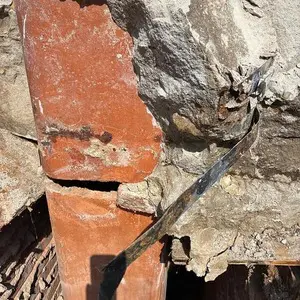
Before: upper masonry damage beyond mortar-joint repair.
Why Some Crowns Were Rebuilt While Others Were Resurfaced
One of the clearest lessons from this multi-chimney masonry restoration in Tower Lakes is that crown repair exists on a spectrum. Some crowns had conditions that justified removal and complete reconstruction, while other chimney sections received crown resurfacing.
Crown resurfacing works with the existing crown rather than replacing it. On this project, the resurfacing scope included cleaning, repairing cracks as needed, and applying a flexible waterproof crown coating.
Therefore, the project demonstrates why crown replacement and resurfacing should not be treated as interchangeable services.
Waterproofing Followed the Masonry Work
Several chimney sections also received exterior washing and waterproofing. First, the masonry is cleaned to reduce surface grime and vegetative growth. Afterward, a vapor-permeable masonry water repellent can be applied to the prepared surface.
Vapor permeability matters because masonry still needs to release normal moisture vapor. In other words, waterproofing aims to reduce liquid-water absorption without simply wrapping the chimney in an impermeable surface film.
However, waterproofing does not rebuild damaged brick, replace a failed crown, or renew deteriorated mortar joints. Those repairs need to be handled first when the chimney condition calls for them. Chimney Monkey’s masonry waterproofing service explains that sequence in more detail.
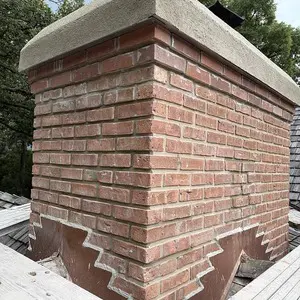
Restored masonry, ready for a vapor-permeable water repellent.
Repair the Masonry, Then Protect It
The fifth project photo shows the restored chimney after major masonry and crown work. It provides a useful contrast with the earlier close-ups of deterioration. Once the required rebuilding, tuckpointing, or crown work is complete, moisture protection can become another part of the maintenance plan. That order keeps waterproofing in its proper role: protection after necessary repairs, not a substitute for them.Safe Roof Access Was a Significant Part of the Project
A property with several chimney locations also creates an access challenge. Roof geometry, chimney height, work duration, and the location of each repair can change how technicians need to approach the job.
The project included multiple safe-access setups. According to the documented scope, this type of access may involve special climbing equipment, specialized technicians, platforms, additional ladders, scaffolding, or a combination of those methods.
Consequently, safe access becomes part of planning the restoration rather than an issue considered only after masonry work begins.
The Roof Layout Shows the Scale of the Job
The final selected photo gives a wider view of the work area. Multiple roof slopes, ladders, work platforms, and separate chimney locations help explain why access planning mattered on this property. Most importantly, the access method should respond to the actual roof and work location. A setup that works for one chimney may not be appropriate for another chimney even at the same address.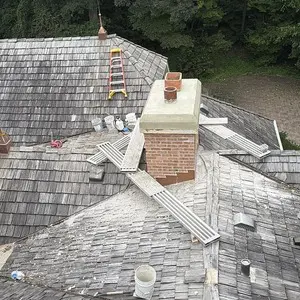
Several chimney locations made roof access part of the scope.
What This Tower Lakes Project Shows About Condition-Based Masonry Repair
The most important lesson from this project is that several chimneys at one property do not necessarily share the same repair need. In fact, the documented scopes differed markedly from one structure to the next.
Some chimney sections received full crown replacement. Others required tuckpointing, resurfacing, waterproofing, or combinations of those services. Meanwhile, Chimney B required a partial rebuild from the roofline upward.
Therefore, evaluating each structure independently can keep recommendations tied to actual conditions instead of treating an entire property as though every chimney has the same defect.
Frequently Asked Questions
Do all chimneys on the same house need the same repair?
No. Exposure, construction, previous repairs, and individual masonry conditions can differ. As a result, one chimney may need rebuilding while another only needs mortar, crown, or waterproofing work.
What is the difference between crown resurfacing and crown replacement?
Resurfacing repairs and protects an existing crown that can remain in service. By comparison, a full replacement removes the old crown and creates a new concrete crown with the required geometry around the flue.
When can tuckpointing be used instead of rebuilding?
Tuckpointing addresses deteriorated mortar joints while retaining masonry units that can remain in service. However, compromised brick or broader structural deterioration may require partial rebuilding instead.
Why waterproof a chimney after masonry repairs?
Once necessary masonry repairs are complete, a vapor-permeable water repellent can help reduce future liquid-water absorption. It does not replace structural or mortar repairs that the chimney already needs.
Why can chimney access affect a masonry project?
Chimney location, roof pitch, height, and work area can make additional access equipment necessary. Therefore, ladders, platforms, climbing systems, or scaffolding may become part of the project plan.
Multi-Chimney Masonry Restoration in Tower Lakes
This multi-chimney masonry restoration in Tower Lakes provides a useful example of repair planning based on individual conditions. Although the chimneys belong to one property, their documented repair needs varied substantially.
The project included new concrete crowns, tuckpointing, a partial rebuild, crown resurfacing, waterproofing, and significant access planning. Together, the work shows how several repair strategies can be coordinated without assuming that every chimney needs identical treatment.
Ultimately, a professional masonry evaluation can help homeowners separate those conditions and determine the appropriate next step for each chimney.
Not sure what service your home needs? Start with a professional evaluation so the system can be identified, the visible conditions can be documented, and the right next step can be recommended.
Have a question about your chimney, fireplace, venting system, gutters, or dryer vent? Schedule a professional visit and get clear recommendations based on the actual condition of your home.
Categories: Chimney Care Chimney Exterior Services Local Services Masonry Chimney Repair Masonry Contractor Services Wood-Burning Insert Installation