Chimney Cap vs. Chase Cover: What’s the Difference?
Diane, a homeowner near Northbrook’s Techny Road, called us after her fireplace store recommended a “new chase cover.” She was confused. “Don’t you mean a chimney cap?” she asked. “Isn’t that the same thing?”
In fact, it’s one of the most common questions we hear. The terms get used interchangeably all the time — but a chimney cap and a chase cover are actually two different parts. Which one your home needs depends on the type of chimney you have. Here’s how to tell them apart.
“I called Chimney Monkey because my fireplace store mentioned I needed a new chase cover — but I had no idea what that even was. I thought they meant a chimney cap. They explained the whole difference in about two minutes and had it replaced by the end of the week. Highly recommend.”
— Diane, Northbrook, IL
 What Is a Chimney Cap?
A chimney cap sits directly on top of a masonry chimney’s flue. Think of a traditional brick chimney — the kind found on many older homes throughout Northbrook, Glenview, and Deerfield. The cap fits over the clay flue tile that sticks up above the brick.
In addition to looking tidy, chimney caps do three jobs at once. They keep rain out of the flue, stop birds, squirrels, and raccoons from nesting inside, and their mesh sides act as a spark arrestor, keeping embers from landing on your roof.
Most masonry chimneys have one flue, so they need just one cap. However, homes with both a fireplace and a furnace flue side by side may need a multi-flue cap instead.
 What Is a Chase Cover?
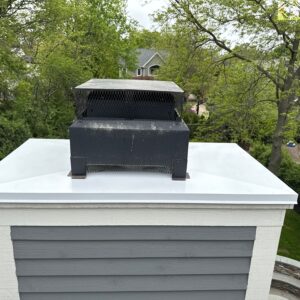 What Is a Chase Cover?
A chase cover, on the other hand, is built for factory-made, prefabricated fireplaces — the kind commonly installed in newer construction throughout Lake and Cook Counties. Instead of a brick chimney, these homes have a “chase,” a framed and sided enclosure that houses a metal flue pipe.
Because the chase is often wider than a masonry chimney, its cover is a flat metal panel that seals the entire top of the enclosure. A smaller pipe or storm collar pokes through the middle, venting the actual flue.
In short, where a chimney cap protects one small opening, a chase cover protects an entire structure. That’s the biggest practical difference between the two.
Why the Confusion Happens
Both components sit on top of a chimney structure and both keep water out. As a result, they are often just called “the cap” by homeowners, and even by some contractors. However, their size, shape, and materials aren’t the same, and neither is the way they fail.
How to Tell Which One You Have
Start by looking up at your chimney from the ground or a second-floor window.
Exposed brick with a small cap perched on top means you have a masonry chimney and a chimney cap. A boxed-in structure covered in siding or stucco — with a wide metal panel on top and a pipe sticking through it — means you have a chase and a chase cover.
Still not sure? A quick photo sent to our team is usually enough for us to tell you exactly which one you’re dealing with.
Signs Your Chase Cover Is Failing
Chase covers take a beating. Chicago winters, wind, and standing water all wear them down over time. Watch for:
- Rust stains streaking down the siding below the chase
- Visible pitting, small holes, or a rippled surface on the metal panel
- Standing water pooling on top after a rainstorm
- A metallic ticking or popping sound during temperature swings
Left alone, a rusted-through chase cover lets water pour straight down around the flue pipe and into your home. The sooner you catch it, the less damage you’re dealing with.
Why Material Matters
Not all chase covers and caps are built the same. Galvanized steel is the most common choice, but also the least durable — it rusts within a handful of years, especially in a wet climate like ours.
Stainless steel, by contrast, resists rust and typically lasts decades. For that reason, it’s the material we recommend for most Northbrook and Northshore homes. Copper is the premium option: it never rusts, develops a natural patina over time, and often outlasts the house itself.
Repair or Replace?
A small amount of surface rust on a chase cover can sometimes be treated and resealed. Once rust has created pinholes or the metal has started to buckle, however, replacement is the safer long-term fix. The same goes for chimney caps with torn mesh or a cracked lid.
Before recommending a repair or full replacement, our technicians inspect the material, the seams, and the flashing where the cover meets the siding.
Serving Northbrook and the Northshore
Chimney Monkey brings expert care straight to your doorstep from our home base in Buffalo Grove. We proudly serve Lake and Cook Counties — including Deerfield, Highland Park, Northbrook, Lincolnshire, and Wheeling, as well as all of our neighboring communities just a short drive away.
If you’re not sure whether your home has a chimney cap or a chase cover, or if you’ve spotted rust, gaps, or standing water up top, contact Chimney Monkey for a full inspection. We’ll tell you exactly what you have and what it needs.
Categories: Chimney Cap Chimney Chase Cover Installation Chimney Inspection Cook County Illinois Local Services Northbrook