
 Chimney Chase Cover Installation, Repair & Replacement
 Chimney Chase Cover Installation, Repair & Replacement
A rusted chase cover can let water into the wood-framed box around a factory-built chimney. Rust streaks, peeling trim or a ceiling stain are reasons to check it—but similar leaks can start at the flashing, cap or storm collar.
Chimney Monkey checks the source before recommending a repair. We inspect the chase top and surrounding components, document what we find, and explain whether the cover can be repaired or needs replacing.
Arrange an inspection or chase-cover measurement
Tell us what you have noticed and add a photo if you have one. A photo helps us understand the request; final measurements and a look at the chase establish the replacement scope.
What a chase cover is
A factory-built chimney sits inside a framed box called a chase, usually finished in siding to match the house. The chase cover — some manufacturers call it a chase pan — is the metal lid across the whole top of that box. The cap is the smaller piece over the flue opening itself.
Most framed chases need both. The cap keeps rain and animals out of the flue. The cover keeps water off the chase top and moves it away from the siding and trim. A cap on its own leaves the largest flat surface on the chimney unprotected.
Why chase covers fail
Most covers we replace on the North Shore are the original galvanized lid the builder installed. Galvanized steel has a service life in this climate — it is not a permanent material. Once the coating wears through, a flat pan holds standing water, rust starts at the low point, and a pinhole becomes a hole.
The sequence is consistent enough to predict:
- Water stands on a flat or under-sloped pan instead of running off
- Rust perforates at the low spot
- Water enters the chase framing rather than shedding at the edge
- Framing, drywall and insulation stay wet through freeze-thaw cycles
- The stain appears on the ceiling below
By the time a ceiling stains, the framing above it has usually been wet for some time. That is worth knowing, not worth panicking about — it changes what we look at, not how urgently you need to act. Where water has already reached the living space, that is chimney leak repair territory as well.
What we look for
- Rust streaks down the chase siding or the chimney face
- Water stains on a ceiling or wall near the chimney
- Soft, swollen or peeling trim at the chase top
- A lid that rattles, has lifted at a corner, or holds water in a dent
- No cross-breaks — a dead-flat pan with nowhere for water to go
- No drip edge, so runoff tracks back down the siding
- A missing or unsealed storm collar where the flue passes through
Chase cover repair, or replacement?
Repair is worth doing in a narrow set of cases: an intact pan in sound metal, where the actual problem is a failed seam sealant, a loose fastener, or a storm collar that needs resetting. That is a real repair and we do it.
Once a pan has rusted through, patching it is not a good use of your money. Sealant over a rust hole buys a season, and the metal immediately around that hole is the same age and in the same condition. We would rather replace a pan once than reseal it three times.
We will also tell you if the problem is not the cover at all. Flashing failures and cap problems produce similar stains, and the fix is different. If the chase cover has been leaking for a while, the framing underneath may need attention too — that is a separate question, and we will document what we find rather than quote around it.
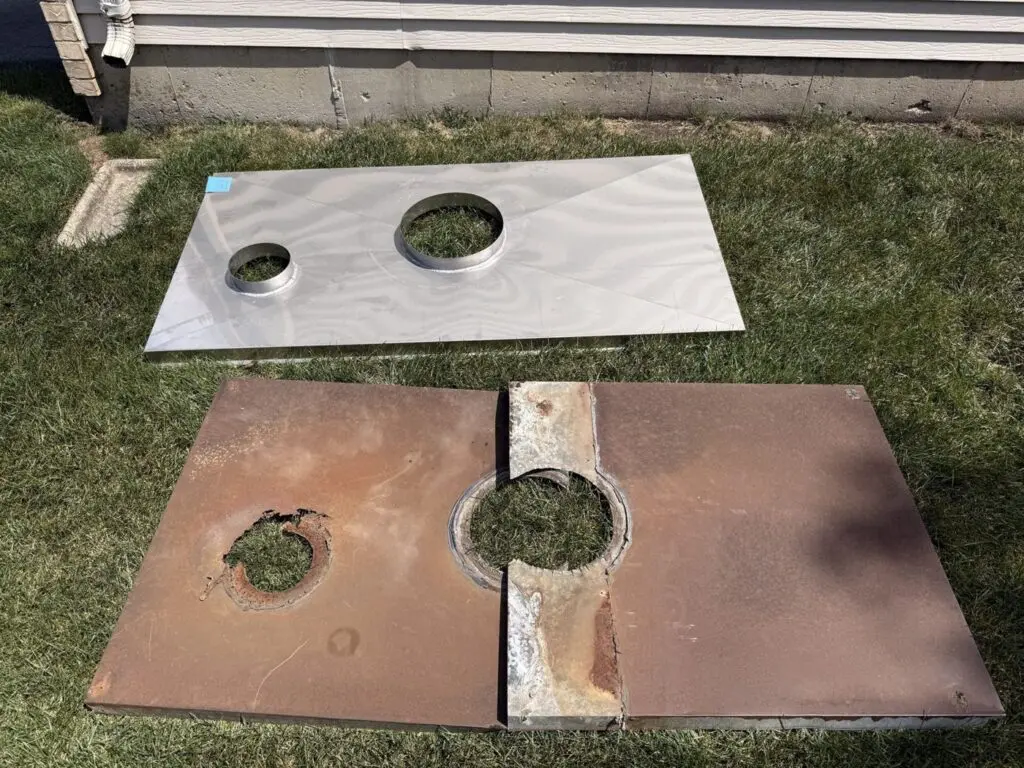
What we build
- Stainless steel — our default recommendation. Longest service life, does not rust.
- Copper — where the chimney is visible and appearance matters
- Powder-coated steel — colour matched to the chase or trim
- Cross-breaks formed into the pan so water sheds instead of standing
- A drip edge so runoff leaves the pan clear of the siding
- One-piece tops with welded corners — fewer seams means fewer places to leak
- Custom sizing — measured to your chase, not a stock lid trimmed to fit
- An integrated storm collar at the flue penetration
Chase replacement is a different job
Sometimes the framed chase itself is the problem, not the lid on top of it. Rotted framing, failed siding, or a chase that has shifted needs structural correction before a new cover goes on. Setting a new stainless lid over rotted framing conceals a problem for a few years rather than solving it, and we will say so if that is what we find.
How the work goes
- Inspect — chase, cover, flue, storm collar and flashing, documented with photographs
- Measure — exact dimensions of the chase top
- Fabricate — built to those measurements, with slope and drip edge
- Install — set, sealed, secured, and the site cleaned up
What chase-cover replacement costs
Smaller utility chase tops can start around $800 installed. Larger fireplace chase tops start around $1,200 installed. The final quote depends on the size, material, flue openings, and any cap or storm-collar work. Measurements and a check of the chase condition establish the scope. Repairs to damaged framing are quoted separately. Typical starting prices as of November 2026.
If you need the source of a leak established first, a chimney inspection is a paid diagnostic visit, typically $205 to $300. We photograph what we find and provide written recommendations you can use whether or not we do the repair. Typical inspection rates as of November 2026; call 847-994-4388 to confirm current pricing. See our chimney service costs for other services.
Arrange an inspection or chase-cover measurement
Chase Cover Work From Our Job Records
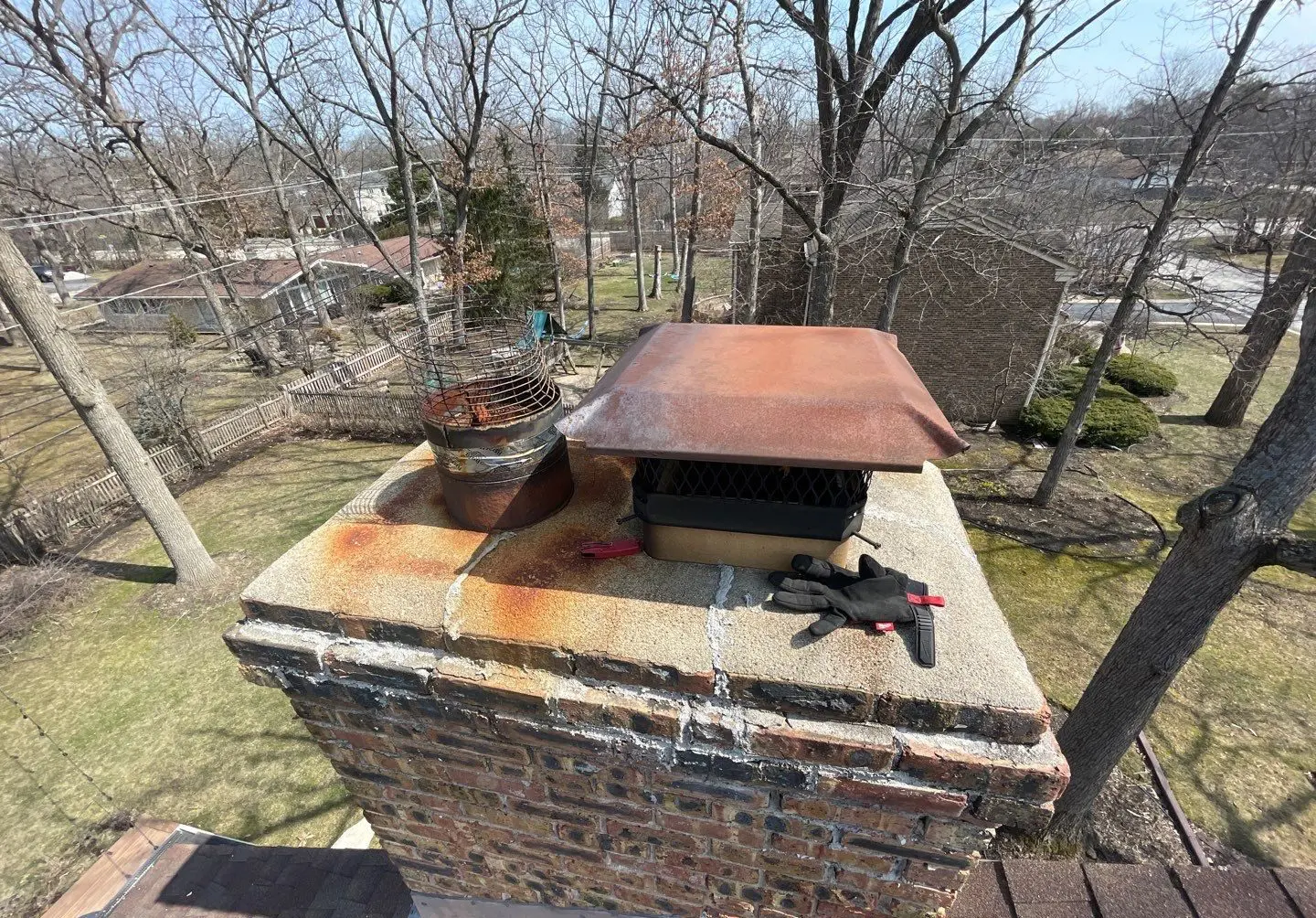
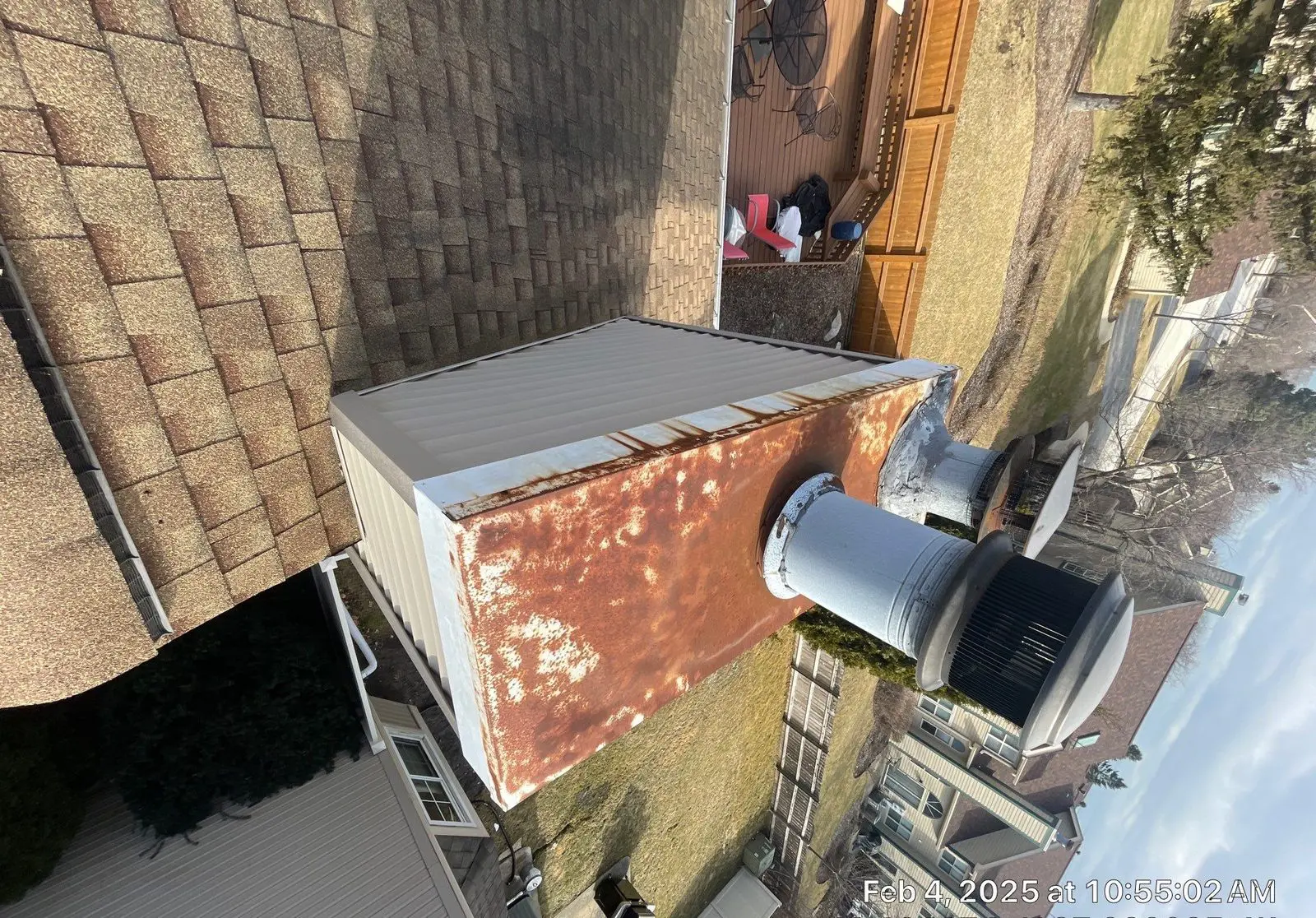
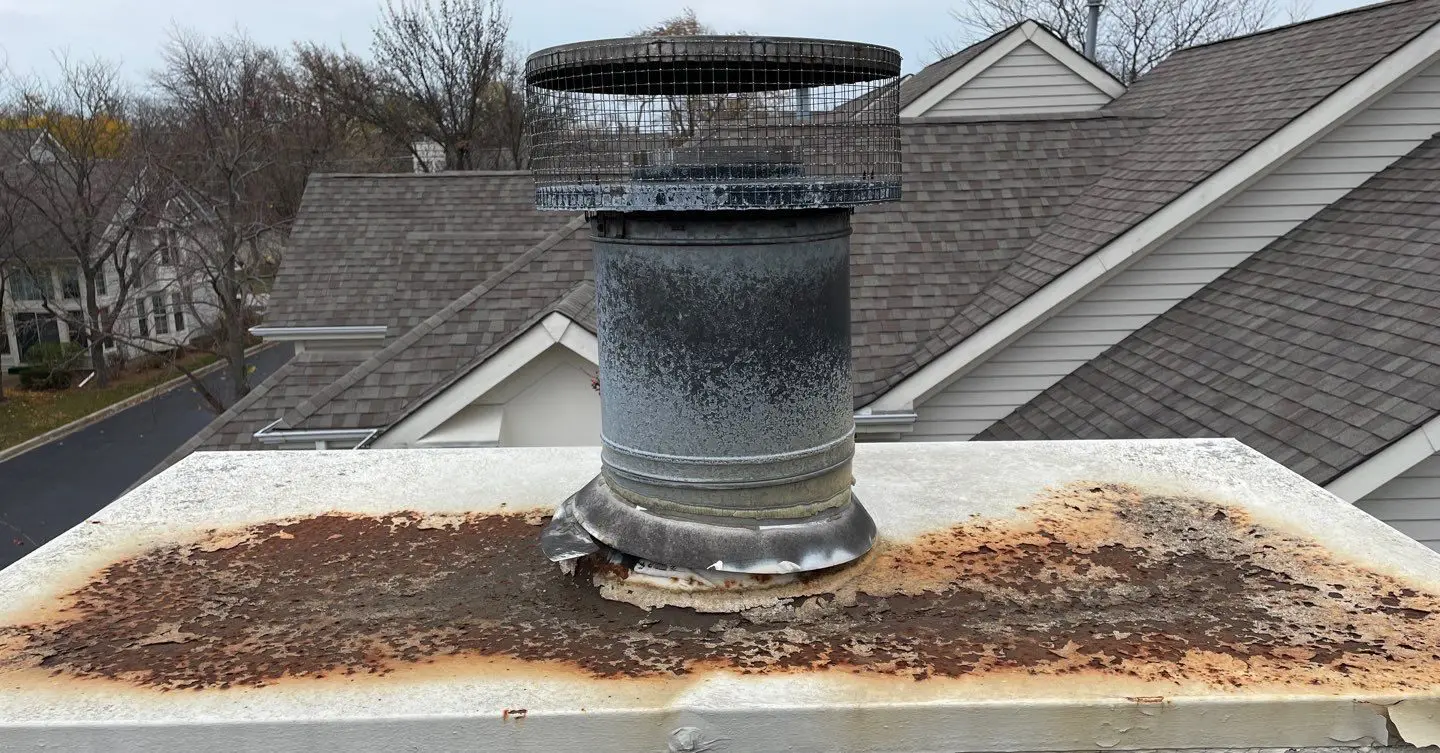
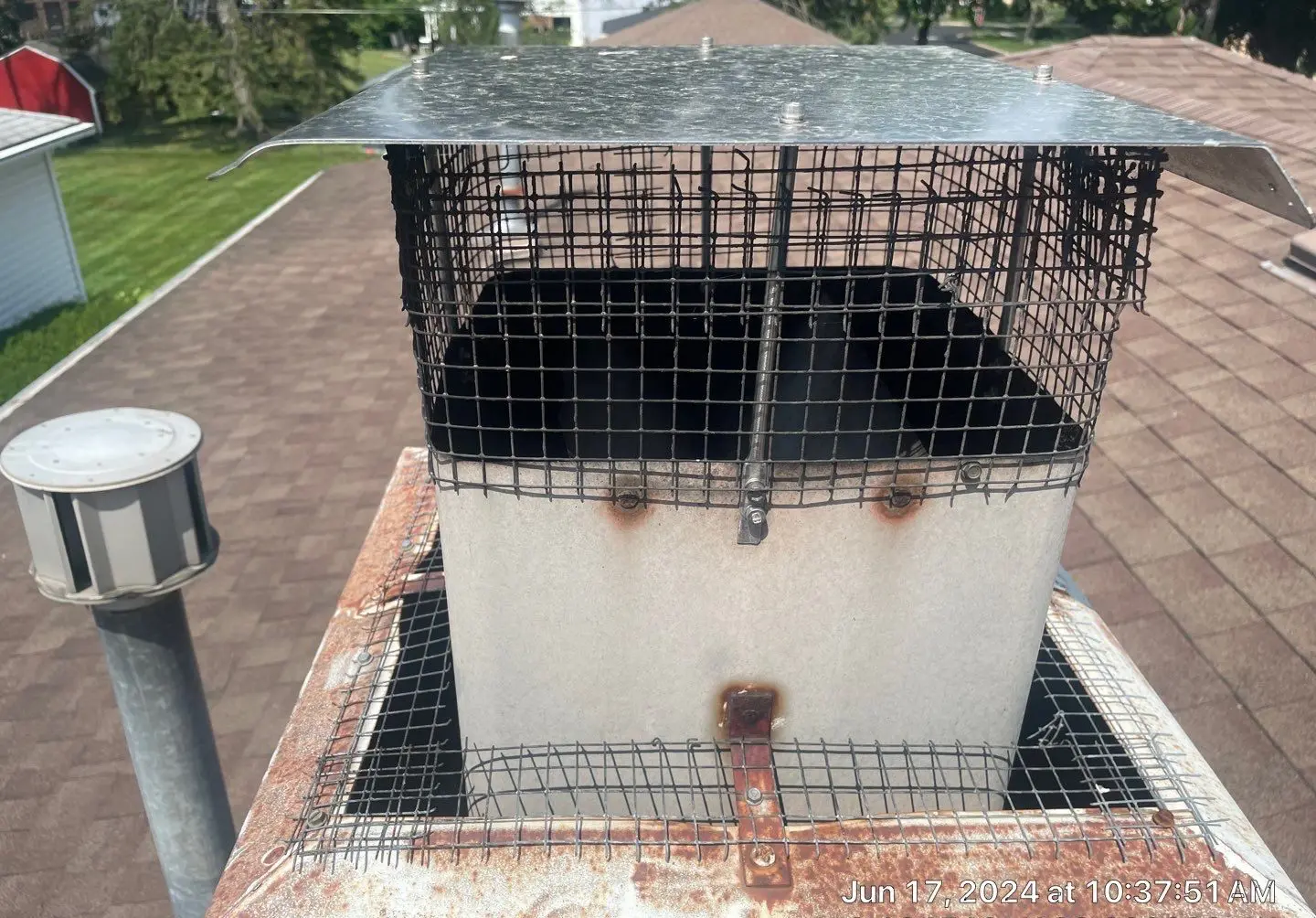
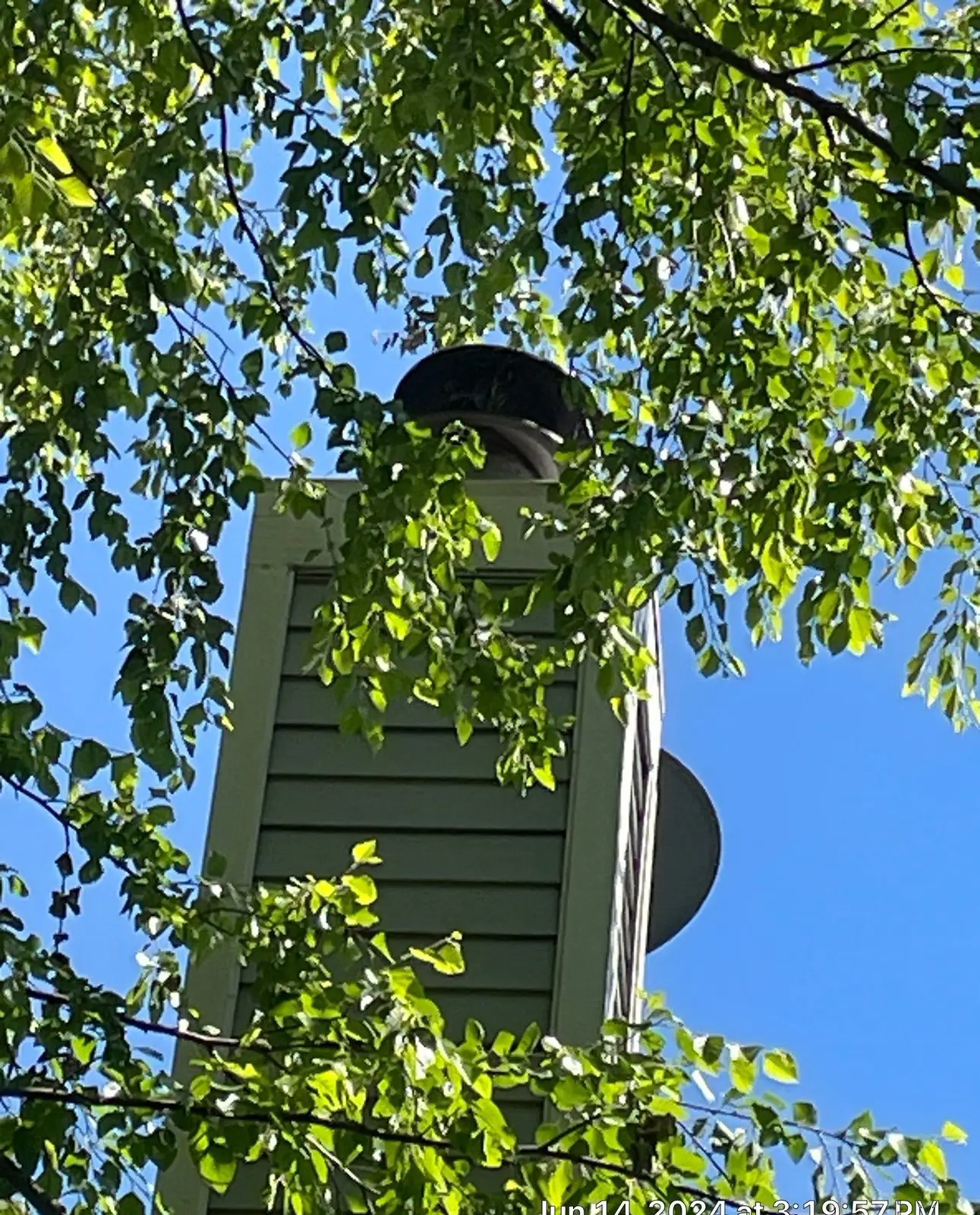
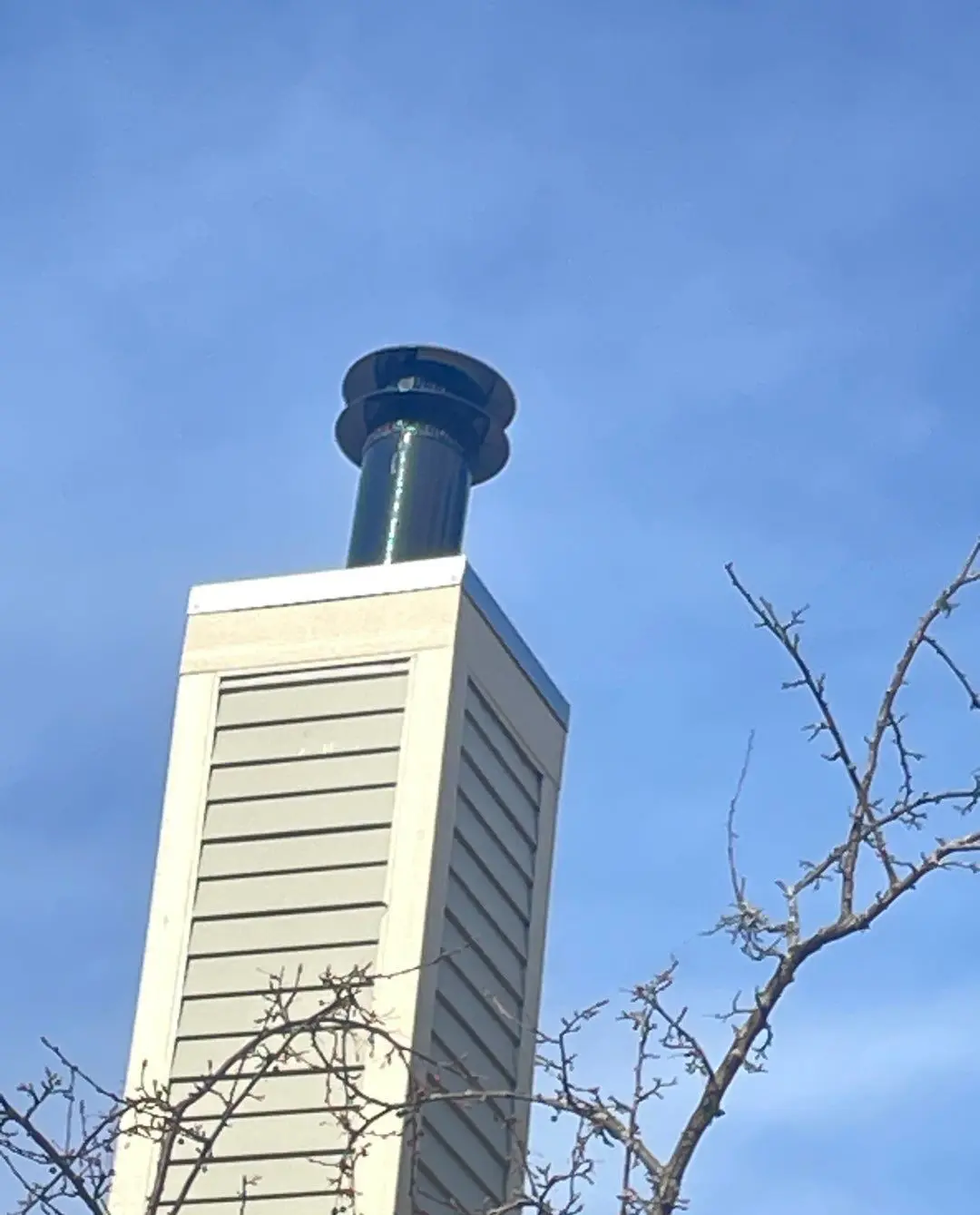
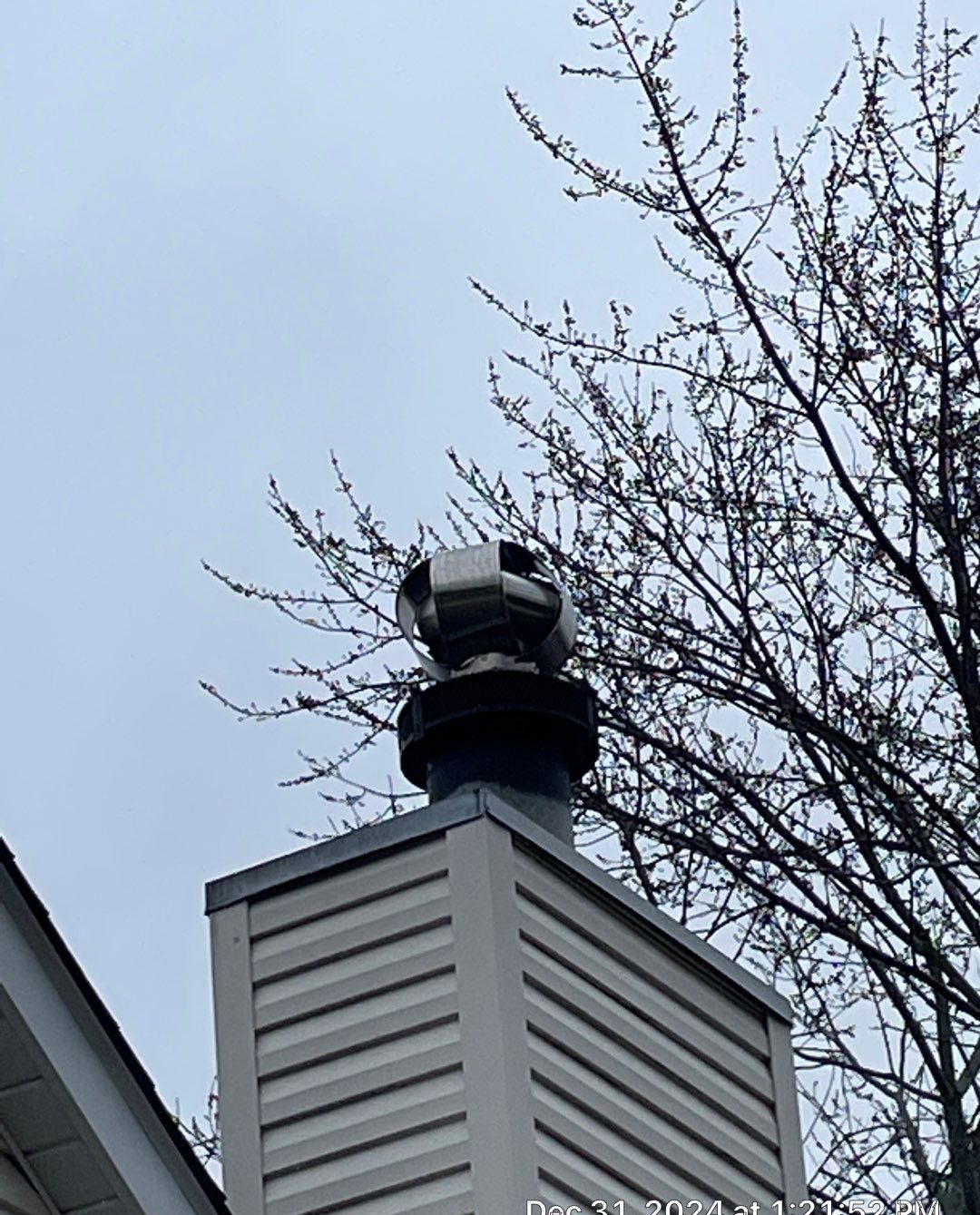
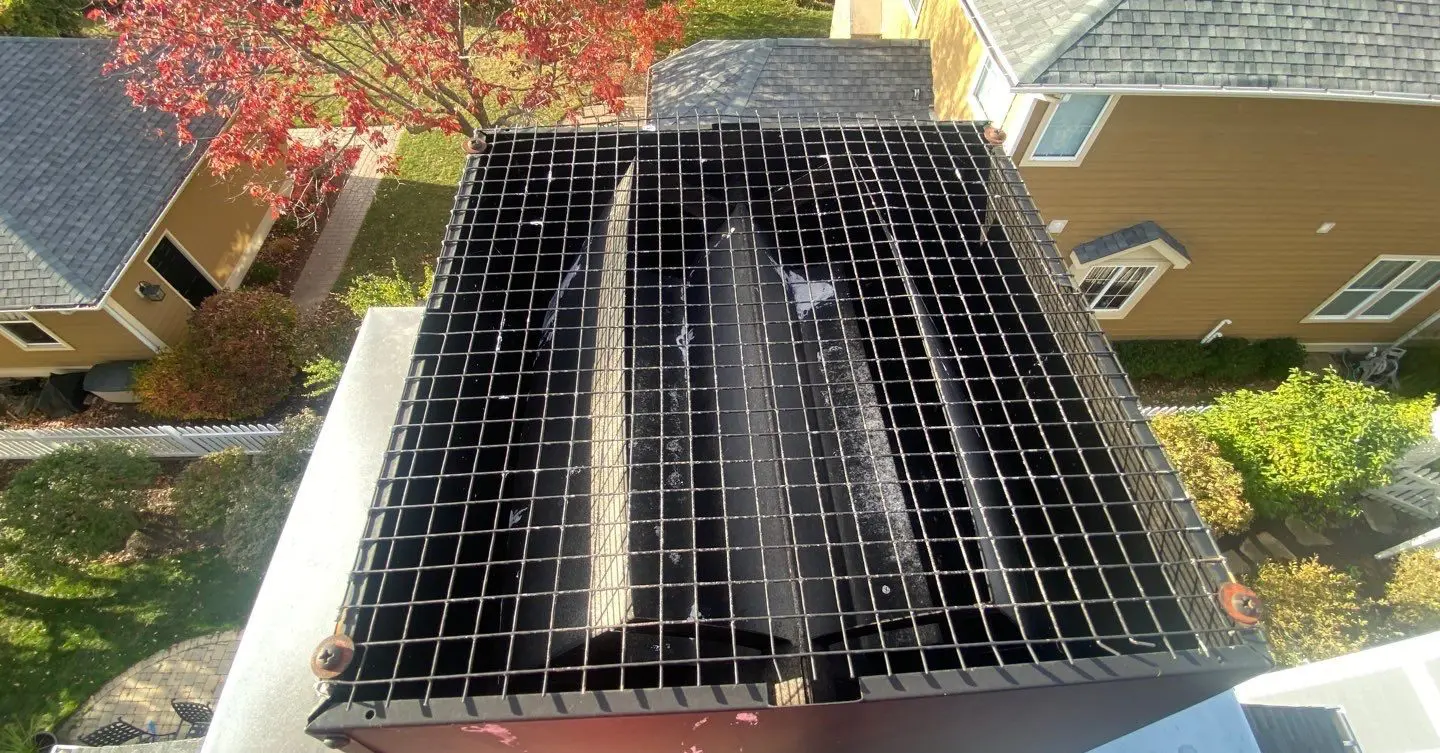
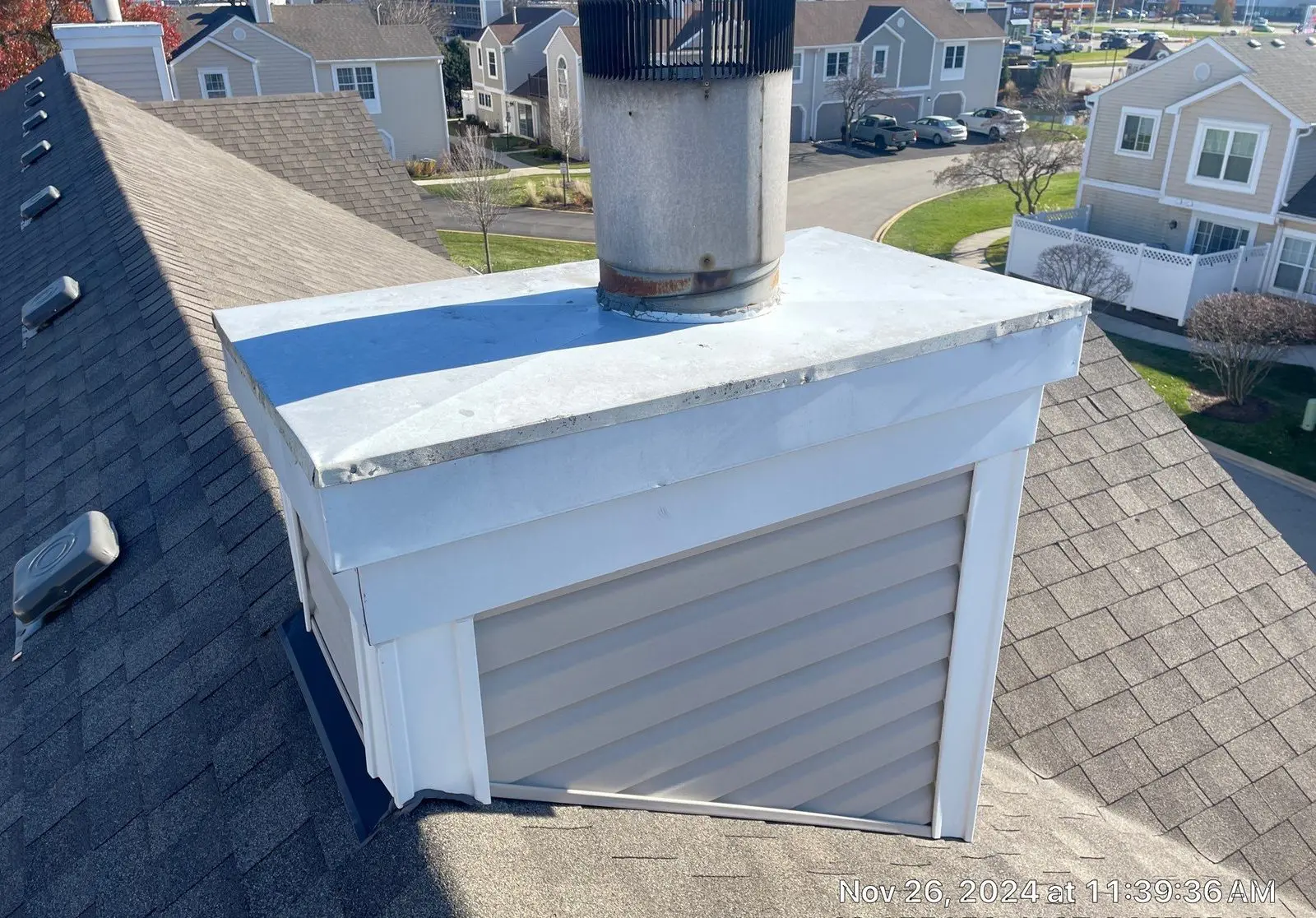
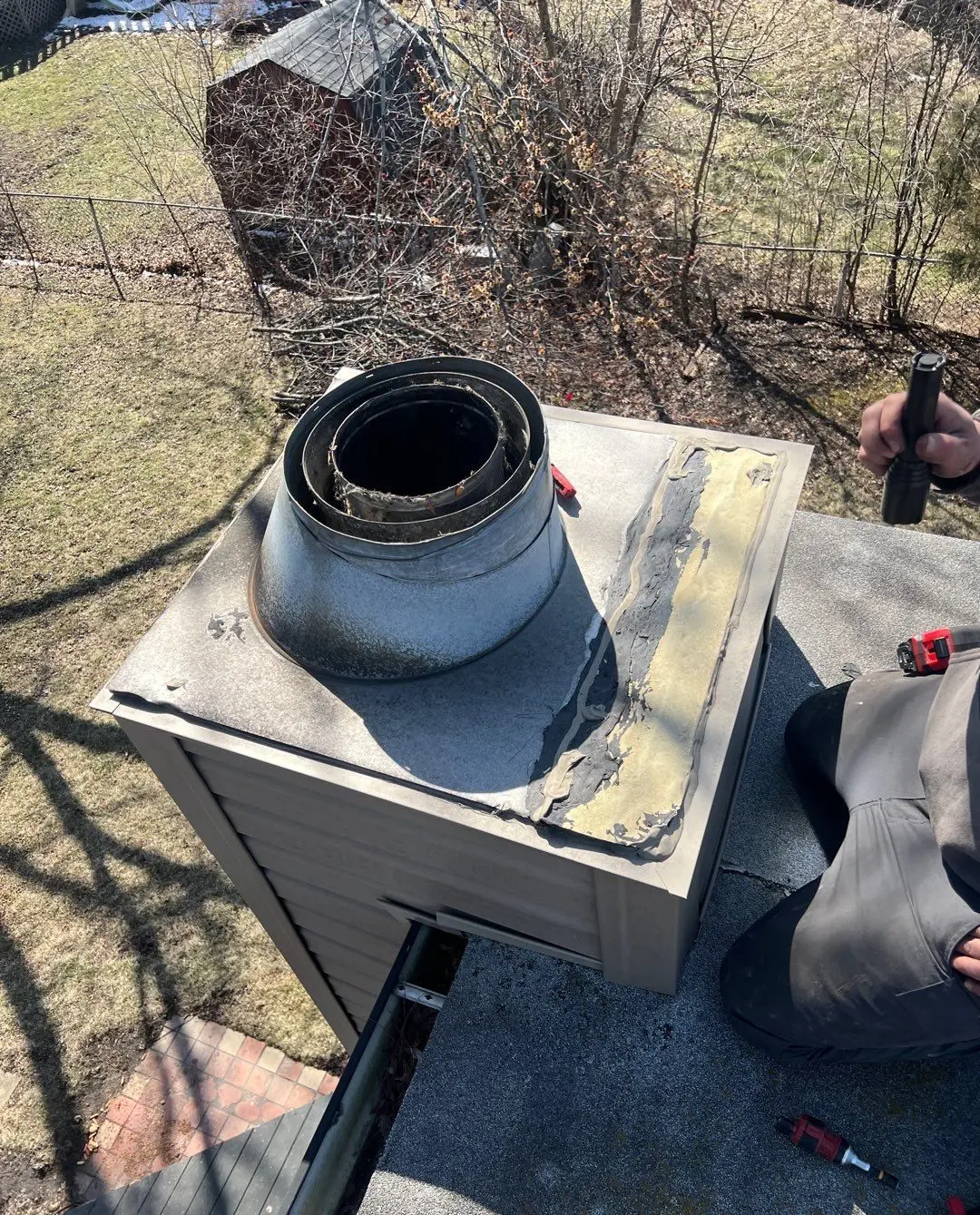
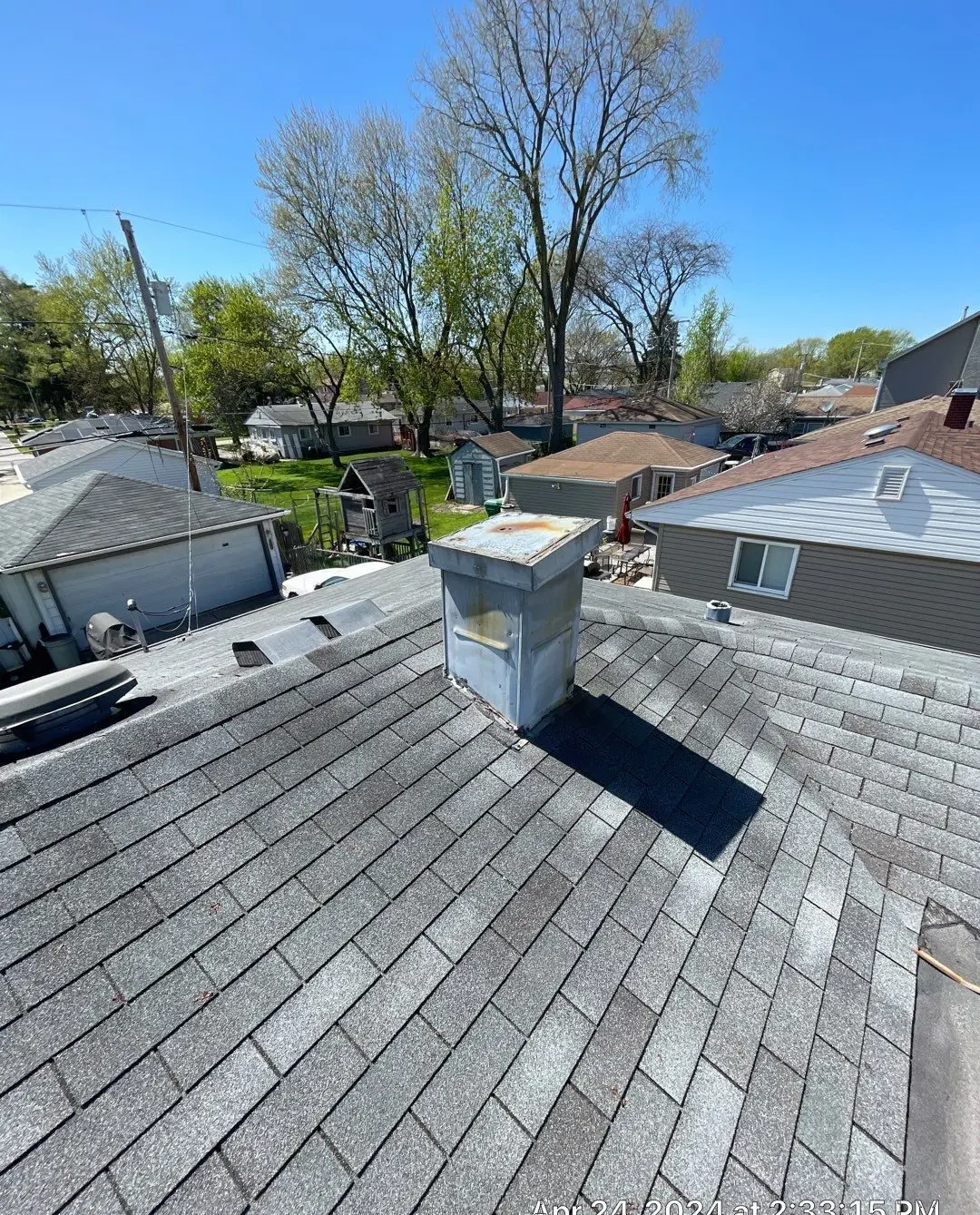
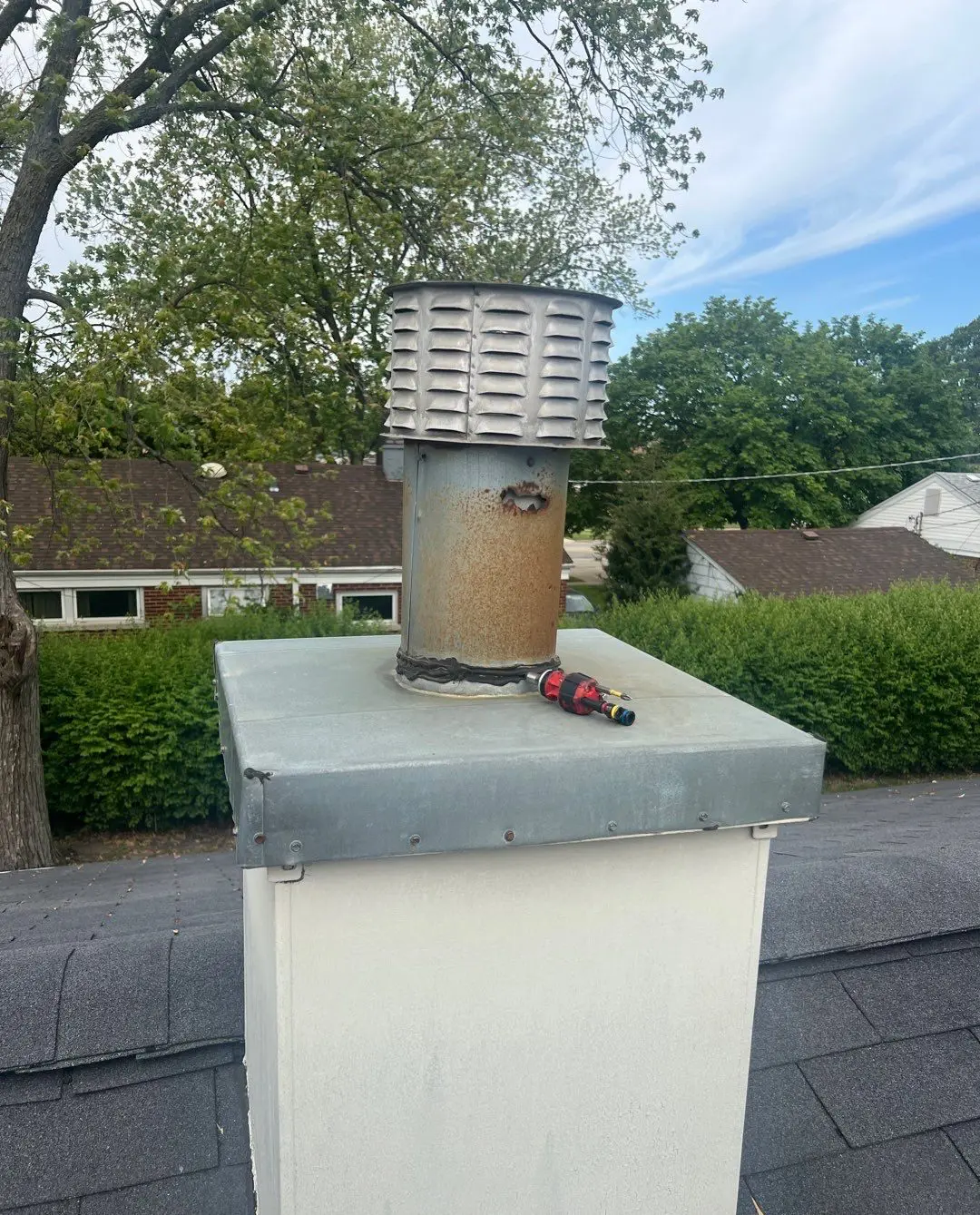
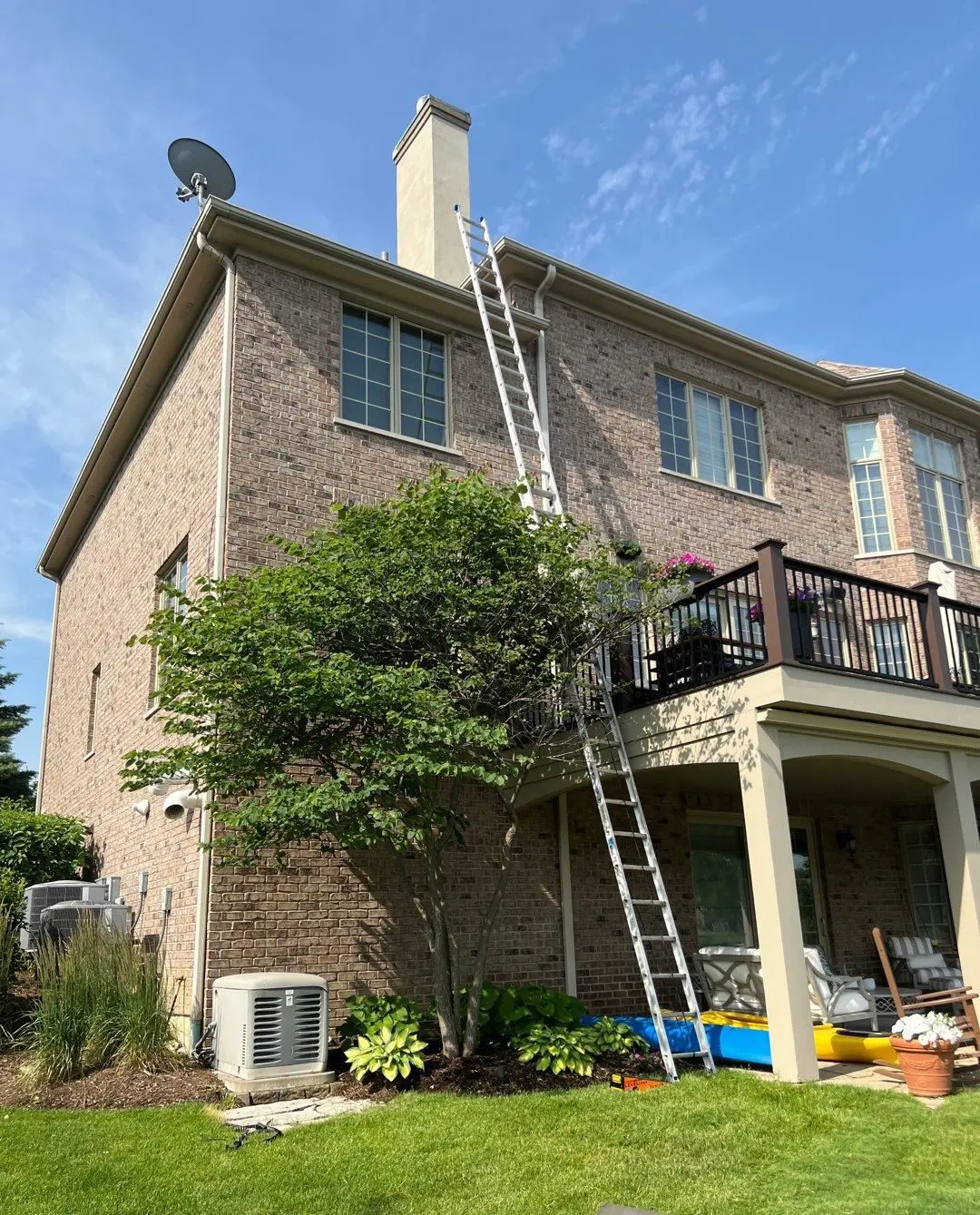
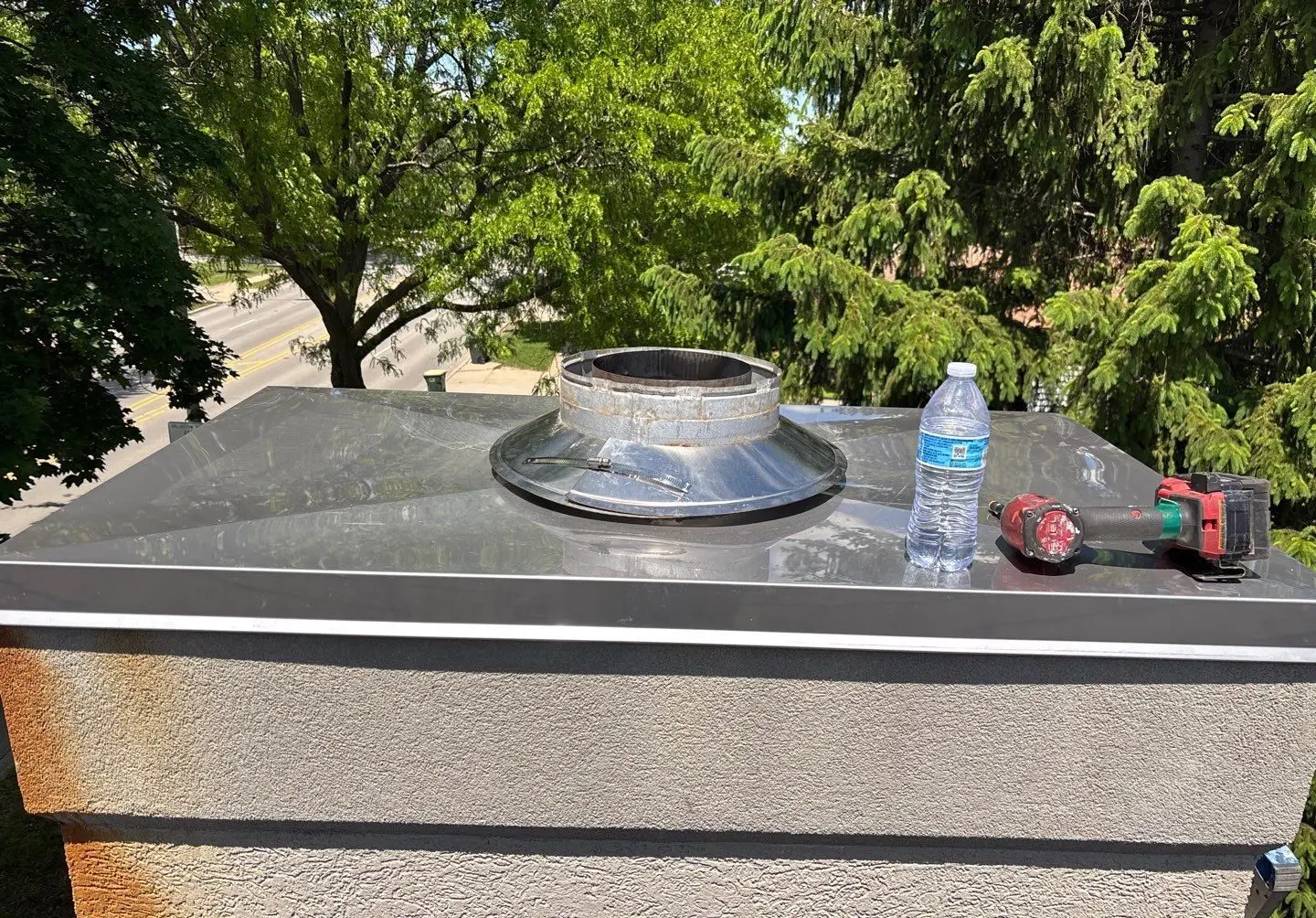
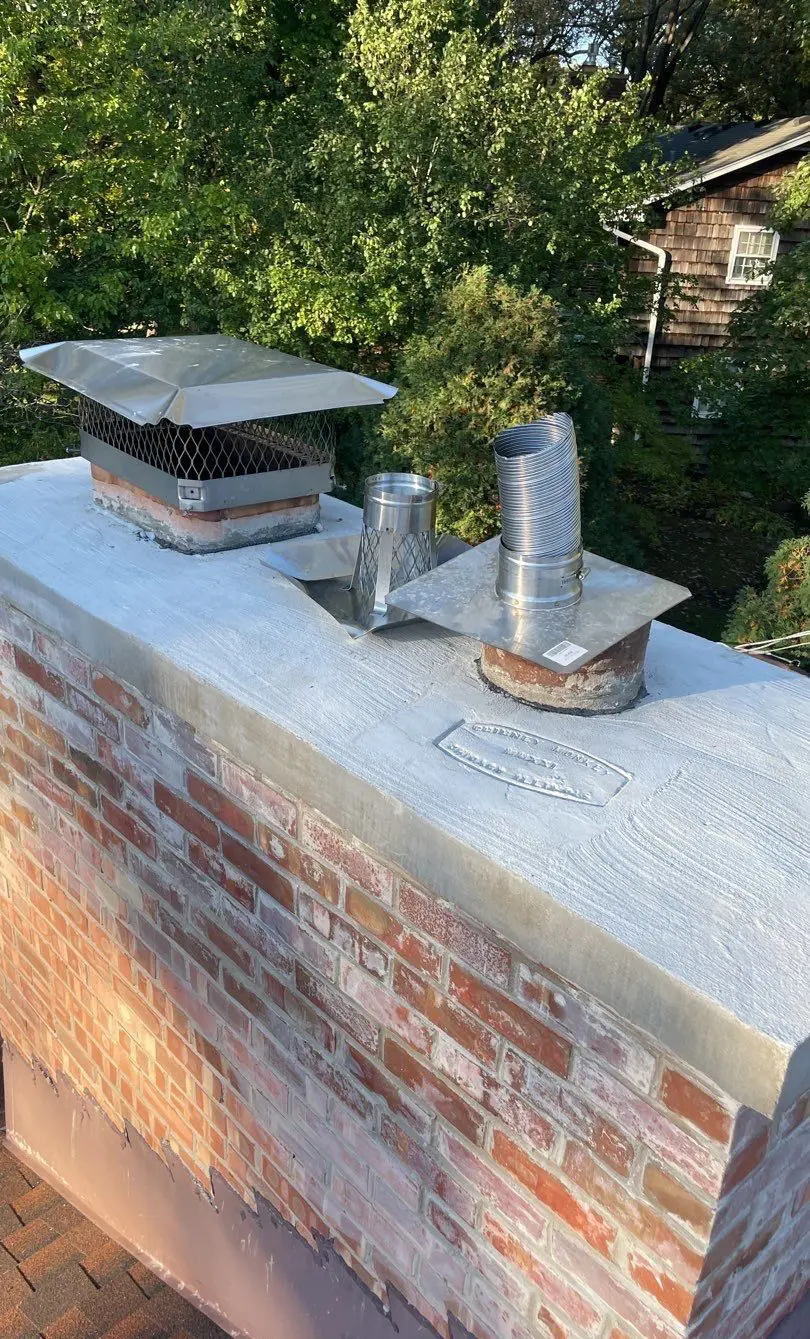
These photos come from our own job records across Chicago's North Shore and nearby suburbs. The first set shows chase covers and chase tops as we found them; the second shows chimneys we have worked on. Each caption names the town and street. We don't publish house numbers.
Chase covers as we found them
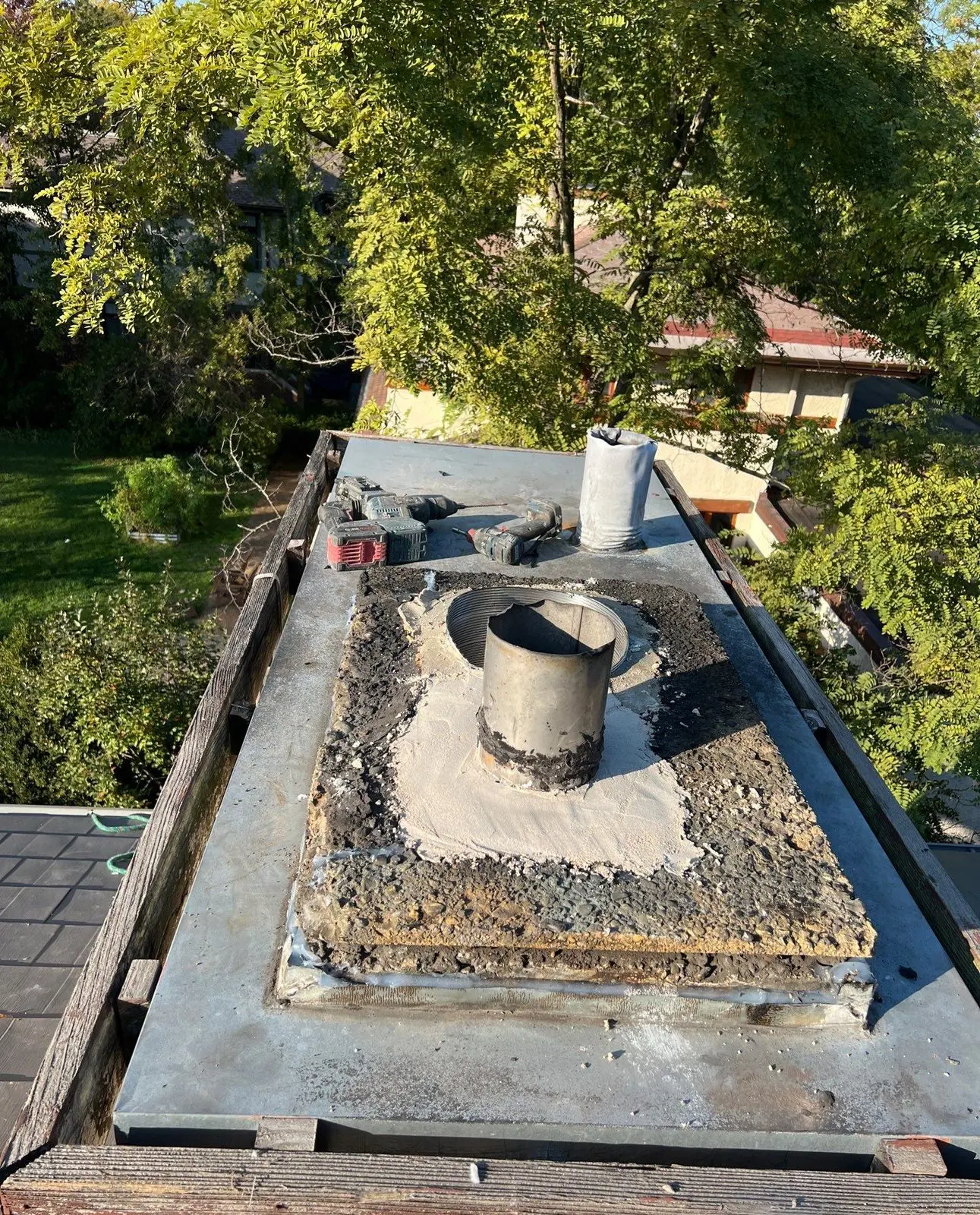
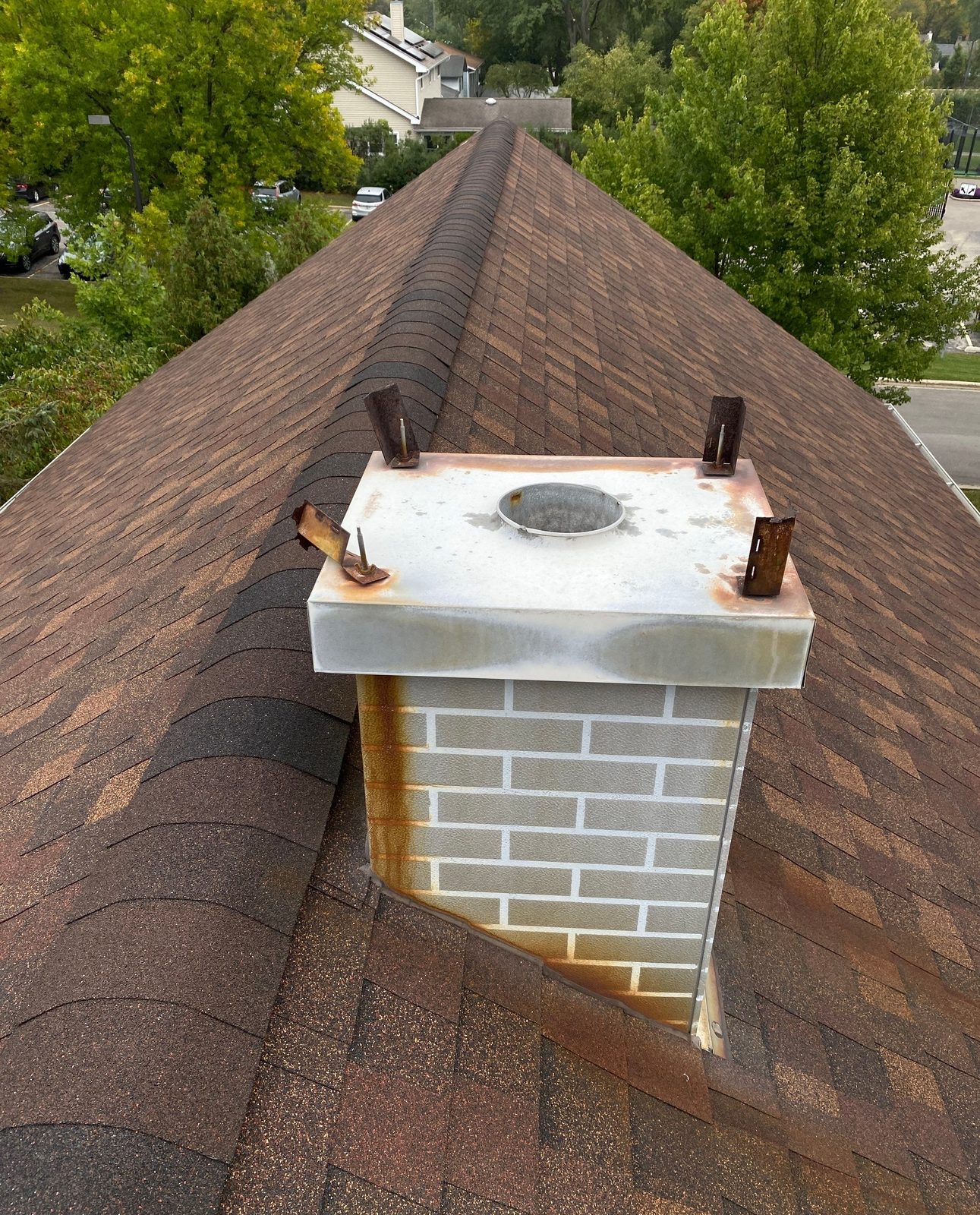
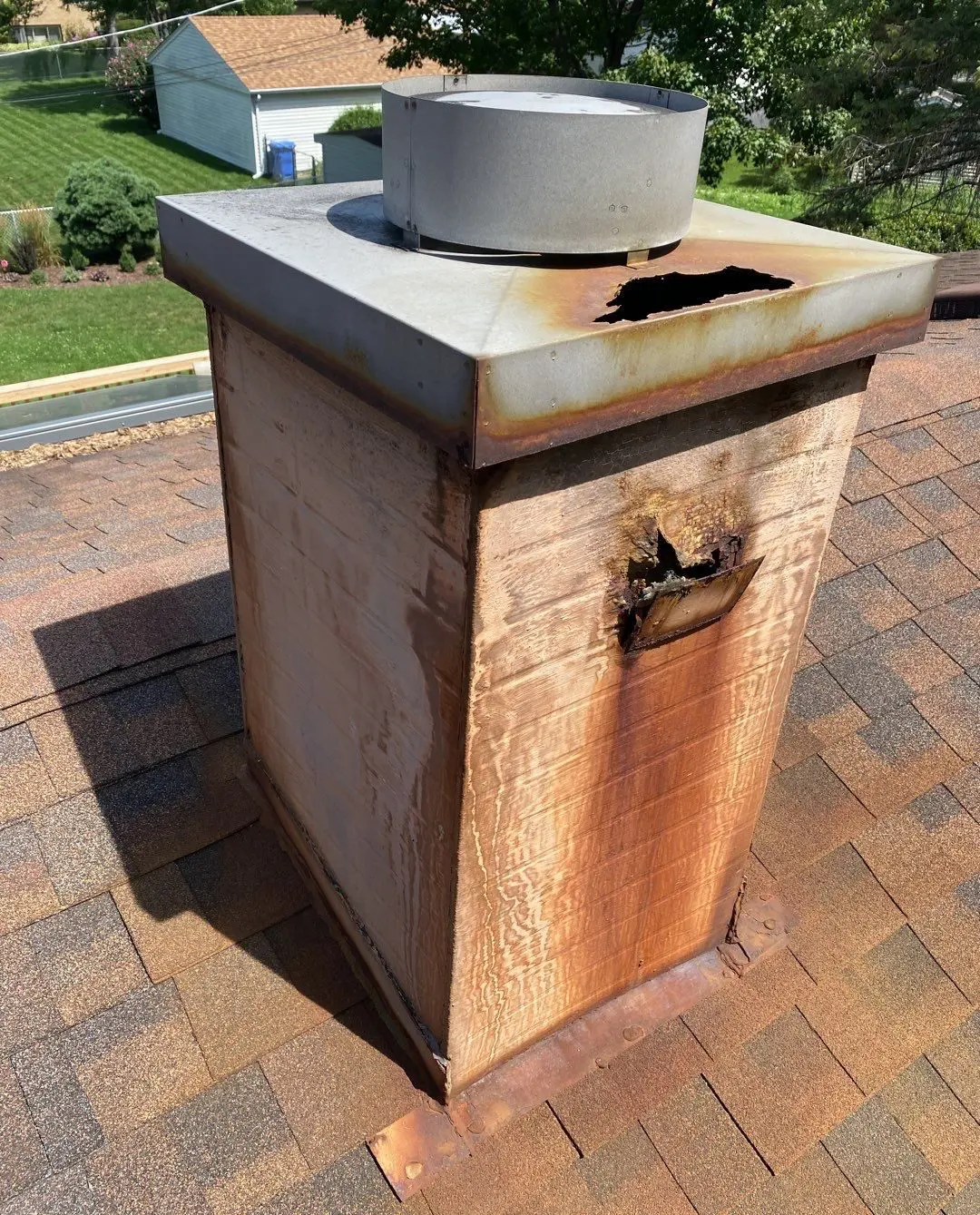
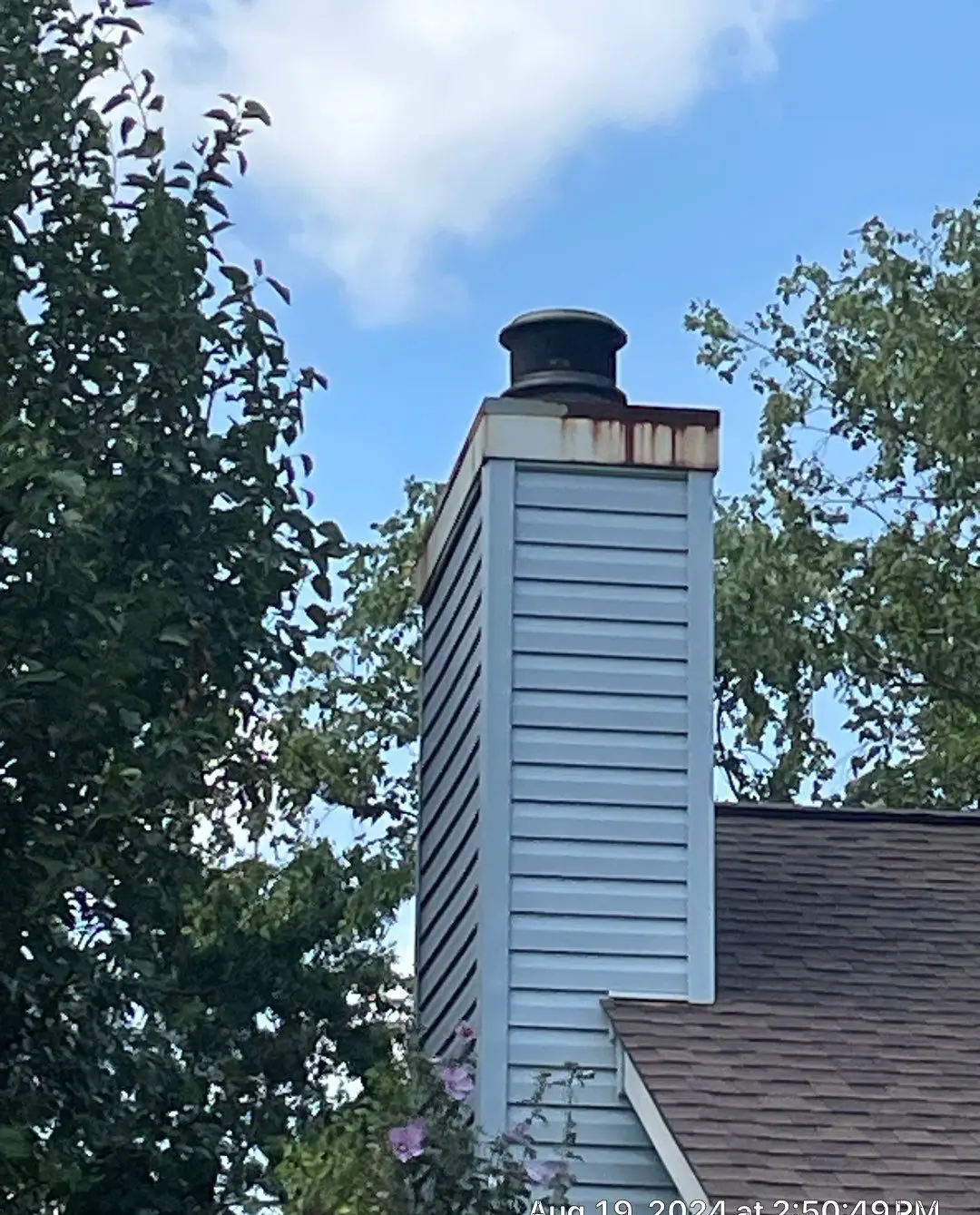
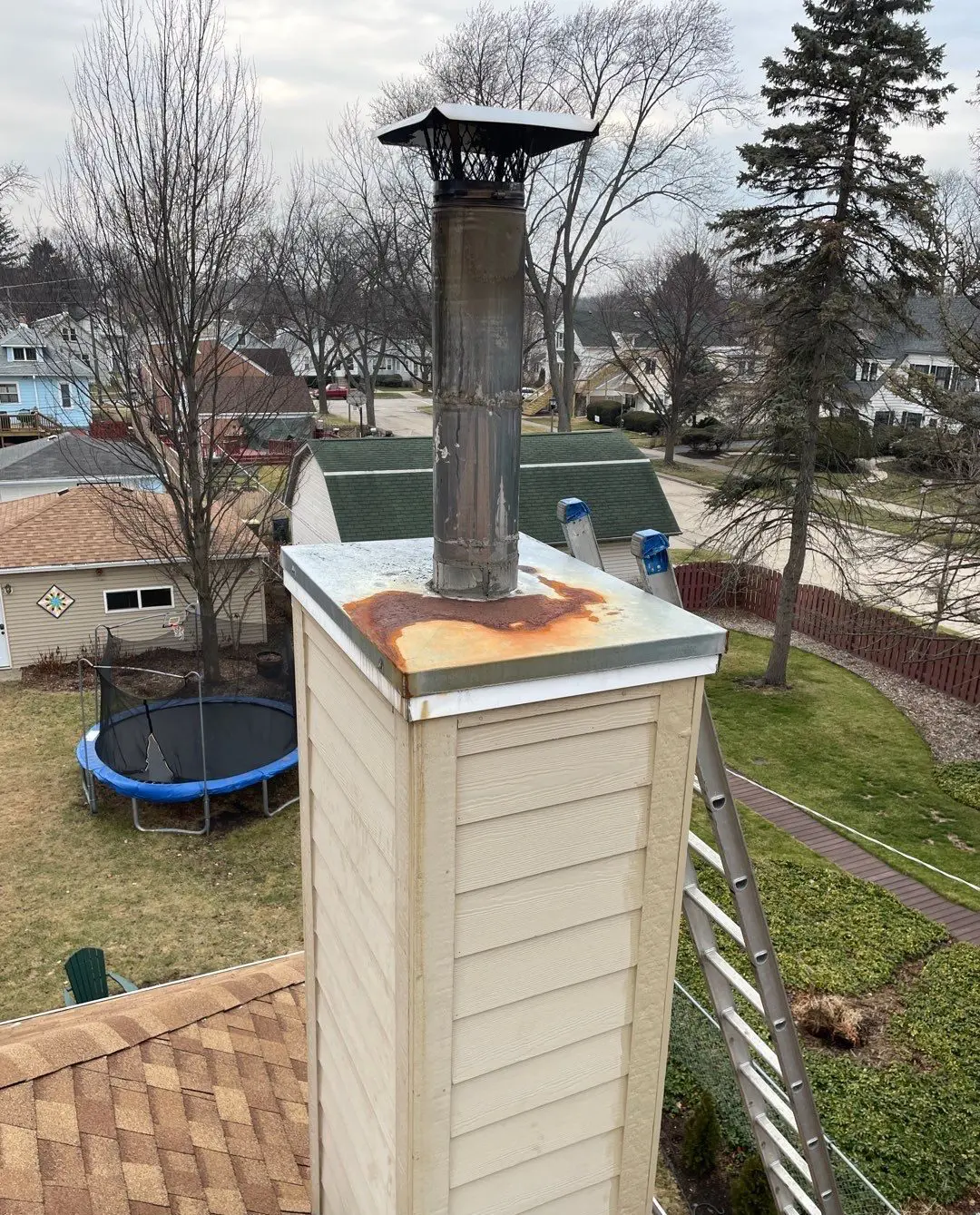
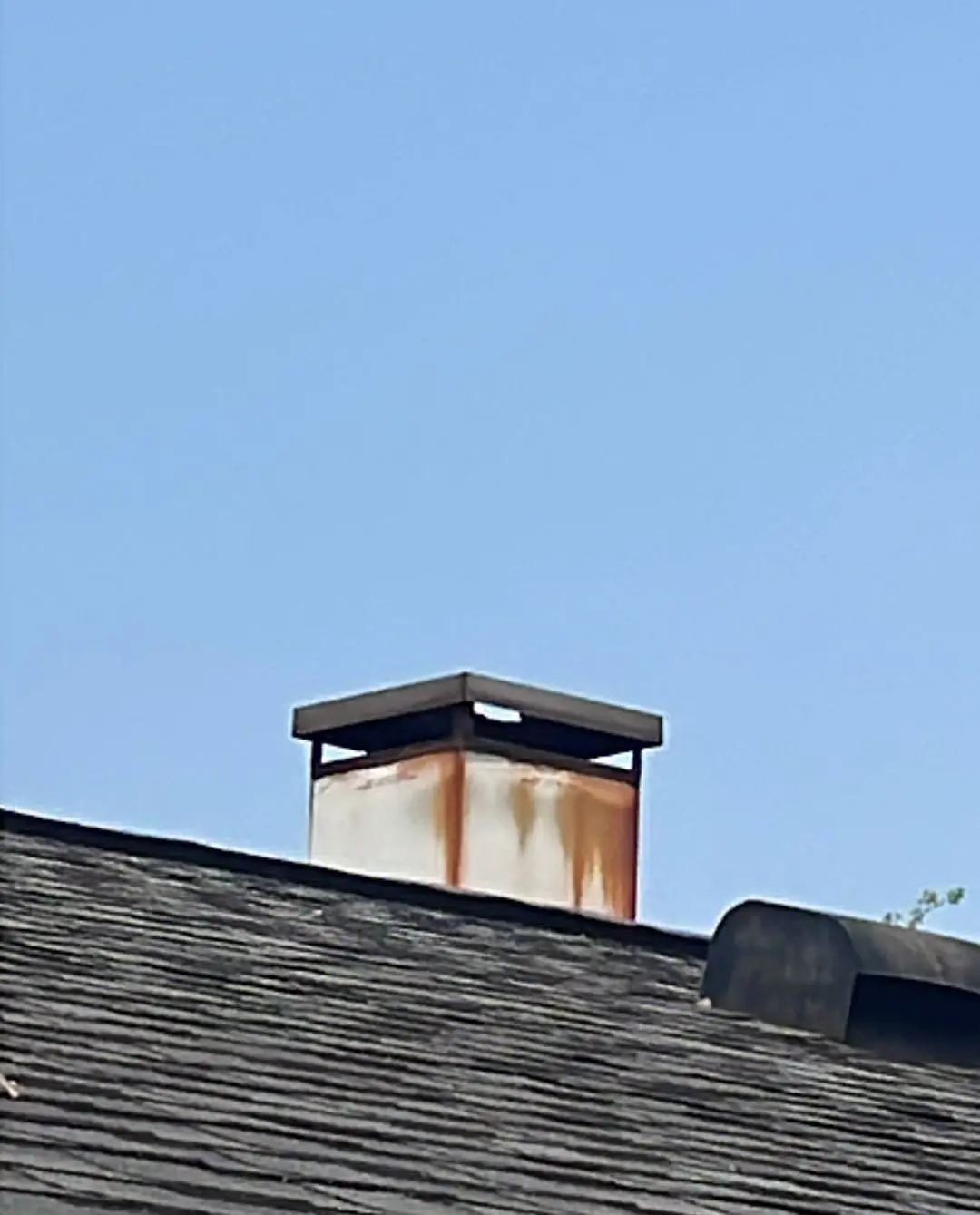

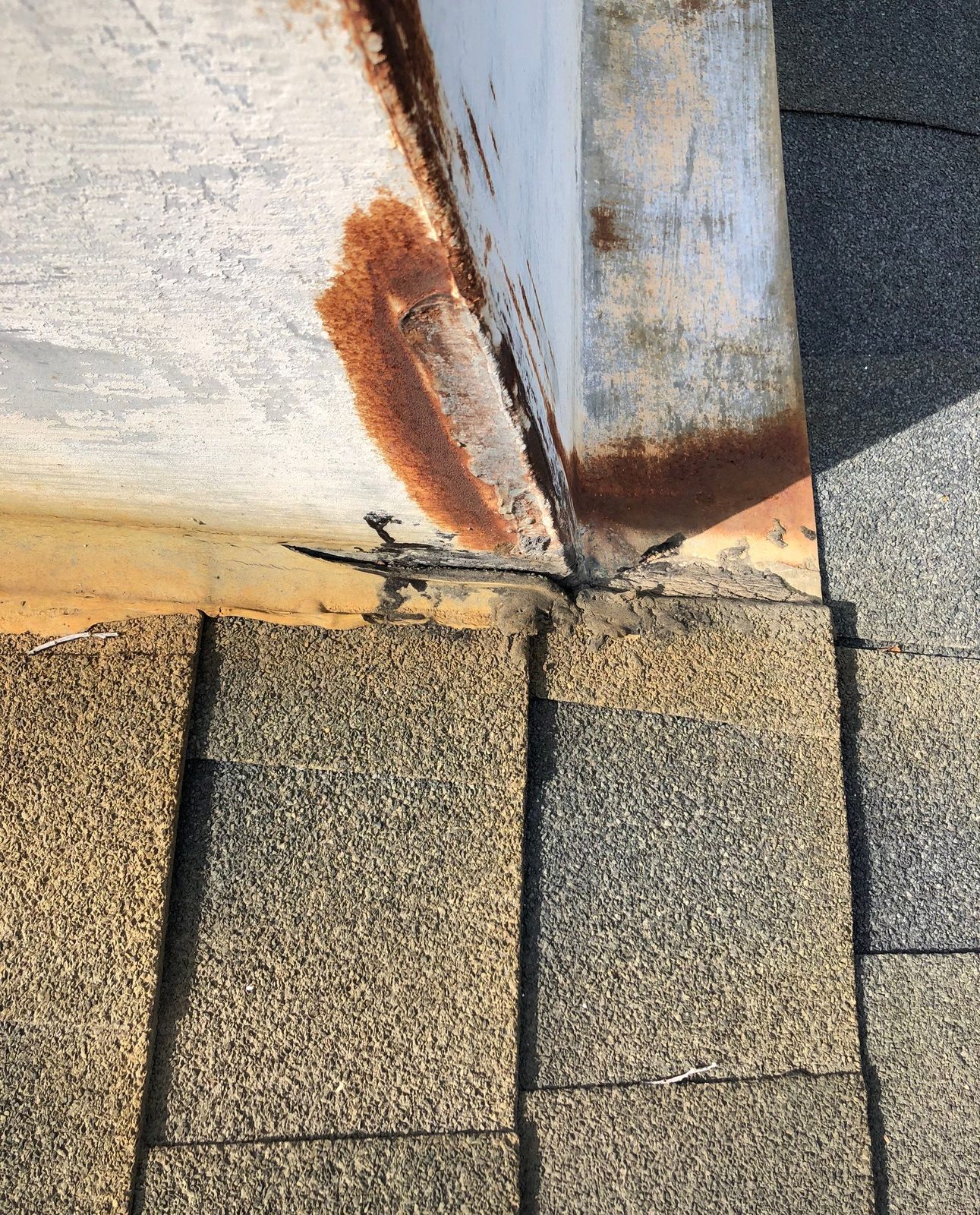
Chase covers and chase tops we have worked on

Common questions
How long should a chase cover last?
A builder-grade galvanized pan often needs replacing somewhere between fifteen and twenty-five years in this climate. Stainless steel, properly sized with cross-breaks and a drip edge, should outlast the siding around it.
Can a rusted chase cover be repaired instead of replaced?
Once it has perforated, no — not in a way we would stand behind. Before that point, seam and fastener repairs are reasonable.
What is the difference between a chase cover, a chase pan and a chimney cap?
Chase cover and chase pan are the same thing: the lid over the whole chase top. A cap covers only the flue opening. Framed chases generally need both.
How do I know the leak is the chase cover and not the flashing?
Often you cannot tell from inside the house — the stain looks the same. That is what the inspection is for. We look at the cover, the storm collar, the cap and the flashing before recommending anything.
Do you replace the cap at the same time?
Usually it makes sense to. The cap and the storm collar sit in the same assembly, and doing them together means one trip to the roof rather than two.
Who does the work
Chimney Monkey has worked on Chicago’s North Shore since 2017, out of Buffalo Grove. We are members of the National Chimney Sweep Guild, we carry more than 1,100 Google reviews, and we keep inspectors and masons on staff — so the people who diagnose the problem are the people who correct it.
Call 847-994-4388 to arrange an inspection or a chase cover measurement.
Proudly Serving Chicago’s North Shore
Chimney Monkey has served Cook and Lake Counties from Buffalo Grove since 2017. Chase cover work is weather-dependent — sealing a new pan properly needs dry conditions — so we schedule it from spring through late autumn wherever we can.
Core Service Areas
Specifically, we proudly serve Evanston, Wilmette, Kenilworth, Winnetka, Glencoe, Highland Park, Highwood, Lake Forest, Lake Bluff, Deerfield, Riverwoods, Bannockburn, Northfield, Northbrook.
Extended Service Areas
We also cover Arlington Heights, Barrington, Buffalo Grove, Des Plaines, Glenview, Hawthorn Woods, & Fort Sheridan.
Therefore, no matter where you live in the North Shore, Chimney Monkey is ready to help. In addition, our team ensures quick response in all listed areas. Likewise, we adapt to local needs for safer results.
📞 Call Chimney Monkey at (847) 994-4388 and let us take care of your chimney needs!
Frequently Asked Questions
How do I know my chase cover has failed?
Rust streaking down the siding or the chase below the cover is the clearest sign, and it usually appears before any leak shows up indoors. Standing water on the cover after rain means it has lost its pitch. Staining on the ceiling near the chimney often traces back here rather than to the roof.
What is the difference between a chase cover and a chimney cap?
A chase cover is the metal lid over the whole top of a factory-built chimney chase, like a shallow tray turned upside down. The cap sits on top of the flue opening itself. A chase can have a failed cover and a perfectly good cap at the same time.
Can a rusted chase cover be repaired instead of replaced?
Sealing a rusted cover buys a season or two at best. Once a galvanized cover has rusted through it will keep rusting, and sealant on top of corrosion does not bond well. We do not recommend spending money on a repair that defers the same replacement.
Why does a chase cover fail in the first place?
Most failures are galvanized steel reaching the end of its life, or a cover fabricated without enough pitch or without a drip edge, so water sits on it instead of running off. Both are construction decisions made years earlier.
What happens if a failed chase cover is left alone?
Water runs into the chase, which is a wood-framed structure. It reaches the firebox, the chimney sections and the framing itself. The repair stops being a cover replacement and becomes a chase rebuild, which is a different order of cost.
Categories: