
Rain First. Chimney Leaks Next.
After heavy rain, many homeowners notice stains near the fireplace, damp smells, ceiling spots, peeling paint, or moisture in the attic near the chimney. The tricky part is that a chimney leak does not always look like a chimney problem at first.
Water can enter through damaged flashing, cracked chimney crowns, deteriorated masonry, missing rain caps, open mortar joints, or gaps around the flue. From there, it may travel through the attic, walls, ceiling, or fireplace area before the source becomes obvious.
Chimney Monkey helps homeowners across Chicago’s North Shore inspect, diagnose, and repair chimney-related water entry before small leaks turn into larger masonry, roofline, or interior damage.
Not Every Leak Near the Roof Is a Roof Leak
When water shows up near a chimney, many homeowners call a roofer first. Sometimes the roof is the problem. But very often, the chimney itself is part of the water-entry path.
A masonry chimney sits above the roofline and takes direct exposure from rain, snow, wind, sun, and freezing temperatures. Over time, small openings can develop in the flashing, crown, brick, mortar, chase cover, or cap area. Once water finds a path in, it can move in ways that are hard to trace from inside the home.
That is why a chimney leak inspection should look at the full chimney system, not just one visible stain.
Common Chimney Leak Sources We Inspect
Chimney Flashing
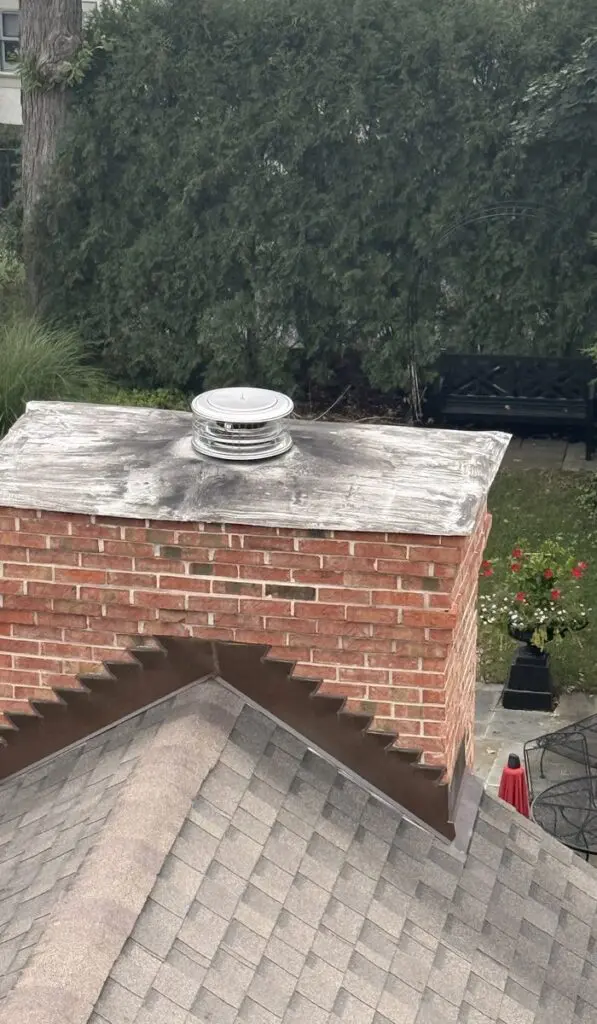
Flashing is the metal system where the roof meets the chimney. If flashing is loose, rusted, poorly sealed, improperly installed, or separating from the masonry, rainwater can enter at the roofline.
Flashing problems are especially common after years of weather exposure, previous roof work, or repeated patching with surface sealants.
Chimney Crown
The chimney crown is the concrete or masonry surface at the top of the chimney. Its job is to shed water away from the flue and brickwork.
A cracked, flat, thin, or deteriorated crown can allow water to soak into the top of the chimney. Proper crown repair or replacement helps protect the masonry below.
Brick and Mortar
Brick and mortar absorb weather over time. Open joints, cracks, spalling brick, missing mortar, and deteriorated tuckpointing can all allow water into the chimney structure.
North Shore homes with older masonry chimneys often need careful inspection because the exterior may look acceptable from the ground while still allowing water entry.
Rain Caps and Flue Openings
A missing or damaged rain cap can allow rain, animals, leaves, and debris into the flue. Open flue tiles and oversized gaps at the top of the chimney can also contribute to moisture problems.
A properly fitted chimney cap helps protect the flue opening while still allowing the system to vent correctly.
Chase Covers
For factory-built fireplace systems, a metal chase cover may sit on top of the framed chimney chase. If the chase cover is rusted, sagging, undersized, or poorly sloped, water can collect and enter the chase.
This can lead to rust staining, water damage, and deterioration around the fireplace system.
Signs You May Have a Chimney Leak
You may need a chimney leak inspection if you notice:
- ✓Water stains on the ceiling or wall near the chimney
- ✓Moisture inside the firebox
- ✓Musty smell from the fireplace
- ✓Peeling paint or bubbling drywall near the chimney
- ✓White staining on exterior brick
- ✓Crumbling mortar or loose brick
- ✓Rust on the damper, firebox, chase cover, or fireplace components
- ✓Dripping sounds after rain
- ✓Water in the ash dump or cleanout area
- ✓Previous roof repairs that did not stop the leak
A leak does not need to be dramatic to matter. Small, repeated water entry can slowly damage masonry, metal components, wood framing, drywall, and interior finishes.
Why Chimney Leaks Matter on North Shore Homes
Homes in Deerfield, Northbrook, Glenview, Highland Park, Lake Forest, Winnetka, Wilmette, Glencoe, Evanston, Skokie, Lake Bluff, and nearby North Shore communities often have masonry chimneys that are exposed to harsh seasonal weather.
Rain, snow, freezing temperatures, thaw cycles, wind, and age all work against the chimney exterior. Once water enters brick, mortar, crowns, or flashing gaps, the damage can spread over time.
Chimney leak repair is not only about stopping today’s stain. It is about protecting the chimney structure, the roofline, the fireplace system, and the inside of the home.
Our Chimney Leak Inspection Process
A Chimney Monkey technician will inspect the visible chimney and related components to help identify likely water-entry points. Depending on access and conditions, the inspection may include:
- ●Exterior chimney masonry review
- ●Flashing inspection
- ●Chimney crown inspection
- ●Rain cap and flue opening review
- ●Mortar joint and brick condition check
- ●Chase cover inspection when applicable
- ●Fireplace and firebox moisture review
- ●Attic or interior leak-path observations when accessible
- ●Photos and recommendations when repairs are needed
The goal is to separate guessing from actual inspection. Chimney leaks can have more than one source, so we look at the full system before recommending repairs.
Chimney Leak Repairs We May Recommend
Every home is different, but common repair recommendations may include:
- ●Chimney flashing repair or replacement
- ●Chimney crown repair or crown replacement
- ●Tuckpointing damaged mortar joints
- ●Replacing damaged or spalling brick
- ●Installing or replacing a chimney rain cap
- ●Installing a properly sized chase cover
- ●Sealing gaps around flue tiles where appropriate
- ●Waterproofing suitable masonry surfaces
- ●Repairing related firebox or smoke chamber damage when water has affected the fireplace
We do not recommend covering up a leak with random caulk or surface patches. Temporary sealants may hide the problem for a while, but they often fail again because the underlying issue was never corrected.
Chimney Waterproofing: What It Does and What It Cannot Do
Waterproofing gets asked about constantly, and it is worth being precise about it, because the wrong product makes a chimney worse rather than better.
Brick and mortar are porous by design. A masonry wall is meant to absorb some water and then release it back out as vapor. A breathable water repellent — typically a siloxane or silane formulation made for masonry — lines the pores so liquid water beads and runs off, while still letting vapor escape outward. That is the product we use, and on a chimney that has been absorbing water it meaningfully slows spalling and mortar loss.
What we do not use are film-forming sealers: acrylics, paints, and anything that leaves a glossy surface. Those trap moisture that is already inside the masonry. It then freezes behind the film and pushes the brick face off, which is the exact failure the homeowner was trying to prevent.
Just as important, waterproofing is not a leak repair. If water is coming in through a failed crown, bad flashing, open mortar joints, or a missing cap, a repellent will not stop it, because those are openings rather than porosity. We fix the defect first, let the masonry dry, and apply the repellent afterward as protection going forward. Applied in the wrong order it seals moisture in.
A properly applied breathable repellent generally lasts seven to ten years in the Chicago climate before it needs reapplication, and it works best on masonry that is sound to begin with. Where the brick or joints have already deteriorated, tuckpointing or masonry repair comes first.
Schedule a Chimney Leak Inspection
If you noticed staining, damp smells, moisture, or suspected water entry after rain, schedule a chimney inspection before the next storm makes the problem worse.
Chimney Monkey serves homeowners across Chicago’s North Shore with chimney inspections, masonry repair, crown repair, flashing-related recommendations, rain cap installation, and chimney water-entry solutions.
Serving Deerfield, Northbrook, Glenview, Highland Park, Lake Forest, Winnetka, Wilmette, Glencoe, Evanston, Skokie, Lake Bluff, Buffalo Grove, and nearby North Shore communities.
Frequently Asked Questions
Why is water coming in near my chimney?
Water may be entering through the flashing, chimney crown, brick, mortar joints, rain cap, chase cover, or gaps around the flue. The stain may show up inside the home even if the source is outside at the roofline or chimney top.
Is a chimney leak always a roof leak?
No. Some leaks near the chimney are roof-related, but many are caused by the chimney itself. Flashing, crowns, masonry, caps, and chase covers should all be inspected before assuming the roof is the only issue.
What is chimney flashing?
Chimney flashing is the metal system where the roof meets the chimney. It helps direct water away from the roof-to-chimney connection. Damaged or poorly sealed flashing is a common source of chimney-area leaks.
What is a chimney crown?
The chimney crown is the top surface of a masonry chimney. It helps shed water away from the flue and brickwork. Cracks, gaps, or poor slope can allow water to enter the chimney structure.
Can damaged brick and mortar cause a chimney leak?
Yes. Open mortar joints, cracked brick, spalling masonry, and deteriorated tuckpointing can allow water to soak into the chimney. Over time, this can lead to more masonry damage and interior moisture problems.
Do I need a chimney cap?
A chimney cap helps keep rain, animals, leaves, and debris out of the flue opening. If your chimney is missing a cap or has an older damaged cap, replacement may be recommended.
Can waterproofing stop a chimney leak?
Waterproofing can help protect suitable masonry, but it is not a substitute for proper repairs. Cracked crowns, open mortar joints, failed flashing, damaged brick, and missing caps should be corrected before waterproofing is considered.
How soon should I schedule an inspection after noticing a leak?
Schedule an inspection as soon as possible. Repeated rain can make the problem worse, especially when water is entering masonry, attic framing, drywall, or fireplace components.