
 Do Decorative Chimney Rain Caps Add Value and Protection to Luxury Homes in Lake Forest?
A decorative chimney rain cap can genuinely add both protection and architectural value to a Lake Forest home. Three things make that possible: correct sizing for the flue, a design that fits the home’s architecture, and professional installation. The right cap does two jobs at once. It manages exposure at the top of an open flue. It also becomes a visible design element on part of the roofline that many estate and historic homes leave unfinished.
That combination of function and appearance is why chimney caps deserve more consideration than they typically receive.
What Is a Chimney Rain Cap?
A chimney rain cap covers a flue opening to manage exposure to rain, debris, and animals. It still allows smoke and combustion byproducts to vent properly. Most caps pair a solid top with screened sides. That keeps the flue shielded from above while staying open around the perimeter for airflow.
Caps range from simple stock units to fully custom, decorative toppers that match a home’s roofline and metal finishes. On a plain chimney, a cap is largely functional. On a chimney visible from the street or drive, it becomes part of how the roofline reads.
Why Does an Exposed Chimney Flue Need Protection?
An open, uncapped flue exposes the chimney interior directly to rain, wind-driven debris, and wildlife. All of that can contribute to deterioration over time. Water is the primary long-term concern. Repeated exposure can cause rust on metal components and staining. Depending on the chimney’s construction and climate exposure, it can also add freeze-thaw stress to masonry.
Leaves and windblown debris can also settle inside an open flue and contribute to obstructions. Birds, squirrels, and raccoons seek out open flues as nesting sites. That’s especially true on the wooded, mature lots common across Lake Forest and the North Shore.
An uncapped chimney isn’t in immediate danger. Its top is still one of the more exposed, least protected parts of the structure. A cap is one of the more direct ways to address that.
 Can a Decorative Chimney Cap Improve a Home’s Appearance?
 Can a Decorative Chimney Cap Improve a Home’s Appearance?
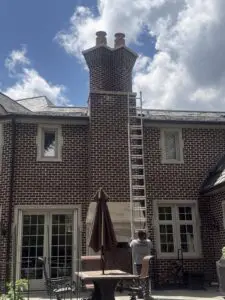
Yes. A decorative chimney cap sits atop one of the most visible vertical elements on a home’s exterior. That makes it a natural place to reinforce, or work against, the home’s overall architecture. A well-proportioned cap, finished appropriately and coordinated with existing roof and metal materials, can complete a chimney’s appearance. Get it wrong, and it can leave the chimney looking unfinished instead.
The reverse is also true. An undersized stock cap, or a mismatched finish next to existing copper gutters, can read as an afterthought. That’s especially true on a home where owners considered every other exterior detail carefully. The stakes are highest on chimneys visible from the street or neighboring sightlines. Those sightlines are common across Lake Forest’s estate properties. There, the cap’s visual role deserves the same attention as its function.
What Is the Best Chimney Cap for a Luxury Home?
There is no single best chimney cap for every luxury home. The right choice depends on the chimney’s construction, flue count and spacing, architectural style, and visibility from ground level. A cap that performs well on a simple single-flue chimney may be the wrong fit elsewhere. A wide, multi-flue estate chimney with an unusual crown profile often needs a different approach.
Luxury and estate homes tend to share chimneys with more complexity than a typical residential flue. Multiple flues, uneven heights, decorative brickwork, or a roofline where the chimney is a genuine focal point are all common. These features usually push a homeowner from a stock cap toward a custom-fabricated one.
What Materials Are Available for Chimney Caps?
Stainless steel, copper, and powder-coated steel are the three most common materials, each balancing appearance, maintenance, and durability differently. Terracotta-compatible caps suit chimneys with exposed clay flue tiles. Chase covers serve a related but distinct role on framed chimney chases.
| Material | Appearance | Corrosion Resistance | Maintenance | Often Suited For |
|---|---|---|---|---|
| Stainless Steel | Clean, understated | Strong; varies by grade | Generally low | Wide range of styles; performance-focused homeowners |
| Copper | Bright at first, patinas over years | Very good when fabricated well | Generally low; finish changes over time | Estate and historic homes; existing copper metalwork |
| Powder-Coated Steel | Custom finish colors | Depends on coating quality | Can increase if scratched | Homes matching color to roofing or trim |
Every material can perform well in an appropriate grade, properly fabricated and installed. It can also underperform when any of those factors is missing.
Should I Choose Stainless Steel or Copper? Is Copper Better Than Stainless Steel?
Neither material is universally better. Stainless steel and copper simply solve different priorities. Stainless steel appeals to homeowners who want strong corrosion resistance, a neutral appearance, and little visual change over time. Copper appeals to homeowners who want a distinctive, evolving finish that coordinates with existing copper elements like gutters or flashing.
The most meaningful difference is how each behaves visually over time. New copper starts bright and reflective, then gradually develops a patina that depends on weather exposure and time. Some homeowners want that evolving character. Others prefer the consistency stainless steel or powder-coated finishes maintain from installation onward. Cost varies by project scope and fabrication complexity, so it’s worth discussing directly with an installer.
What Are the Benefits and Limitations of Powder-Coated Steel?
Powder-coated steel chimney caps offer color flexibility that neither raw stainless steel nor copper can match. That’s useful when a homeowner wants the cap to match roofing, trim, or existing metalwork precisely. The tradeoff is that the coating itself becomes part of the cap’s long-term performance.
A coating properly applied to well-fabricated steel can hold up well over years of exposure. But scratches, cut edges from fabrication, or installation damage can create points where corrosion begins beneath the coating. On a cap exposed to Midwest weather for years without close inspection, coating quality matters as much as color choice.
Can a Rain Cap Be Installed on a Terracotta Flue Tile?
In many cases, yes, but installers need to evaluate the flue tile’s condition first. Terracotta and clay flue tiles are common terminations on masonry chimneys throughout Lake Forest. A well-fitted cap can preserve the chimney’s visual character even there.
Before fitting any cap to a terracotta flue, installers need to assess the tile’s dimensions, height, and condition. They also check the number and spacing of flues and the condition of the crown beneath them. A cracked, loose, or deteriorated flue tile needs repair before it’s safe to mount a cap. Fitting a cap over a compromised tile can mask a problem instead of solving it.
Are Custom Chimney Caps Worth the Investment? Can Chimney Caps Be Made to Match a Home’s Architecture?
Custom fabrication is often worth considering for luxury and estate homes. Few of these chimneys match standard stock dimensions. Multiple flues, unusual spacing, oversized masonry, decorative brickwork, and uneven crown profiles are all common on estate-scale construction. Each can make an off-the-shelf cap a poor fit or a poor visual match.
A custom cap starts from the chimney’s actual dimensions instead of adapting the chimney to a stock product. Fabricators can engineer a single cap for multiple flues or build a full-width design spanning the chimney top. They can also add decorative finials or trim, or coordinate the finish with existing roof and metal materials.
Custom fabrication isn’t automatically right for every chimney, though. A quality stock cap may serve a straightforward single-flue chimney in good condition just as well. The decision comes down to whether the chimney’s dimensions or visibility call for a custom solution. That’s best confirmed in person.
Can One Cap Cover Multiple Flues?
Yes, multi-flue caps are a common solution on chimneys with two or more flues. They can serve multiple fireplaces, a fireplace paired with a furnace or water heater flue, or other combined venting. Whether to use one multi-flue cap or separate caps depends on flue spacing, height, and venting requirements. That’s best confirmed during an in-person evaluation.
What Is the Difference Between a Chimney Cap and a Chase Cover?
A chimney cap and a chase cover serve related but distinct roles, and the two terms are not interchangeable. The cap generally covers and protects one or more individual flue openings. A chase cover, by contrast, spans the entire top of a framed chimney chase. That’s the enclosure around a factory-built, prefabricated fireplace system, and the flue or flues penetrate through the cover.
On a traditional masonry chimney, a cap alone is often the relevant component. On a framed chase, both the chase cover and any cap on the flue penetration may need attention. A professional should evaluate both separately.
Will a Chimney Cap Keep Birds and Squirrels Out?
A properly designed and installed screened chimney cap can meaningfully discourage birds, squirrels, and raccoons from entering an open flue. Even so, no cap can guarantee permanent exclusion of every animal in every circumstance. Screen size, mesh quality, cap design, and installation all affect how well a cap performs this role.
A few practical realities matter here. Damaged or corroded mesh can create entry points over time. Mesh that’s too fine for the appliance’s venting requirements can also interfere with proper draft. Sometimes wildlife is already present, such as an active nest. That situation needs evaluation and resolution first, since sealing a flue with an animal or nest inside isn’t appropriate. Some birds also carry protection under wildlife law, which can affect timing. A professional should always evaluate a suspected obstruction before a cap goes on, not after.
Can a Chimney Cap Help Reduce Moisture Damage? Will a Rain Cap Prevent Chimney Leaks?
A well-fitted chimney cap can help reduce rainwater entering directly through an open flue, one meaningful source of chimney-related moisture. On its own, though, it’s not a complete solution to chimney leaks. A flue opening is only one of several places water can get into a chimney system.
Water can also enter through a cracked chimney crown, deteriorated mortar joints, or damaged flashing. Porous masonry, a failed chase cover, and gaps at siding transitions or other roof penetrations are common entry points too. A cap addresses the flue opening specifically. If water intrusion continues after a cap goes on, that usually points to a separate issue needing its own evaluation. Chimney protection works best as a system. A sound crown, intact flashing, serviceable masonry, and a functioning flue liner all play a role. No single component carries the full load alone.
How Long Do Chimney Caps Last? How Do I Know if My Current Chimney Cap Needs Replacement?
How long a chimney cap lasts depends on its material grade, fabrication quality, installation, and exposure. There’s no single lifespan that applies to every cap. A well-made cap in an appropriate grade, properly installed and reasonably sheltered, can perform for many years. A lower-grade cap, poor fabrication, or harsher exposure can shorten that considerably.
Watch for a few signs that a current cap needs evaluation or replacement. Visible rust or corrosion, damaged or torn mesh, and a cap that has come loose are common signs. So is staining on the crown or masonry below, or a cap installers undersized or fitted poorly. Any of these is worth a professional look. The right response depends on what’s actually happening at the chimney: replacement, repair, or continued monitoring.
Why Do Decorative Chimney Caps Matter for Lake Forest’s Architecture?
Lake Forest’s residential architecture spans a wide range of traditional and custom styles. Tudor, Colonial, French Country, and English Manor influences appear throughout the community, alongside contemporary custom homes. Builders often use brick, limestone, or natural stone masonry, topped with slate, cedar shake, or clay tile roofing. Chimneys on these homes are frequently substantial, sometimes multi-flue, and often highly visible from the street, drive, or wooded lots.
On homes like these, a chimney cap is rarely an isolated decision. It sits alongside a roof material, an established masonry color, and often existing copper or metalwork in gutters or flashing. A cap chosen only for function, without regard to slate, cedar shake, or existing metal accents, can look disconnected. That’s especially true on a home where owners considered every other exterior detail carefully.
This doesn’t mean every Lake Forest chimney needs a fully custom solution. The right approach still depends on the chimney’s construction, condition, and visibility. But Lake Forest and the surrounding North Shore have a real concentration of estate-scale, architecturally distinctive homes. That’s exactly why chimney cap selection deserves this level of consideration.
Who Installs Decorative Chimney Caps in Lake Forest? What Should a Homeowner Expect During Installation?
 Chimney Monkey serves Lake Forest and the surrounding North Shore. The team evaluates chimneys, then recommends, sources, and professionally installs chimney caps suited to each home’s configuration and architecture. Homeowners can expect a process that starts with evaluation, not a product recommendation made sight unseen.
A typical evaluation and installation process generally includes:
- Inspecting the chimney and accessible surrounding components
- Identifying the chimney, fireplace, appliance, and venting configuration
- Measuring the flue tiles, chimney top, chase, or mounting surface
- Evaluating the condition of the crown, flue tiles, masonry, chase cover, and any existing cap
- Reviewing clearances, roof access, attachment requirements, and ventilation needs
- Recommending suitable materials and cap styles based on that evaluation
- Arranging custom fabrication when standard sizes aren’t appropriate
- Professionally installing the selected cap
- Confirming attachment, fit, stability, and required clearances
- Documenting any other visible conditions that may need separate attention
Installation methods vary based on the chimney’s construction, appliance type, flue configuration, roof access, and cap design. Manufacturer requirements and safety standards factor in too. A cap installation doesn’t automatically include separate work like masonry repair or waterproofing. When an evaluation identifies a separate need, the team addresses it as its own scope and informs the homeowner directly.
Frequently Asked Questions
Do I need a chimney rain cap?
Most open flues benefit from a cap, since rain, debris, and wildlife can reach directly into an uncapped flue. Whether your chimney needs one, or whether an existing cap needs replacement, depends on its current condition, configuration, and exposure. An in-person evaluation is the most reliable way to confirm what your specific chimney needs.
What is the best material for a chimney cap?
There’s no single best material. Stainless steel, copper, and powder-coated steel each offer a different balance of appearance, corrosion resistance, and maintenance. The right choice depends on your chimney’s setup, your home’s architecture, and how much visual change you want over time.
Can chimney caps be custom made?
Yes, fabricators can custom-build chimney caps to fit nonstandard flue dimensions, multiple flues, or unusual spacing. They can also match specific finish and design requirements. That’s common on luxury and estate homes, where chimneys often exceed standard sizing or call for a specific architectural look.
Can a cap be installed on a terracotta flue?
In many cases, yes, provided the flue tile and crown are in suitable condition to support one. A cracked, loose, or deteriorated terracotta tile needs repair before a cap goes on. Mounting a cap over a compromised tile doesn’t resolve the underlying issue.
Will a chimney cap stop squirrels and birds?
A properly designed, screened cap can meaningfully discourage wildlife entry, though no cap can guarantee permanent exclusion in every case. Screen quality, mesh size, and correct installation all affect performance. A professional should evaluate any suspected existing nest or animal before a cap goes on the flue.
How long do stainless steel chimney caps last?
Lifespan depends on the steel’s grade, fabrication quality, installation, and exposure, so there’s no single figure that applies universally. A well-made cap in an appropriate grade, properly installed, can perform reliably for many years. Lower-grade materials or poor fabrication can shorten that considerably.
Is copper worth the additional cost?
That depends on your priorities. Copper offers a distinctive appearance that changes naturally through patina development over time, along with strong durability when properly fabricated. Homeowners who value that evolving finish, or who want to coordinate with existing copper metalwork, often find it worthwhile. Others prefer a more visually consistent material.
Can one cap protect multiple flues?
Yes, multi-flue caps are a common solution for chimneys with two or more flues. Whether one multi-flue cap or individual caps per flue is right depends on flue spacing, height, and venting requirements. An in-person evaluation is the best way to confirm which fits.
How do I know if my chimney cap needs replacement?
Visible rust, damaged or torn mesh, or a cap that has come loose are all signs worth a professional look. So is staining on the crown or masonry below. The appropriate response depends on the specific condition found during inspection: repair, replacement, or continued monitoring.
Who installs decorative chimney caps near Lake Forest?
Chimney Monkey serves Lake Forest and the surrounding North Shore. The team evaluates chimneys, then recommends, sources, and installs caps suited to each home’s configuration and architecture. Every recommendation follows an in-person evaluation of the chimney’s condition, dimensions, flue count, and venting requirements.
Can a chimney cap improve my home’s appearance?
Yes, a well-proportioned, appropriately finished cap can complete a chimney’s appearance and reinforce the home’s broader architectural style. That matters most on chimneys visible from the street or drive. A mismatched or undersized cap can have the opposite effect. Fit and finish matter just as much as material.
Will a rain cap help prevent chimney leaks?
A cap can help reduce water entering through an open flue, one source of chimney moisture. But it doesn’t address other entry points like a cracked crown, deteriorated mortar, or damaged flashing. Persistent leaks after a cap goes on usually point to one of these separate issues.
Not sure what service your home needs?
Start with a professional evaluation so the system can be identified, the visible conditions can be documented, and the right next step can be recommended.
Have a question about your chimney, fireplace, venting system, gutters, or dryer vent?
Schedule a professional visit and get clear recommendations based on the actual condition of your home.
Categories: Chicago Illinois Chimney Cap Chimney Exterior Services Chimney Leak Repair Cook County Illinois Lake County Illinois Local Services Masonry Chimney Repair