
Chimney Liner in Highwood: A 5-Inch Stainless Liner for Gas Appliances
Last updated: · By the Chimney Monkey team
This chimney liner project in Highwood gave a home’s gas appliances a properly sized stainless steel vent. It also rebuilt the chimney crown above it.
Chimney Monkey has served the North Shore since 2017. We are an NCSG member company with NFI-certified technicians, a 4.9-star Google rating and more than 1,100 reviews.
In April 2026, our crew installed a 5-inch stainless steel chimney liner for a Highwood home’s gas appliance venting. We opened the basement wall to connect the liner at the right height, then sealed it. On the roof, we rebuilt the crown and repaired the top flue tile. We also capped the new liner and added a stainless rain cap with spark arrestor.
- 5″stainless steel liner for gas venting
- 1full crown rebuild on a large chimney
- 1top flue tile repaired or extended
- 1new stainless rain cap with spark arrestor

What Did This Chimney Liner Project in Highwood Include?
The project paired a new gas-appliance liner in the basement with a rebuilt crown and new caps on the roof.
Many North Shore homes vent a gas furnace or water heater into an older masonry chimney. Over time, that chimney may no longer suit modern gas exhaust. Here, the crew upgraded the venting path from the basement to the roof in one visit.
In the basement
Gas appliance venting
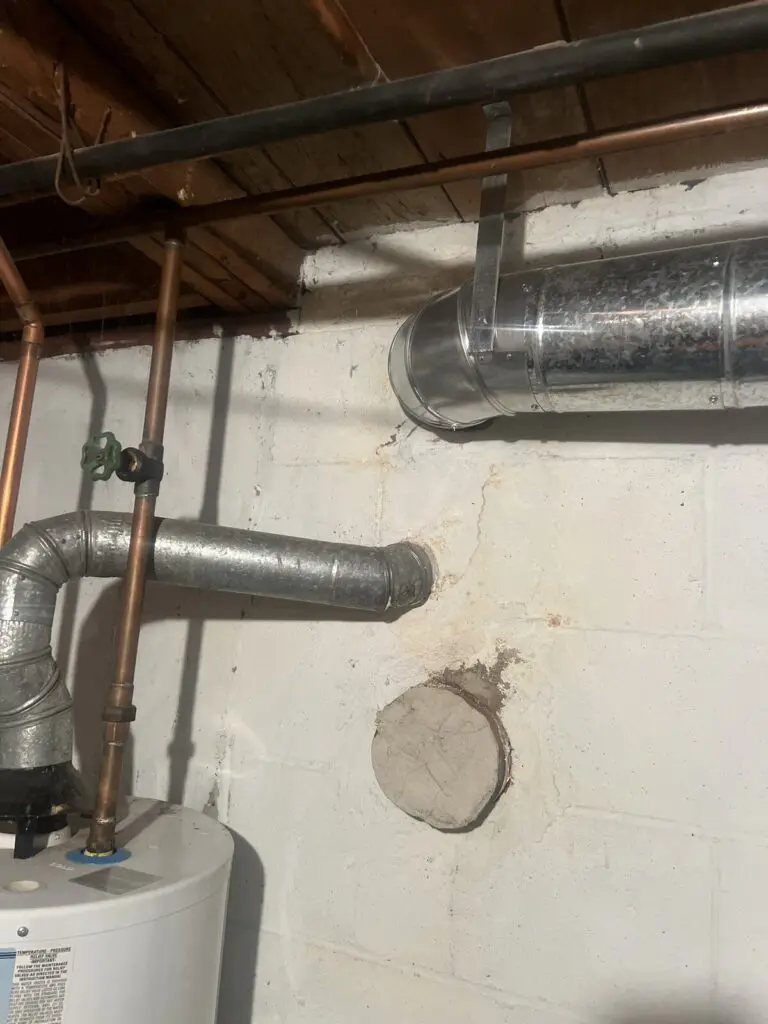
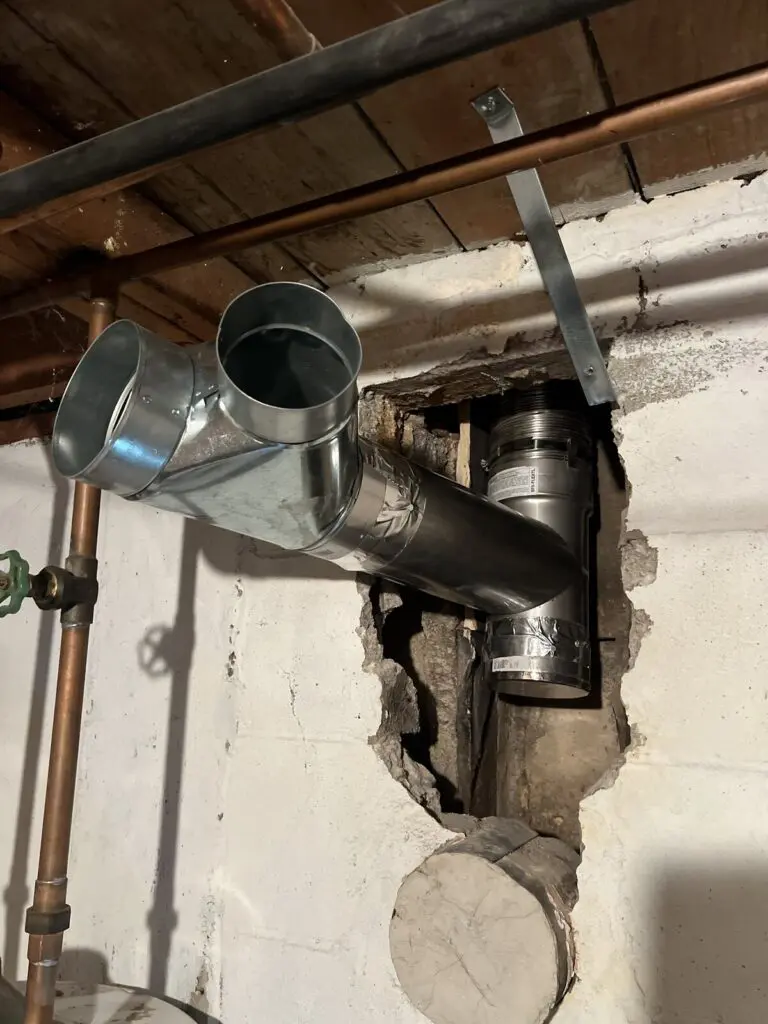
- Access opened in the chimney wall at the connection point
- 5-inch stainless steel liner run to the top of the chimney
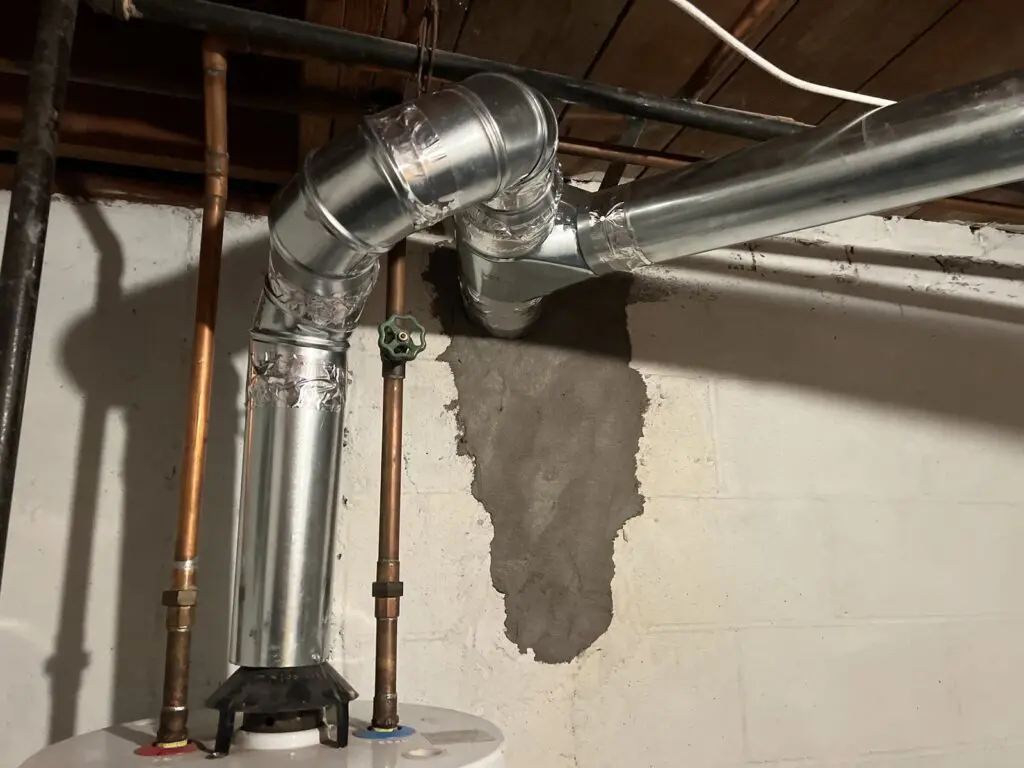
- Vent connectors installed to join the appliances to the liner
- Wall opening sealed after the connection was made
On the roof
Crown, tile and caps
- Old crown removed
- New sloped concrete crown with a drip edge
- Top flue tile repaired, replaced or extended as needed
- Stainless cap installed to protect the new liner
- Stainless rain cap with spark arrestor fitted and installed

Why Do Gas Appliances Need a Chimney Liner?
A gas appliance needs a vent sized for its exhaust, and many older masonry chimneys are not.
Modern gas furnaces and water heaters produce cooler, moister exhaust than older equipment. In a large or unlined masonry flue, that exhaust can cool before it reaches the top. As a result, moisture may condense inside the chimney. That condensation is acidic. Over time, it can wear down clay flue tiles and mortar joints from the inside. A correctly sized stainless steel liner gives the exhaust a smooth, sealed path to the outdoors. It is also designed to resist that acidic moisture.
Why a 5-inch liner?
Liner size depends on the appliances connected to it. A flue that is too large lets exhaust cool and linger. One that is too small may not carry the exhaust away well. This system used a 5-inch liner sized for the home’s gas appliance venting. Learn more about our water heater liners and furnace flue liner installation.
How Does a Gas Appliance Venting System Work, Top to Bottom?
Gas exhaust travels from the appliance, through a connector and up the liner, then exits under a cap at the top.
Every part of that path matters. A sound liner under a failing crown will still face water damage, so this project addressed both ends.
- 1 · CapsLiner cap and rain cap with spark arrestorStainless caps keep out rain, snow, debris, birds and animals.
- 2 · Top tileRepaired or extended clay top tileProjects above the crown so caps sit properly and water stays out.
- 3 · CrownNew concrete crownA sloped top with an expansion joint and drip edge that sheds water. See our chimney crown repair service.
- 4 · Liner5-inch stainless steel linerA continuous, water- and gas-tight path from the appliance connection to the top.
- 5 · ConnectionAccess opening and vent connectorsThe liner meets the appliance vent at the correct height, and the wall is sealed.
- 6 · AppliancesGas appliancesEquipment such as a furnace or water heater that produces the exhaust.
Why open the basement wall?
The liner has to connect to the appliance vent at the correct elevation. So the crew created an opening in the chimney wall, made the connection, then sealed the opening. It is a small, temporary disruption that makes a clean, correct connection possible.
Should a Chimney Crown Be Patched or Fully Rebuilt?
Patching suits a sound crown with minor cracks, while a full rebuild replaces a crown that has broken down.
This chimney received a full crown rebuild. The crew removed the old crown and formed a new one sized for a large masonry chimney.
| Detail | Patch or resurface | Full crown rebuild |
|---|---|---|
| Best for | Sound crowns with minor surface cracks | Crowns that are crumbling, broken or poorly shaped |
| What happens | Cracks repaired and a sealant applied | Old crown removed and a new one formed |
| Shape | Keeps the existing shape | New slope, expansion joint and drip edge |
| Weather | Needs dry conditions to apply | Needs suitable weather to cure properly |
The new crown includes an expansion joint around the flue tile. That joint lets the tile and crown move independently as temperatures change.

What Was Our Step-by-Step Process?
We worked from the basement connection up to the roof, then sealed and capped everything.
- Review the ventingWe looked at the appliance connection and the existing flue.
- Open accessThe crew created an opening in the chimney wall at the connection point.
- Install the linerA 5-inch stainless steel liner went in from the connection to the top of the chimney.
- Connect the appliancesVent connectors joined the gas appliance venting to the new liner.
- Seal the wallThe access opening was closed once the connection was complete.
- Rebuild the crownThe old crown came off, and a new sloped crown with a drip edge was formed.
- Finish the topThe top flue tile was repaired or extended, and stainless caps were installed.
Crown work depends on the weather, since concrete needs suitable conditions to cure. Roof work also requires safe access.
What Does a Gas Appliance Chimney Liner Typically Cost?
A 5-inch stainless steel liner for gas appliances in Highwood and the North Shore commonly runs $2,500 to $4,000 installed.
A rain cap and top tile repair usually add a few hundred dollars each. Pricing varies with chimney height, access, flue condition and the appliances being vented. These are general market ranges, not a quote. We price each project after an inspection.
What Does This Project Mean for Your Home?
If a gas furnace or water heater vents into an older masonry chimney, the liner and crown deserve a closer look.
Signs your gas venting or crown may need attention
- White staining or flaking brick on the outside of the chimney
- Crumbling mortar or debris collecting at the chimney base
- A new furnace or water heater was installed, but the chimney was not checked
- Cracks or missing pieces on the chimney crown
- No cap on one or more flues
- Rust or moisture around the appliance vent connection
Start with a professional chimney inspection. NFPA 211 calls for chimneys, fireplaces and vents to be inspected once a year. Every chimney liner project in Highwood starts there. We serve homeowners in Highwood and nearby Highland Park and Lake Forest.
Key takeaways
- Modern gas furnaces and water heaters need a vent sized for their cooler, moister exhaust, and many older masonry flues are too large.
- A correctly sized stainless steel liner gives gas exhaust a sealed path outdoors and resists acidic condensation.
- This Highwood system used a 5-inch liner, connected at the correct height through a sealed opening in the basement chimney wall.
- A full crown rebuild, a repaired top tile and stainless caps protect the new liner from water and animals.
- NFPA 211 calls for an annual inspection of chimneys and vents, including those serving gas appliances.
Frequently Asked Questions
Do gas furnaces and water heaters need a chimney liner?
Often, yes, when they vent into a masonry chimney. Gas appliances need a vent sized for their exhaust, and many older chimneys are too large or unlined. A stainless steel liner gives the exhaust a sealed path outdoors. An inspection confirms what your system needs.
How is the right liner size chosen?
Liner size depends on the appliances connected to it and how the system is set up. This Highwood project used a 5-inch liner sized for the home’s gas appliance venting. Sizing follows manufacturer instructions and gas venting codes, so we confirm it on site rather than guessing.
Why did the crew open the chimney wall in the basement?
The liner must connect to the appliance vent at the correct height. Opening the wall at the connection point gives the crew room to make that connection properly. Once the liner and connectors are in place, the crew seals the opening again.
What is an orphaned water heater?
An orphaned water heater is one left alone in a large chimney flue after a furnace stops sharing it. That often happens when a home gets a high-efficiency furnace that vents differently. On its own, the water heater may not keep the oversized flue warm, so a properly sized liner is commonly recommended.
Is a stainless steel liner better than clay tile for gas appliances?
For gas appliance venting, stainless steel liners suit the job well. They resist the acidic moisture that gas exhaust can produce, and installers size them to the appliance. Clay tile flues can work, but many are too large for modern equipment. We recommend the option that fits your system.
When does a chimney crown need a full rebuild?
A full rebuild makes sense when the crown is crumbling, broken through or shaped so water sits on top. The crew removes the old crown and forms a new sloped crown with a drip edge. On a sound crown, a simple repair often fixes minor cracks instead. Our crown repair page explains both options.
What does the top flue tile do?
The top flue tile is the last section of clay liner at the top of the chimney. It supports the rain cap or spark arrestor and helps keep water out of the flue. If it is cracked or too short, a technician can repair, replace or extend it above the crown.
How often should a gas-vented chimney be inspected?
NFPA 211 calls for chimneys, fireplaces and vents to be inspected once a year, including those serving gas appliances. Gas appliances that work properly burn cleanly, but vents, crowns and caps still wear. Working carbon monoxide alarms are also a smart addition in any home with gas appliances.
Standards referenced: NFPA 211, Standard for Chimneys, Fireplaces, Vents, and Solid Fuel–Burning Appliances; NFPA 54, National Fuel Gas Code. This recap is based on the completed work order for this project. Client details are kept private.
Not sure what service your home needs? Start with a professional evaluation so the system can be identified, the visible conditions can be documented, and the right next step can be recommended.
Have a question about your chimney, fireplace, venting system, gutters, or dryer vent? Schedule a professional visit and get clear recommendations based on the actual condition of your home.
Categories: Chimney Care Chimney Liner Services Highwood Lake County Illinois Local Services