

Contact your local chimney sweep
You can call our office from Monday to Friday from 8am – 9pm at 847 994 4388
Gas Fireplace Installation in Chicago and the North Shore
Chimney Monkey installs gas, wood-burning, and electric fireplaces across Chicago and the surrounding suburbs. Fireplace installation is one of the two things we do most — the other is chimney repair — and it is work that rewards doing carefully. A fireplace is a combustion appliance tied into your home’s structure and venting, so the difference between a good install and a rushed one shows up in draft, in efficiency, in safety, and in how the finished hearth actually looks in the room.
We handle the whole job in one place: helping you choose the unit, sizing and routing the vent, framing and finishing the surround, running the gas line connection, and commissioning the appliance so it lights, burns, and shuts down the way the manufacturer intended. Call 847-994-4388 to talk through a project or request an estimate.
What a Fireplace Installation Actually Involves
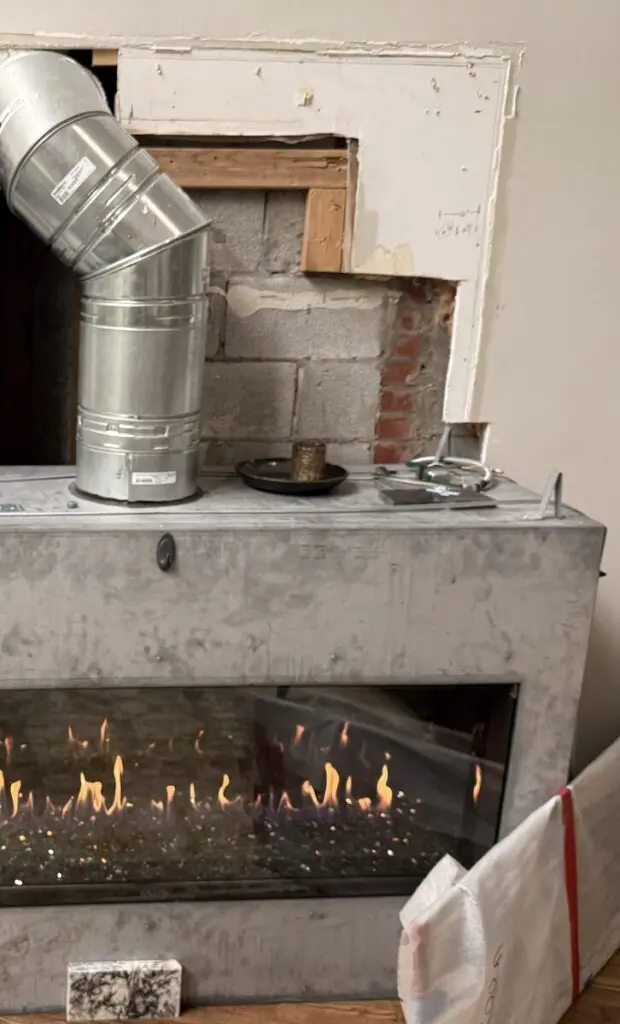
Most homeowners think of the fireplace as the box, but the box is roughly a third of the job. A typical installation runs like this. We start with a site visit to look at where you want the fireplace, what is behind that wall, where the vent can reasonably terminate, and whether gas service is nearby. From there we specify a unit that fits the opening, the room’s heat load, and the venting path available to it.
The install itself covers framing the enclosure to the manufacturer’s clearance specifications, setting the appliance, assembling and sealing the vent run through the wall or roof, connecting and pressure-checking the gas supply, and installing the surround, mantel, and hearth materials. We finish by firing the unit, checking the flame pattern, verifying draft, testing the safety shutoffs, and walking you through the controls. On a straightforward direct-vent job that is usually a one- to two-day visit; a project that involves opening a wall, running a new gas line, or building a chase takes longer.
Direct Vent, B-Vent, and Vent-Free: Choosing the Right System
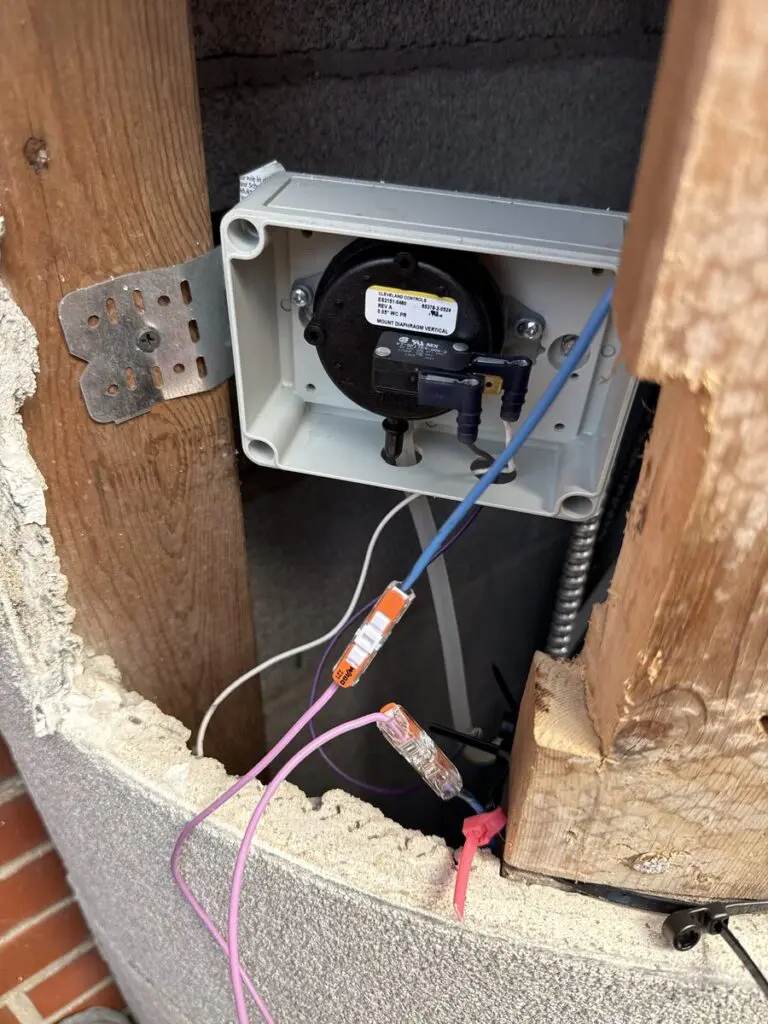
Venting is the decision that shapes everything else, so it is worth understanding the three families before you fall in love with a particular model.
Direct vent is what we install most often, and what we recommend for most Chicago-area homes. The firebox is sealed behind glass, and a coaxial pipe pulls combustion air in from outside while pushing exhaust out. Nothing is drawn from the room. That makes it efficient in a tight, well-insulated house, and it can vent horizontally through a sidewall, which is a real advantage in a home with no existing chimney.
B-vent units draw combustion air from inside the room and vent vertically through a flue. They tend to look more like a traditional open fire, but they are less efficient and they need a proper vertical vent path, which usually means an existing chimney.
Vent-free units need no flue at all. They are simple to place, but they put all combustion moisture and byproducts into the living space, and their use is restricted or prohibited in some Illinois jurisdictions and by many condo and HOA rules. We will tell you honestly whether a vent-free unit is appropriate for your situation, and often it is not.
Converting a Wood-Burning Fireplace to Gas
Conversions are one of our most common requests. Plenty of Chicago-area homes have a masonry fireplace that nobody uses because hauling wood, managing ash, and scheduling sweeps stopped being worth it. Converting that opening to gas brings it back into service with a switch or a remote.
There are three broad paths. A gas log set is the least invasive: we install burners and ceramic logs in the existing firebox and vent through the existing flue, which usually requires a properly sized stainless liner. A gas insert is a sealed unit that slides into the masonry opening and vents through a liner run up the existing chimney — far more efficient than logs, and it produces real heat. A full built-in replacement removes the old firebox entirely and is the most involved option.
Every conversion starts with an inspection of the existing chimney, because we need to know the flue is sound before we send appliance exhaust up it. A standard inspection is $200 to $300 (rates as of September 2026). If we find deteriorated masonry, a cracked crown, or a failing liner, we will show you what we found and price the repair separately rather than building a new appliance on top of an old problem.
Fireplace Inserts: Will One Fit My Existing Fireplace?
Not every insert fits every fireplace, which is the honest answer to a question we get constantly. What matters is the firebox opening — height, width, and especially depth — along with the flue size and the condition of the chimney. Manufacturers publish minimum opening dimensions for each model, and we measure against those before recommending anything.
Prefabricated metal fireplaces add a wrinkle: many are listed only for the specific insert their manufacturer approved, and dropping a third-party unit into them voids the listing. If you have a prefab, bring us the model and serial plate information, usually found inside the lower louver or on the firebox wall, and we will work from that.
What Drives the Cost of a Fireplace Installation
Fireplace installation pricing varies widely because the projects vary widely. The factors that move the number most are the appliance itself, the length and complexity of the vent run, whether a gas line already reaches the location, whether framing or drywall work is needed, the finish materials you choose for the surround and hearth, and whether the existing chimney needs work before it can serve the new unit.
Rather than quote a range that would not mean much, we price each project after seeing it. We give you a written price after we see the space, and the proposal itemizes appliance, venting, labor, and finish work separately so you can see exactly where the money goes and adjust. Check our current specials before you book.
Brands We Sell and Install
We are a dealer for a range of hearth manufacturers rather than a single-line shop, which means we can match the unit to the room instead of to our inventory. You can browse the lines we carry on our fireplace brands page, and we are an authorized Real Fyre dealer for gas log sets. If you are still shaping the look of the space, our fireplace design page covers surrounds, mantels, and hearth materials.
Gas Fireplace Repair, Cleaning, and Annual Service
Gas fireplaces are low-maintenance, not no-maintenance. Pilot assemblies foul, thermocouples and thermopiles weaken, glass gaskets flatten, blowers collect dust, and log sets drift out of position and start sooting. An annual service visit covers cleaning the burner and pilot assembly, checking gas pressure and the safety circuit, cleaning the glass and reseating the gasket, vacuuming the blower, and correcting log placement.
If your unit will not light, lights and then drops out, burns with a lazy yellow flame, or has started leaving black film on the glass, those are all things we repair. The same visit is a good time to have the chimney swept if the home also has a wood-burning flue.
Permits, Codes, and Why Installation Quality Matters
Fireplace and gas line work is permitted in most Chicago-area municipalities, and requirements differ village by village. We pull permits where they are required and install to manufacturer listings and the applicable mechanical and fuel gas codes. That matters beyond compliance: clearance-to-combustible violations, undersized or over-long vent runs, and improperly terminated vents are the failures that cause callbacks, and occasionally worse. Getting them right the first time is most of what you are paying for.
Where We Install Fireplaces
We work throughout Chicago and the north, northwest, and western suburbs, including Buffalo Grove, Deerfield, Northbrook, Glenview, Winnetka, Wilmette, Highland Park, Lake Forest, Barrington, Arlington Heights, Palatine, Evanston, Skokie, Elmhurst, Oak Brook, and Naperville. Our shop is at 741 Hastings Dr, Buffalo Grove, IL 60089. If you are not sure whether you are in range, call 847-994-4388 and ask.
Beyond installation we handle the rest of the system too: chimney repair, crown repair, chimney caps, tuckpointing, and full rebuilds.
Fireplace Installation FAQs
Can I install a gas fireplace in a house with no chimney?
Yes. A direct-vent unit can terminate horizontally through an exterior wall, so no chimney is required. This is the most common solution for additions, basements, and homes built without a masonry fireplace.
How long does a fireplace installation take?
A straightforward direct-vent installation into an existing framed opening is typically one to two days. Projects that require opening walls, running new gas line, building a chase, or custom stone and millwork run longer, and we give you a schedule with the estimate.
Can a fireplace insert go into any existing fireplace?
No. The insert has to fit the firebox opening’s height, width, and depth, and the chimney has to accept a properly sized liner. Prefabricated fireplaces are often listed only for inserts approved by their own manufacturer. We measure and check the model listing before recommending a unit.
Do I need a chimney inspection before converting to gas?
Yes. We inspect the flue before any conversion so we know it is sound enough to vent the new appliance. A standard inspection is $200 to $300, and anything we find gets documented and priced separately.
Is a gas fireplace expensive to run?
A modern direct-vent gas fireplace is efficient enough that many homeowners use it as zone heat, turning down the furnace and heating the room they are actually in. Operating cost depends on the unit’s BTU input, how long you run it, and current gas rates.
Do you service fireplaces you did not install?
Yes. We repair, clean, and service gas and wood-burning fireplaces regardless of who installed them, and we stock common parts for the major brands.
Who You Are Hiring
Chimney Monkey has been in business since 2017 and works out of our own shop in Buffalo Grove. We are members and sponsors of the National Chimney Sweep Guild — our partner Brett Conklin serves on the NCSG board as an At-Large director through 2027 — and we belong to the regional North Central Chimney Guild. Our technicians are NFI certified across wood-burning, gas and pellet appliances, and some hold SPRAT rope-access certification for work on tall stacks and steep roofs. More than 1,100 Google reviews.