
Outdoor Fireplace Restoration in Lake Bluff: Two Lakefront Shelters Rebuilt
Last updated: · By the Chimney Monkey team
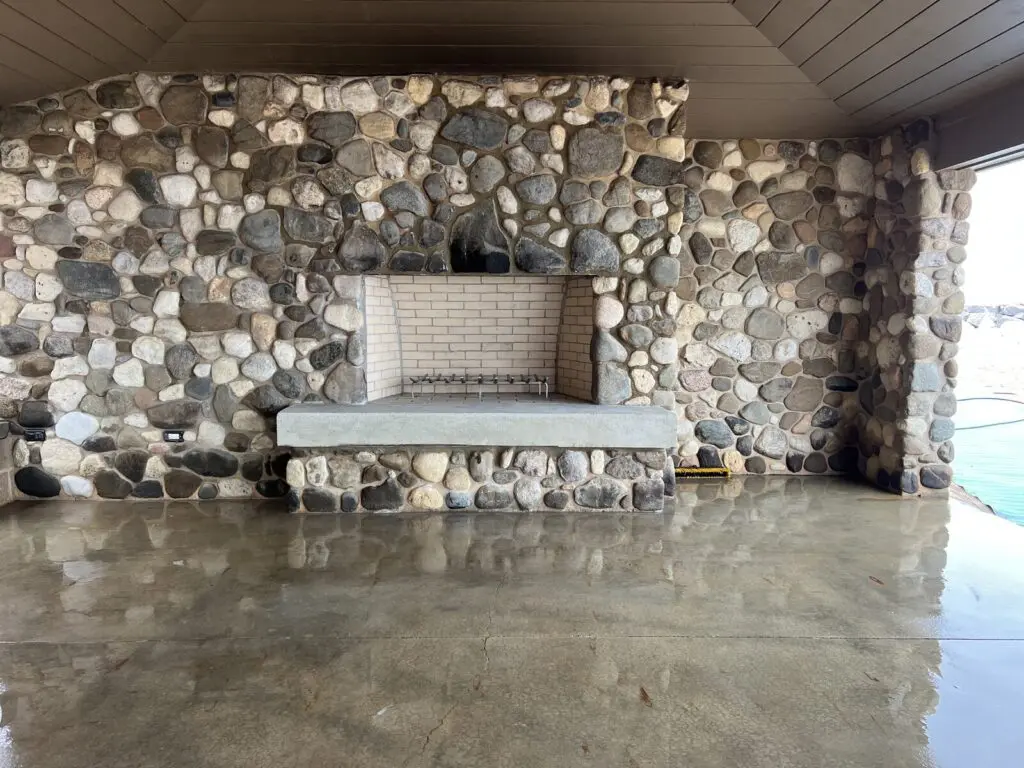
This outdoor fireplace restoration in Lake Bluff covered two wood-burning fieldstone fireplaces inside open-air beach shelters on the Lake Michigan shoreline.
Chimney Monkey has served the North Shore since 2017. We are an NCSG member company with NFI-certified technicians, a 4.9-star Google rating and more than 1,100 reviews.
In April 2026, our crew completed an outdoor fireplace restoration in Lake Bluff, Illinois, on two lakefront beach shelters. The south shelter got a full top-to-bottom restoration, from a new rain cap with spark arrestor down to the hearth. The north shelter received a partial firebox rebuild and an anchored stainless grate.
- 2open-air beach shelters
- 16completed work items
- 15″insulated stainless steel flue liner
- 9system layers restored, cap to hearth
What Did This Outdoor Fireplace Restoration in Lake Bluff Include?
The project covered 16 completed work items across two shelter fireplaces, with most of the work on the south shelter.
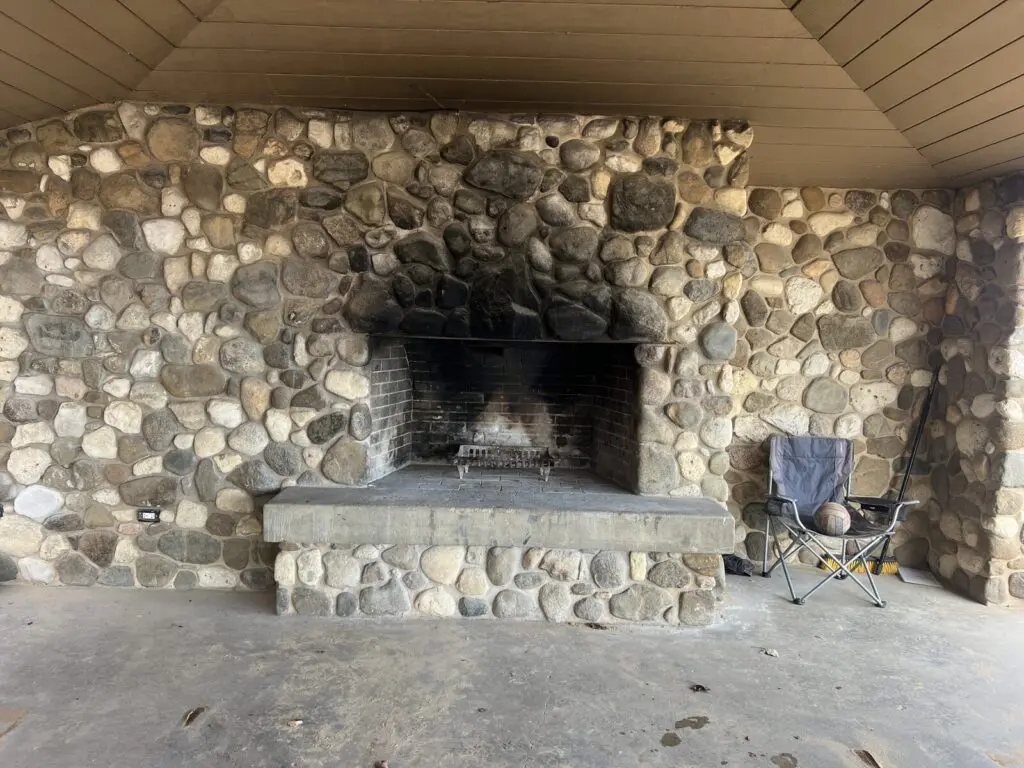
Both shelters sit right on the beach. Each one has a large wood-burning fireplace faced in rounded fieldstone, open to the weather on several sides. The south shelter chimney needed attention from the cap down to the hearth. By contrast, the north shelter only needed targeted firebox and grate work.
South shelter
Full system restoration · 12 items
- Stainless steel rain cap with spark arrestor
- Top flue tile replacement
- Full concrete crown rebuild
- Partial chimney rebuild
- Flashing replacement
- 15-inch insulated stainless flue liner
- Smoke chamber parging
- Full firebox rebuild, large and reinforced
- Anchored stainless fireplace grate
- Hearth extension replacement
- Smoke staining removal and tuckpointing on the stone face
- Chimney wash and waterproofing
North shelter
Targeted firebox repair · 4 items
- Partial firebox rebuild, large and reinforced
- Cracked or broken refractory bricks replaced as needed
- Firebox painted black for a uniform look
- Anchored stainless grate sized for a firebox over 38 inches wide
Not every fireplace needs everything. This shelter’s chimney and exterior did not need the same scope, so the work stayed inside the firebox.
Why Do Lakefront Outdoor Fireplaces Wear Out Faster?
Outdoor fireplaces near Lake Michigan face wind-driven rain, freeze-thaw cycles and heavy use, with no warm house around them to dry the masonry.
An indoor fireplace has a roof, walls and a heated home protecting most of the chimney. A beach shelter fireplace has none of that. As a result, moisture reaches the stone, mortar and firebox from almost every direction.
Here is what usually drives the damage:
- Water entry at the top. A cracked crown or missing cap lets rain run straight into the flue and masonry.
- Freeze-thaw cycles. Water inside brick and mortar expands when it freezes. Over several winters, that breaks joints and spalls brick.
- Exposed fireboxes. Rain and snow blow into an open shelter. Wet refractory brick that is heated again and again tends to crack sooner.
- Public use. Shared fireplaces see many fires and many users. Loose grates get moved, and fires are not always built the same way.
None of this means outdoor fireplaces are a bad idea. It simply means they need regular inspection and a design that sheds water well.
How Does a Top-to-Bottom Chimney Restoration Work?
A full restoration treats the fireplace as one connected system, with work running from the rain cap at the top down to the hearth.
Each layer protects the one below it. A new firebox under a leaking crown would fail early, so the south shelter work addressed every layer that showed damage.
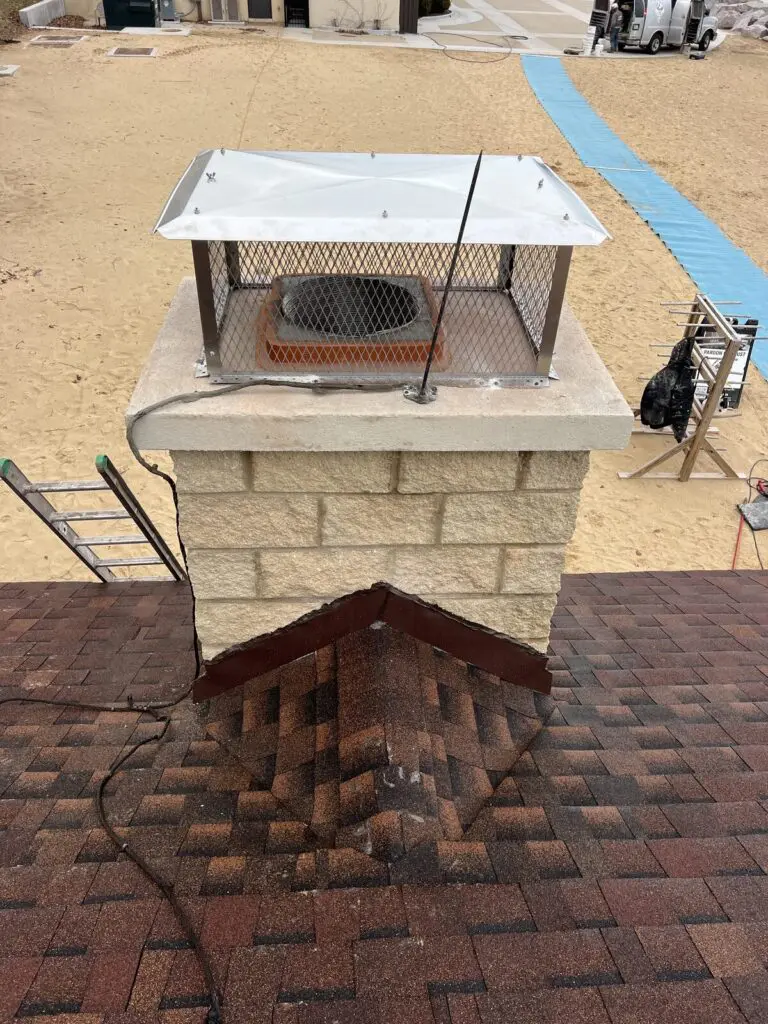
- 1 · Rain capStainless cap with spark arrestorKeeps out rain, snow, debris, birds and animals, and its mesh helps contain embers.
- 2 · Top tileNew terracotta top flue tileSupports the cap and resists moisture where the flue meets open air.
- 3 · CrownFull concrete crown rebuildA sloped concrete top with a drip edge that sheds water away from the chimney. Learn more about chimney crown repair.
- 4 · Chimney bodyPartial chimney rebuildDamaged masonry was torn down and rebuilt with the closest available block and mortar match.
- 5 · FlashingFlashing replacementNew metal flashing seals the joint where the chimney passes through the shelter roof. See our chimney flashing repair service.
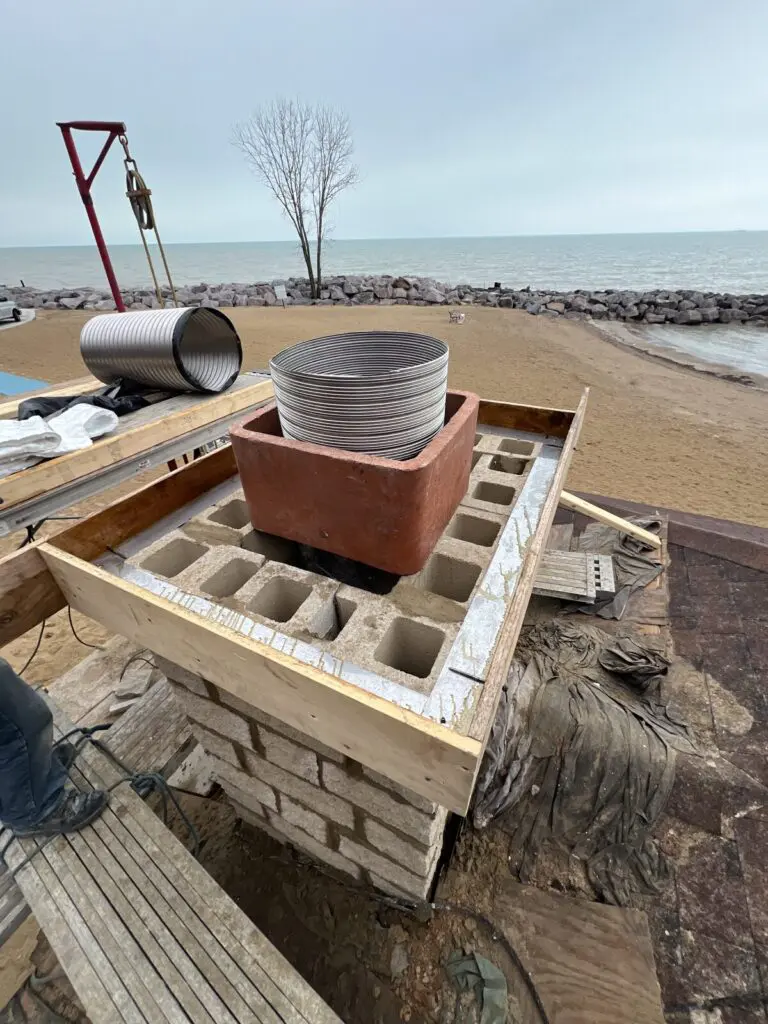
- 6 · Flue liner15-inch insulated stainless steel linerA continuous, sealed liner from the smoke chamber to the top of the chimney.
- 7 · Smoke chamberSmoke chamber pargingGaps, cracks and holes sealed with refractory parging so the corbeled brick is smooth.
- 8 · FireboxFull firebox rebuildAll refractory brick removed and replaced in a large, reinforced firebox.
- 9 · HearthHearth extension and anchored grateA new hearth in front of the opening plus a stainless grate fixed into the firebox floor.
Why the flue liner mattered
The liner is the part you never see, yet it does some of the most important work. A stainless steel liner gives smoke a smooth, sealed path out of the chimney. It also shields the surrounding masonry from heat and acidic moisture.
If the existing clay flue tiles need to come out, the crew breaks and removes them first. Then the insulated liner goes in and is secured. Learn more about our chimney liner installation.
Why a spark arrestor fits a beach shelter
Beach shelters sit near dune grass, trees and people. A rain cap with spark arrestor mesh helps keep embers inside the chimney instead of drifting across the beach. It does not replace safe fire practices, but it adds a useful layer of protection. Explore our rain cap installation options.
What Is the Difference Between a Partial and Full Firebox Rebuild?
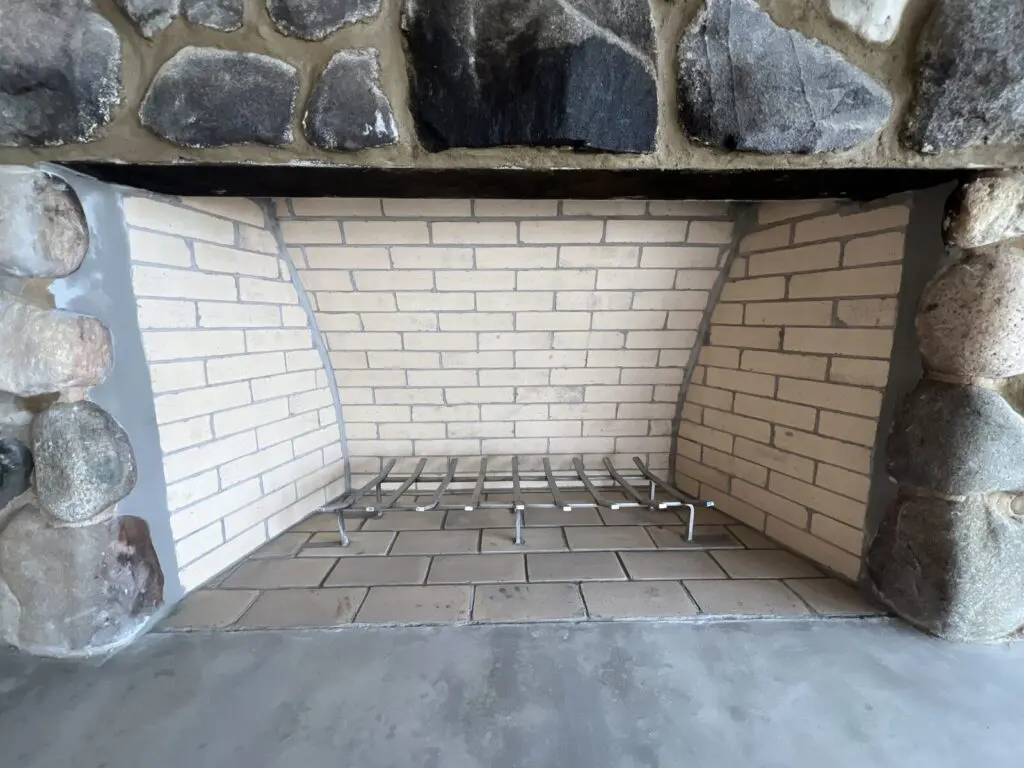
A partial rebuild replaces only cracked or broken refractory bricks, while a full rebuild removes and replaces every brick in the firebox.
This project used both approaches, which makes it a useful side-by-side example.
| Detail | South shelter: full rebuild | North shelter: partial rebuild |
|---|---|---|
| Bricks replaced | All refractory bricks | Only cracked or broken bricks, as needed |
| Firebox size | Large, reinforced | Large (wider than 32 inches), reinforced |
| Finish | New refractory brick face | Painted black for a uniform look |
| Grate | Custom anchored stainless grate | Anchored stainless grate for fireboxes over 38 inches wide |
| Best fit when | Damage is widespread or the rest of the system is also being restored | The firebox shell is sound and damage is localized |
Why anchor the grate?
Both new grates are stainless steel with longer legs and bottom anchors. The anchors fix the grate to the firebox hearth, so it cannot be dragged out or set in the wrong place. In a public shelter, that also helps prevent theft.
Meanwhile, the grate lifts logs so air can flow underneath. That supports a cleaner fire and protects the firebox floor.
How Did the Crew Keep a Public Beach Safe During the Work?
The crew set up scaffolding and a fenced work perimeter, so the public stayed clear of the roof and shelter work.
Working on a public lakefront is different from working at a private home. Beachgoers, walkers and park staff may pass by at any time. So the setup included:
- Scaffolding and work platforms for safe access to the chimney
- Caution tape barriers around the shelter and work zone
- Posted signage so visitors knew work was underway
- Delivery, assembly and removal of all access equipment
This same approach works for condo associations, HOAs and property managers who need repairs in shared spaces.
What Was Our Step-by-Step Process?
We followed a top-down sequence so each finished layer stays protected from the work happening below it.
- Inspect and documentWe reviewed both fireplaces and recorded visible conditions with photos.
- Set up access and the perimeterScaffolding, platforms and barriers went up before any demolition began.
- Restore the top of the chimneyThe crew completed the partial rebuild, new crown, top tile, flashing and rain cap.
- Reline the flueOld flue tiles came out where needed, and the insulated 15-inch stainless liner went in.
- Repair the smoke chamber and fireboxRefractory parging sealed the smoke chamber. Then the firebox was rebuilt and the grate anchored.
- Finish the face and hearthThe hearth extension was replaced, smoke staining was cleaned and the stone face was tuckpointed.
- Wash and waterproofFinally, the chimney was washed and treated with a vapor-permeable water repellent.
Sequence shown is the typical order for this scope. Weather, curing time and site access can change the order on any given day.
What Does an Outdoor Fireplace Restoration Typically Cost?
A full outdoor fireplace restoration in Lake Bluff and the North Shore commonly runs $20,000 to $35,000, while a targeted firebox repair costs far less.
Full restoration of one large outdoor fireplace: cap, crown, partial rebuild, flashing, liner, smoke chamber, firebox and hearth.
Targeted repair: partial firebox rebuild plus a new anchored stainless grate.
Pricing varies with chimney height, firebox size, materials, condition and site access. Safe access equipment is usually a separate line item, too. These are general market ranges, not a quote. We price each project after an inspection.
What Does This Project Mean for Your Fireplace?
The same warning signs apply to any outdoor masonry fireplace on the North Shore, whether it sits on a beach, patio or courtyard.
Signs your outdoor fireplace may need attention
- Cracked, crumbling or missing crown concrete at the top of the chimney
- Gaps or loose mortar between fieldstone or brick
- Cracked or missing firebrick inside the firebox
- Heavy smoke staining above the opening
- No rain cap, or a cap without spark arrestor mesh
- A grate that moves around or keeps disappearing
Start with a professional chimney inspection. NFPA 211 calls for chimneys, fireplaces and vents to be inspected once a year. An inspection shows whether you need a small fix or a broader chimney repair plan.
We serve homeowners, associations and public properties throughout Lake Bluff, Lake Forest, Highland Park and the rest of the North Shore.
Key takeaways
- Lakefront outdoor fireplaces wear faster because water, wind and freeze-thaw reach them from every side.
- A full restoration works top-down: cap, crown, chimney body, flashing, liner, smoke chamber, firebox, then hearth.
- A partial firebox rebuild is often enough when the firebox shell is sound and damage is localized.
- Anchored stainless grates suit public fireplaces because they stay in place and resist theft.
- An annual inspection is the best first step before any repair decision.
Frequently Asked Questions
Can the original fieldstone face be kept during repairs?
Yes, in most cases. On this project, the stone face stayed in place. The crew tuckpointed the joints and removed smoke staining instead of replacing the stone. Some older stone and mortar can be fragile, though, so a small amount of breakage is always possible during firebox work.
Will smoke stains come off fieldstone completely?
Not always. Smoke staining is removed as much as possible, but some staining may remain, especially on rough or porous stone. Rounded fieldstone has many textured surfaces where soot settles. Cleaning usually makes a clear visual difference, even when faint shadows stay behind.
Does waterproofing make a stone chimney maintenance-free?
No. Waterproofing reduces how much water the brick and mortar absorb, which slows freeze-thaw damage. We use a vapor-permeable repellent, so moisture inside can still escape. Even so, crowns, flashing and caps still wear over time. That is why an annual chimney inspection remains the best way to catch problems early.
Do outdoor masonry fireplaces need a flue liner?
Masonry chimneys generally need a sound flue lining, whether the fireplace is indoors or outdoors. The liner protects the surrounding masonry from heat, smoke and moisture. When original clay tiles are cracked or failing, a stainless steel liner is a common fix. An inspection confirms what your chimney actually needs.
How long does a full outdoor fireplace restoration take?
It depends on scope, weather and curing time. A targeted firebox repair may take a single visit. A full restoration with a new crown, partial rebuild and liner takes longer. Concrete and mortar need dry weather above freezing to cure properly. We share a realistic timeline after the inspection.
Why does a crown need a full rebuild instead of a patch?
Patching works when cracks are minor and the crown is still solid. When the concrete is crumbling or broken through, a patch will not hold. A full rebuild creates a new sloped crown with a drip edge that sheds water away from the chimney. Our crown repair page explains both options.
Do you work on commercial and public-property fireplaces?
Yes. We work with park districts, condo associations, HOAs and property managers, as well as homeowners. Shared spaces usually need a fenced work perimeter, signage and scaffolding, like this Lake Bluff project. We plan that setup before work begins so the public stays clear.
What is smoke chamber parging?
The smoke chamber is the sloped area above the firebox and damper. In many older fireplaces, its brick is stepped and rough. Parging coats that area with refractory mortar to seal gaps, cracks and holes and create a smooth surface. That helps smoke move up the flue more efficiently.
Standards referenced: NFPA 211, Standard for Chimneys, Fireplaces, Vents, and Solid Fuel–Burning Appliances; International Residential Code (IRC) Chapter 10, Chimneys and Fireplaces. This recap is based on the completed work order for this project. Client details are kept private.
Not sure what service your home needs? Start with a professional evaluation so the system can be identified, the visible conditions can be documented, and the right next step can be recommended.
Have a question about your chimney, fireplace, venting system, gutters, or dryer vent? Schedule a professional visit and get clear recommendations based on the actual condition of your home.
Categories: Chimney Cap Chimney Care Chimney Exterior Services Lake Bluff Lake County Illinois