
Roofline Chimney Rebuild in Mundelein
Quick answer
This roofline chimney rebuild in Mundelein replaced the damaged brick above the roof. The crew also built a new concrete crown, resealed the flashing, and waterproofed the exterior masonry.
Instead of treating one symptom, the project restored every part of the upper chimney that sheds water. The photos below follow the job from damaged brick to finished chimney.
Project at a glance
- Location: Mundelein, IL
- Rebuilt the chimney from the roofline up, as needed
- New concrete chimney crown
- Resealed the existing flashing
- Chimney washing and waterproofing
- Reused sound existing brick where practical
- New brick and mortar chosen to blend in
Why Did the Upper Chimney Need More Than a Small Repair?
Before this roofline chimney rebuild in Mundelein, the brick above the roof had worn past the point where small repairs could help. Exterior chimney masonry takes the full force of rain, snow, and Illinois freeze-thaw cycles. Over time, water soaks into porous brick and mortar. When that trapped water freezes, it expands and slowly weakens the masonry.
Eventually, the damage spreads beyond a few open joints. Spalling, crumbling brick, loose units, and crown cracks often mean the masonry can no longer stay in service.
For this Mundelein home, the scope called for rebuilding the damaged chimney from the roofline up, as needed. So the work went well beyond filling joints or adding a surface coating.
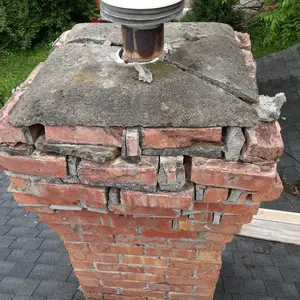
Visible Deterioration at the Chimney Top
The first photo shows heavy wear around the upper chimney. In addition, several brick courses and parts of the crown show more than one isolated crack.
Because damaged masonry keeps soaking up water, leaving it in place lets the decay continue. In cases like this, a rebuild gives the new crown a solid base.
What Does a Roofline Chimney Rebuild Involve?
A roofline rebuild replaces only the damaged part of the chimney, not the whole structure. On this project, the crew focused on the masonry above the roof.
- Remove failed masonry. Technicians take down brick that can no longer stay in service.
- Rebuild the section. They rebuild the upper chimney and reuse sound brick where practical.
- Blend new materials. When the job needs new brick, the crew picks brick and mortar that blend with the original.
- Create a stable base. The finished masonry supports the new crown and other water-control parts.
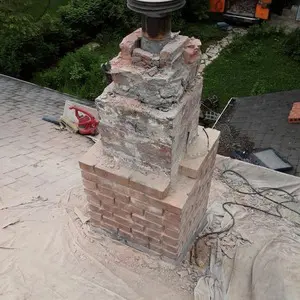
Removing the Damaged Upper Masonry
Next, the second photo captures the chimney mid-rebuild. Most of the worn upper section has already come down, while sound lower masonry stays in place.
In fact, this stage shows how rebuilding differs from covering up damage. Rather than hiding weak brick, technicians remove it and then rebuild.
To learn more about partial rebuilds, see Chimney Monkey’s chimney rebuild and restoration service.
How Does the New Crown Protect the Rebuilt Masonry?
The new concrete crown sheds water off the chimney top, so rain drains away from the fresh brick. After the rebuild, the crew built a new crown around the flue.
What the crown design includes
- An expansion joint around the flue tile
- An overhang past the brick walls
- A drip edge that sheds water clear of the masonry
- A sloped top that moves rain and snow away from the flue
This design matters most after a rebuild. The fresh masonry still needs protection from the same moisture that caused the original damage.
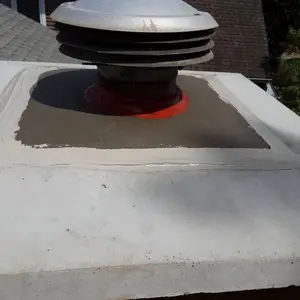
Why Crown Geometry Matters
The third photo gives a close look at the finished chimney top. Specifically, the crown reaches past the brick walls and forms a broad surface around the flue.
In other words, the crown is not decorative concrete. Its slope, overhang, and gap around the flue all work to manage water.
Chimney Monkey’s chimney crown repair and replacement information explains when to repair a crown and when to replace it.
Why Did the Project Include Flashing Resealing?
Flashing seals the joint where the chimney meets the roof, an area the crown cannot protect. Accordingly, the crew resealed the existing sheet-metal flashing on this job.
While the crown guards the top of the masonry, flashing handles water at the roofline. As a result, a chimney can have a sound crown and still leak near the roof. Likewise, flashing work alone won’t fix failed brick above it.
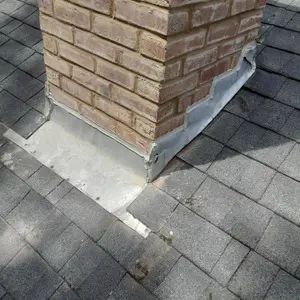
A Separate Water-Management Detail
The fourth photo focuses on the base of the chimney, where the flashing meets the shingles. In particular, this close view shows why leak prevention needs attention at more than one height.
Notably, this project resealed the flashing rather than replacing it. Stating that clearly keeps the scope accurate.
How Did Washing and Waterproofing Add Protection?
Washing and waterproofing gave the repaired masonry an extra layer of defense against moisture. First, the crew cleaned the chimney to remove dirt, organic growth, and residue that could block the treatment.
Next, they applied a vapor-permeable masonry water repellent. This type of product helps reduce how much liquid water brick and mortar absorb. At the same time, it still lets normal moisture vapor escape.
Important
Waterproofing does not replace structural repair. Failed brick, damaged crowns, open mortar joints, and flashing problems each need their own fix first.
For more details, see Chimney Monkey’s masonry waterproofing service.
What Does the Finished Roofline Chimney Rebuild in Mundelein Look Like?
As a result, the finished chimney now has rebuilt brickwork, a new concrete crown, and renewed roofline transitions. Because the project treated several water-exposed parts together, it goes beyond a simple brick replacement. Each part also plays its own role in the restoration.
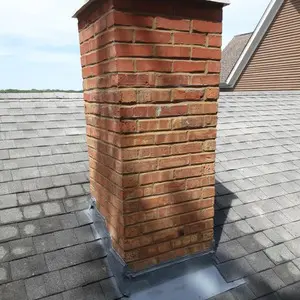
A Clear Before-and-After Transformation
The fifth photo shows the restored chimney after the main exterior work. It shows rebuilt brick courses, a clean roof transition, and a top that looks very different from the damaged chimney shown earlier.
Most importantly, the photo comes from the actual Mundelein project, not a stock image.
How Do the Four Repair Areas Work Together?
In this roofline chimney rebuild in Mundelein, each repair area solves a different problem, so fixing just one can leave another path for water.
| Project component | Role in the restoration |
|---|---|
| Roofline rebuild | Replaced damaged upper masonry that could no longer stay in service. |
| Concrete crown | Created a new water-shedding surface at the chimney top. |
| Flashing reseal | Sealed the joint where the chimney passes through the roof. |
| Waterproofing | Reduced water absorption through the repaired exterior masonry. |
What Does This Mundelein Chimney Restoration Show?
This project shows why it pays to look at a chimney as a whole system, not just one visible crack. After all, water affects upper brick, the crown, the roof joint, and porous surfaces in different ways.
First, the damaged masonry needed a rebuild above the roofline. Next, a new crown protected that rebuild from above. Meanwhile, resealed flashing handled the roof joint. Finally, washing and waterproofing added one more layer of protection.
This condition-based approach ties each repair to the part it fixes.
Roofline Chimney Rebuild FAQs
What is a roofline chimney rebuild?
A roofline chimney rebuild removes and rebuilds the damaged part of a masonry chimney above the roof. Sound masonry below the roofline stays in place. The exact scope depends on how far the damage reaches, which a professional chimney inspection can confirm.
Can you reuse old brick in a chimney rebuild?
Yes, sound existing brick can often go back into the rebuilt section. When the job needs new brick, the crew chooses brick and mortar that blend as closely as practical with the original chimney. That helps the repaired section match the rest of the house.
Why rebuild the crown after rebuilding the chimney?
The crown protects the masonry at the top of the chimney. A well-built crown uses slope, overhang, and a gap around the flue to direct water away from the rebuilt walls. Without it, fresh brick faces the same moisture that caused the first failure.
Is flashing repair the same as crown repair?
No. Flashing seals the joint between the chimney and the roof, while the crown covers the top of the masonry. Each area fails in its own way. For that reason, each one needs its own evaluation and repair plan.
Why waterproof masonry after rebuilding it?
Once repairs are complete, a vapor-permeable water repellent helps reduce how much liquid water the brick and mortar absorb. It still lets normal moisture vapor escape. However, waterproofing works best on sound masonry, so it comes after structural repairs, not instead of them.
Professional Chimney Restoration in Mundelein
This roofline chimney rebuild in Mundelein restored far more than damaged brick. Overall, it combined a masonry rebuild, a new concrete crown, flashing resealing, and exterior waterproofing.
Ultimately, the right repair depends on how much sound masonry remains and where water has done damage. That is why a professional evaluation helps show whether targeted repair, a partial rebuild, or broader restoration makes the most sense.
Not sure what service your home needs? Start with a professional evaluation so the system can be identified, the visible conditions can be documented, and the right next step can be recommended.
Have a question about your chimney, fireplace, venting system, gutters, or dryer vent? Schedule a professional visit and get clear recommendations based on the actual condition of your home.
Categories: Masonry Chimney Repair