
Natural Stone Chimney Repair in South Barrington: New Crown, Tuckpointing, and Waterproofing
Natural stone chimney repair in South Barrington often means fixing more than one part of the chimney. On this project, Chimney Monkey repointed worn mortar joints, removed and rebuilt an extra-large concrete crown, washed and waterproofed the stone, and resealed the flashing at the roof line. Each step solved a different water problem.
Project at a glance
- Location: South Barrington, Illinois
- Chimney type: Natural stone masonry with several flue openings
- Mortar: Tuckpointing of worn and loose joints
- Crown: Full tear-out and rebuild of an extra-large concrete crown
- Surface: Masonry wash plus a vapor-permeable water repellent
- Roof line: Reseal of the existing chimney flashing
Why Is a Natural Stone Chimney Harder to Repair Than Brick?
A stone chimney is harder to repair because every stone has its own size, shape, and color, so the mortar joints are uneven. Brick sits in a neat grid. Stone does not.
As a result, the mortar does two jobs. It holds the stones together, and it shapes how the chimney looks. When that mortar wears out, the repair must follow each irregular edge. For that reason, careful joint prep and finishing decide whether the new work blends in.

What the Chimney Looked Like Before the Work
This first photo shows the full chimney and roof. From the ground, the stone still looks like one solid feature.
Up close, though, a technician has to check each mortar joint, the crown, and the roof flashing. In short, a chimney can look fine from a distance while single parts still need repair.
How Does Tuckpointing Repair a Natural Stone Chimney?
Tuckpointing replaces worn mortar between the stones while keeping the sound stone in place. On this South Barrington home, it was the largest part of the masonry work.
The scope called for removing loose or failed mortar and packing in new mortar to restore joint depth and finish. Unlike a full masonry rebuild, tuckpointing focuses on the joints. The basic steps look like this:
- Remove failed mortar from the damaged joints.
- Clean the joints so the new mortar can bond.
- Pack in fresh mortar and tool it to match the stone’s joint style.
With natural stone, the joint is part of the look. So the new mortar has to work with uneven edges, mixed stone sizes, and the existing joint profile.
Good to know: Tuckpointing fixes mortar joints only. It does not replace sound stone, rebuild a crown, or fix flashing. Each of those needs its own check.
Why Did This South Barrington Stone Chimney Need a Full Crown Rebuild?
This chimney got a full crown rebuild because the plan called for replacing the old crown instead of coating it. The crew removed the old crown and formed a new concrete one sized for the wide stone chimney.
A chimney crown is the concrete slab that caps the top of the masonry. It sits in one of the most exposed spots on the house. Its shape moves rain and snowmelt away from the stone below. The new crown includes three key details:
- A slope that moves water outward, away from the flues.
- A gap around each flue tile.
- An overhang with a drip edge, so water falls clear of the walls.
Our chimney crown repair and replacement service explains why the crown should be checked apart from the walls below.
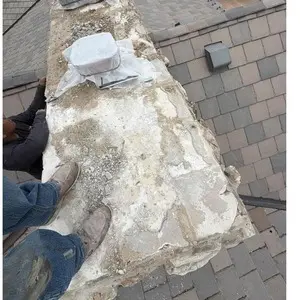
The Old Crown Before the Rebuild
This second photo shows the top of the chimney before work began. The old surface looks worn and uneven, and several areas around the wide top show heavy wear.
Rather than coat over it, the approved plan replaced the crown entirely. That way, the repair fixed the crown itself, not just the visible surface.
How Is a Large Concrete Chimney Crown Rebuilt?
A large crown is rebuilt in four stages: tear-out, forming, pouring, and curing. Each stage builds on the last one.
- Tear-out: Remove the old crown and prep the chimney top.
- Forming: Set forms that define the outer edge and the overhang.
- Pouring: Place fresh concrete around the flue openings with a slope that sheds water.
- Curing: Give the concrete time to harden before it faces the weather.
Because concrete needs time to cure, crown work depends on good weather as well as good building methods.
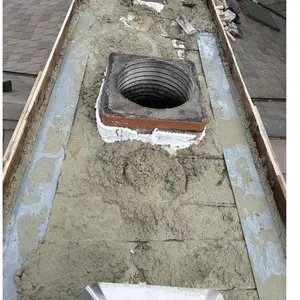
The Crown Mid-Build
This photo shows the new crown while the concrete work was underway. Temporary forms hold the outer edge, and the flue openings stay clear.
For homeowners, a mid-build photo teaches more than a finished shot. It proves a full rebuild is new concrete work, not a thin skim coat over the old crown.
What Does the Finished Crown Do?
The finished crown is now the main water-shedding surface at the top of the chimney. Its size stands out on a broad stone chimney like this one.
The new slab extends past the chimney walls. In addition, it wraps several separate vent openings in one continuous concrete surface.
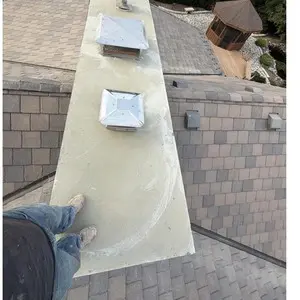
Before vs. After at the Chimney Top
Compare this photo with the worn crown shown earlier. Where the old surface was uneven, the chimney now has one smooth, newly formed top.
Just as important, the photo shows this exact crown, not a stock image. As a result, readers can match the finished work to the repair scope.
Why Was the Stone Waterproofed After the Masonry Repair?
Waterproofing came last because a sealer protects sound masonry, but it cannot fix broken joints or a failed crown. First, the crew washed the stone to remove grime and plant growth. Then, they applied a vapor-permeable water repellent to the stone and mortar.
Vapor-permeable means the sealer blocks liquid water but still lets trapped moisture escape as vapor. Even when the stone is durable, the mortar between the stones still benefits from that moisture control.
That order matters on every natural stone chimney repair in South Barrington. Our masonry waterproofing service follows the same rule: repair first, then protect.
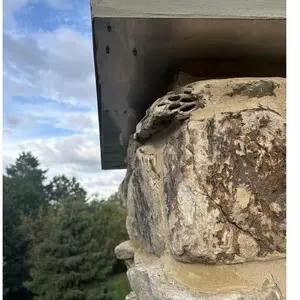
Close-Up of the Restored Stonework
This close-up shows the finished stonework. The irregular stone stays the main visual feature, while new mortar fills and joins the gaps between pieces.
Above the stone, you can also see the new crown’s overhang. In one photo, both repairs are visible: renewed joints below and a new water-shedding crown above.
Was the Flashing Replaced or Resealed?
The existing flashing was resealed, not replaced. Flashing is the metal seal where the roof meets the chimney, and it steers water across that joint.
For this project, the work included cleaning the flashing area and applying a suitable sealant to strengthen the existing seal.
However, resealing and replacement are not the same. Damaged or poorly installed flashing may need full chimney flashing repair instead. Our chimney leak repair guide explains how flashing, crowns, and masonry can each let water in.
How Do the Four Repairs Work Together?
This natural stone chimney repair in South Barrington used four separate fixes. Each one protects a different part of the chimney, so one cannot stand in for another.
| Chimney area | What was done | Job it does |
|---|---|---|
| Mortar joints | Tuckpointing | Holds the stones together and closes gaps |
| Chimney crown | Full concrete rebuild | Sheds water from the top |
| Stone surface | Wash and vapor-permeable waterproofing | Cuts water absorption |
| Roof line | Flashing reseal | Seals the roof-to-chimney joint |
In short, the crown handles water from above, the mortar binds the stone, the sealer limits absorption, and the flashing guards the roof line.
What This Natural Stone Chimney Repair in South Barrington Shows
The main lesson is simple: check each chimney part on its own before choosing a repair. The stone walls, mortar, crown, sealer, and flashing all affect the chimney’s health. However, each one does a different job.
First, worn mortar got targeted joint repair. Next, the old crown was removed and rebuilt instead of resurfaced. After the masonry work, washing and waterproofing protected the stone. Finally, the flashing got its own reseal at the roof line.
For stone chimney owners, this approach makes repair advice easier to follow. A professional chimney inspection can show which parts need work and which can stay as they are.
Signs Your Natural Stone Chimney May Need Repair
- Crumbling, sandy, or missing mortar between stones
- Cracks, chips, or a worn surface on the crown
- Water stains on ceilings or walls near the chimney
- White, powdery deposits on the stone (called efflorescence)
- Gaps or loose sealant where the roof meets the chimney
Frequently Asked Questions
Can a natural stone chimney be repaired with tuckpointing?
Yes. Tuckpointing works on stone chimneys as well as brick. The technician removes failed mortar between the stones and packs in compatible new mortar. Sound stone stays in place, so the chimney keeps its original look. Because stone joints are irregular, the finishing step takes more care than it does on a brick grid.
When does a chimney crown need a full replacement instead of a patch?
A full replacement makes sense when the old crown is too worn or poorly built for a coating or patch to last. In that case, the crew removes the crown and forms a new concrete one. The new crown gets a proper slope, a gap around the flue tile, and an overhang with a drip edge.
Does waterproofing replace tuckpointing?
No. Waterproofing and tuckpointing do different jobs. A water repellent cuts the amount of liquid water the masonry absorbs, while tuckpointing rebuilds failed mortar joints. Sealing over broken joints does not fix them, so repairs should come first. On this South Barrington chimney, the crew finished the masonry and crown work before applying the sealer.
Should a stone chimney be waterproofed?
Often, yes. Many stones resist water well, but the mortar joints between them still absorb moisture. A vapor-permeable water repellent helps protect the whole masonry surface while still letting trapped moisture escape. A technician should first confirm the stone and mortar are sound, since a sealer is not a repair.
Is flashing resealing the same as flashing replacement?
No. Resealing adds fresh sealant to flashing that is still in usable shape. Replacement removes the old metal and installs new flashing. Damaged, rusted, or poorly installed flashing usually needs replacement. On this project, the scope called for cleaning and resealing the existing flashing rather than replacing it.
Why does weather matter for a chimney crown rebuild?
Fresh concrete needs time to cure before it faces rain, frost, or strong sun. Pouring in very cold or wet weather can weaken a new crown. For that reason, crews plan crown rebuilds around the forecast. In the Chicago suburbs, that often means scheduling exterior masonry work during milder months.
Professional Natural Stone Chimney Repair in South Barrington
Chimney Monkey handles natural stone chimney repair in South Barrington and across the northwest suburbs from our base in Buffalo Grove. This project combined tuckpointing, a new extra-large concrete crown, washing and waterproofing, and a flashing reseal in one coordinated job.
The photos follow the work from the original chimney, through crown building, to the restored stone and finished top. Above all, stone chimney repair should follow the real condition of the structure. Checking the mortar, crown, stone surface, and flashing one by one leads to a plan that fits each part.
Not sure what service your home needs? Start with a professional evaluation so the system can be identified, the visible conditions can be documented, and the right next step can be recommended.
Have a question about your chimney, fireplace, venting system, gutters, or dryer vent? Schedule a professional visit and get clear recommendations based on the actual condition of your home.
Categories: Barrington Chimney Care Chimney Exterior Services Cook County Illinois Local Services