
 Why Is Water Leaking Into My Utility Room Around the Chimney?
In short: Chimney chase leak repair starts with figuring out why water is getting in. Usually the cause is a rusted chase cover, damaged flashing, or a vent system that no longer fits the appliance it serves. Warm exhaust gases carry water vapor. An oversized or poorly sized vent lets that vapor cool and condense before it escapes. The trapped moisture rusts the metal chase top from the inside and slowly rots the wood framing underneath. Once rust holes form, rainwater gets in too. Homeowners often see the damage first as a stain in the utility room, before they notice anything on the roof.
Chimney Monkey sees this pattern often in homes built during the 1980s, 1990s, and early 2000s. It shows up throughout Buffalo Grove and nearby suburbs. Builders in that era commonly used a framed, factory-built chimney chase instead of a masonry chimney. It was faster and cheaper to build. Many of those original chases are now decades old and reaching the end of their service life.
1. What Is a Chimney Chase?
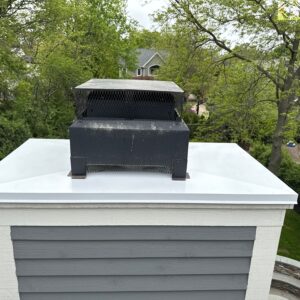
A chimney chase is a framed enclosure that surrounds factory-built metal vent pipes for a furnace, water heater, or fireplace. It isn’t a masonry chimney at all. Builders typically frame it in wood and finish it with siding or stucco to match the house. A metal or fiber-cement cover, often called a chase top or chase cover, caps the structure. It seals the chase against weather while letting the vent pipes pass through.
2. What Is the Difference Between a Masonry Chimney and a Prefabricated Chimney Chase?
A masonry chimney is built from brick, block, or stone with a clay or metal flue liner inside. A prefabricated chimney chase is a wood-framed box clad in siding, built around factory-made metal vent pipe instead of masonry. The two age differently. Masonry chimneys crack and their mortar erodes, while chases rust at the metal components and rot at the wood framing.
3. Why Do Utility Chimneys Rust Out?
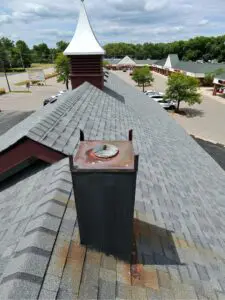
Constant moisture is the main cause. Condensation forms inside the vent system, and rain reaches the exterior metal components over time. Builder-grade chase covers are often thin galvanized steel, and their protective coating breaks down after years of that exposure. Once the coating fails, ordinary rust takes over and eventually eats through the metal.
4. Why Do So Many Builder-Grade Chimney Chases Fail?
Many of these chases used cost-driven, code-minimum materials when builders installed them decades ago. Those materials weren’t built for indefinite service. Most original chases from the 1980s through early 2000s are now well past a reasonable lifespan. Age, combined with years of condensation and weather exposure, makes failure common. It isn’t usually a sign of poor upkeep on any one home.
5. Why Is Water Leaking Into My Utility Room?
Water usually travels down inside a deteriorated chase and follows the vent pipe down to the room below. Rust holes in the chase top, or failed flashing around it, let rain and melting snow enter. From there, water runs straight down the inside of the chase. The vent pipes pass through the ceiling into the utility room, so that’s often where the water shows up first.
6. Why Is My Furnace Vent Chimney Leaking?
Standard-efficiency furnaces still vent through metal pipe inside the chase. The same rust and moisture problems apply directly to them. A furnace vent leak often points to a deteriorated chase top, failed flashing, or vent pipe that has rusted through. It can also follow an incorrectly sized vent installed during a past furnace replacement.
7. Why Is My Water Heater Chimney Leaking?
This often points to an “orphaned” water heater. A high-efficiency furnace upgrade often adds its own separate venting. That frequently leaves the water heater alone on the old metal chimney vent, which was originally sized for both appliances together. The water heater alone often can’t produce enough heat to keep that oversized vent warm. Exhaust gases condense inside it as a result, and the extra moisture corrodes the chase and vent components faster than normal.
8. Can Condensation Destroy a Chimney Chase?
Yes, and it’s often the first cause, even before rain becomes a factor. Exhaust gases from a furnace or water heater carry water vapor. An oversized or mismatched vent lets those gases cool too quickly and condense inside the vent system. That moisture rusts metal components from the inside and dampens nearby framing, often before any exterior rust holes appear.
9. What Happens When the Chimney Chase Top Rusts Away?
Once the chase top rusts through, rain enters directly through the resulting holes instead of running off. Water then travels down inside the framed walls of the chase, soaking insulation and framing along the way. Left alone, water eventually reaches the ceiling or wall below. It shows up as a leak inside the house rather than an obvious problem on the roof.
10. Why Does the Framing Inside the Chase Begin to Rot?
Standard wood framing was never built to handle constant moisture. A chase also provides no way for trapped water to dry out. Once water gets past a failed chase cover or flashing, it saturates the studs and sheathing inside. Without airflow to dry the wood, rot sets in and can spread for years before it becomes visible from outside.
11. What Are the Warning Signs That a Chimney Chase Needs Replacement?
 11. What Are the Warning Signs That a Chimney Chase Needs Replacement?
Several visible clues usually show up well before a chase fails completely. Homeowners typically notice one or more of the following:
- Water stains on the utility room ceiling or nearby walls
- Dripping water around the chimney chase or vent pipes
- Wet drywall, a musty or moldy smell, or soft, spongy wood near the chase
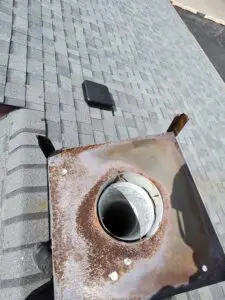
- Rust streaks, a visibly rusted chase cover, or missing sections of metal
- Loose siding or deteriorated trim around the chase
- Moisture appearing around the furnace or water heater vent
- Stains that show up after heavy rain, or during cold winter condensation
Many homeowners assume the roof is leaking when the deteriorated chase is the actual cause.
12. Can I Repair Only the Chase Top?
Sometimes, yes — if the framing underneath is still dry and structurally sound. In that case, a lighter repair can resolve the leak. That means replacing the chase cover, any rusted vent components, deteriorated flashing, and the rain cap. A technician needs to confirm the framing hasn’t already taken on moisture damage before recommending this option.
13. When Does the Entire Chase Need Replacement?
A full rebuild becomes necessary once water has reached and damaged the framing. It’s also needed once a chase has been deteriorating for years without repair. That typically means rebuilding the framing and siding, correcting the vent height or sizing, and installing a new chase cover. Chimney Monkey recommends this level of repair only when inspection shows the damage has gone beyond the surface.
14. Can a Damaged Chase Affect Furnace or Water Heater Venting?
Yes. A compromised chase can let in outside air, moisture, and even pests, all of which can interfere with proper draft. Rusted-through sections of vent pipe can also reduce airflow. They can even let combustion byproducts escape where they shouldn’t, which is a safety concern as well as a structural one. Chimney Monkey checks the venting itself, not just the chase around it, during an inspection.
15. Should the Venting System Be Resized During Repairs?
Often, yes. Vent sizing should match the specific appliance connected to it. A mismatch is one of the more common root causes of chase failure. This shows up most often after a furnace replacement leaves a water heater on a vent that’s now too large for it. Correcting the vent size or height during repairs helps prevent the same condensation problem from coming back.
16. How Can Chimney Monkey Inspect My Chimney Chase?
An inspection typically works from the outside in. It usually includes:
- An exterior visual inspection of the chase, siding, and trim
- A roof inspection around the base of the chase
- Evaluation of the chase top and its condition
- Inspection of the vent termination and rain cap
- A vent sizing evaluation for the connected appliances
- An assessment of any moisture or water damage found
- A framing inspection wherever it’s safely accessible
- Photo documentation of the findings
Chimney Monkey follows this with a specific recommendation for repair or full replacement, based on what the inspection actually finds.
17. Who Handles Chimney Chase Leak Repair Near Chicago?
Chimney Monkey provides chimney chase leak repair and inspection from its base in Buffalo Grove, Illinois. The company serves Chicago and the surrounding suburbs. It handles everything from a chase cover replacement to a full rebuild, plus related furnace venting and fireplace services.
Where This Problem Shows Up
Chimney Monkey encounters deteriorated utility chimney chases throughout Chicago and the North Shore and northwest suburbs. That includes Buffalo Grove, Deerfield, Northbrook, Glenview, Highland Park, Lake Forest, and Lake Bluff. It also includes Lincolnshire, Vernon Hills, Arlington Heights, Palatine, Mount Prospect, and Wheeling. Skokie, Evanston, Wilmette, Winnetka, Glencoe, and Libertyville round out the areas where this comes up often. Homes built during the 1980s, 1990s, and early 2000s across these communities share this pattern. Builders frequently installed the same type of prefabricated chimney chase system.
Frequently Asked Questions
Why is my furnace chimney leaking?
A furnace vent leak usually traces back to the chimney chase around it. A rusted chase top, failed flashing, or corroded vent pipe typically lets water in. It can also result from a vent that was sized incorrectly during a past furnace replacement. An inspection can identify which of these is actually causing the leak.
What is a chimney chase?
A chimney chase is a wood-framed enclosure built around factory-made metal vent pipe for a furnace, water heater, or fireplace. It’s a different structure than a masonry chimney. Siding or stucco typically covers the frame, and a metal or fiber-cement cover caps the top. Many homes built from the 1980s onward use this design.
How long do prefab chimney chases last?
Service life varies with materials and exposure. Many builder-grade chases installed from the 1980s through early 2000s are now reaching or past a reasonable lifespan. Ongoing condensation and weather exposure gradually wear down the protective coating on the metal. Age combined with visible rust or moisture usually signals it’s time for an inspection.
Can condensation damage a chimney?
Yes. Exhaust gases from a furnace or water heater carry water vapor. An oversized or mismatched vent lets that vapor cool and condense before it fully escapes. That condensation can rust metal components from the inside and dampen surrounding framing, often before any exterior rain damage becomes visible.
What causes a chase cover to rust?
Years of condensation inside the vent system gradually break down the protective coating on builder-grade metal chase covers. Ordinary rain exposure on the exterior adds to the wear. Once that coating fails, the underlying metal rusts, eventually forming holes that let water into the chase itself.
Can rain enter through a damaged chase?
Yes. Rust holes in the chase top, or failed flashing around it, let rain and melting snow run directly down inside the framed chase. From there, water travels along the vent pipe and framing, often reaching the utility room or attic below.
Can the framing inside rot?
Yes. Wood framing inside a chase isn’t designed for constant moisture exposure. There’s also no airflow to help it dry out once water gets in. Left unaddressed, rot can spread through the studs and sheathing for years before becoming visible from outside the home.
Should vent sizing be checked?
Yes, especially after any furnace or water heater replacement. An oversized vent for the connected appliance is a common, often overlooked cause of condensation and chase deterioration. Checking and correcting vent sizing during repairs helps prevent the same problem from recurring.
Can only the chase top be replaced?
Sometimes. This works if the framing underneath has stayed dry and structurally sound. In that case, replacing just the chase cover, rusted vent components, and flashing can resolve the issue. A technician needs to confirm there’s no hidden moisture damage first.
When does the whole chase need rebuilding?
A full rebuild becomes necessary once water has damaged the framing, or once deterioration has continued for years. That typically involves rebuilding the framing and siding, correcting vent sizing or height, and installing a new cover. It’s more than just patching the surface.
How do I know if my chimney chase is unsafe?
Rusted-through vent pipe, visible framing rot, or a chase top with holes all go beyond a cosmetic issue. These issues can affect proper venting of combustion byproducts, not just let in water. It’s worth having a professional evaluate the system rather than waiting.
Who repairs leaking chimney chases near Chicago?
Chimney Monkey repairs and inspects leaking chimney chases throughout Chicago and the surrounding suburbs from its base in Buffalo Grove. The company handles everything from a chase cover replacement to a complete rebuild, plus related furnace venting and fireplace work.
Schedule a Chimney Chase Inspection
Water stains, rust, or moisture around a utility chimney are worth acting on quickly. Left alone, they can turn into structural damage, mold, or an expensive framing repair. Contact Chimney Monkey to schedule an inspection if you’ve noticed any of these signs. An inspection can determine whether a simple chase cover replacement will solve the problem. In more serious cases, the chase, venting system, or framing may need more extensive repair or rebuilding.
Not sure what service your home needs?
Start with a professional evaluation so the system can be identified, the visible conditions can be documented, and the right next step can be recommended.
Have a question about your chimney, fireplace, venting system, gutters, or dryer vent?
Schedule a professional visit and get clear recommendations based on the actual condition of your home.
Categories: Chicago Illinois Chimney Chase Cover Installation Chimney Leak Repair Cook County Illinois Lake County Illinois Local Services Masonry Chimney Repair