
 Are Birds Nesting in Your Chimney? What to Do During Chimney Swift Season in Chicago
Chimney swift season in Chicago often starts with a simple question: why do you hear birds chirping in your fireplace, especially on warm mornings or evenings? If the sound is coming from an uncapped masonry chimney, chimney swifts are likely nesting inside during their active nesting period. Chimney Monkey responds to chimney swift season in Chicago every summer throughout the Chicago area. The safest response is usually to stop using the fireplace, leave an active nest undisturbed, and arrange for chimney service after the birds have naturally departed.
Quick answer: If chimney swifts are actively nesting in your chimney, do not light a fire or attempt to remove the birds, eggs, chicks, or nest. The federal Migratory Bird Treaty Act protects chimney swifts. After the nest becomes inactive and the birds have left, schedule a chimney inspection, appropriate cleaning, and evaluation for a properly sized cap.
What Is a Chimney Swift in Chicago?
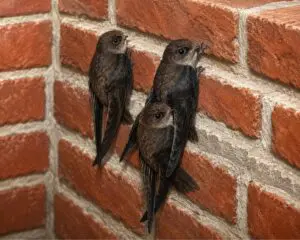
A chimney swift is a small, migratory bird that spends most of its waking life in flight and commonly nests or roosts inside vertical structures. Illinois Department of Natural Resources describes the chimney swift as a common migrant and summer resident throughout Illinois. The bird is dark gray-brown, has long curved wings, and often looks almost tailless in flight. Chimney swifts gather small twigs while flying and attach them to a vertical surface with saliva, forming a shallow half-saucer nest. They cannot perch on a branch like many backyard birds. Instead, their feet let them cling to rough vertical surfaces, including the interior walls of suitable chimneys. Homeowners may notice rapid, chattering or ticking sounds overhead, while nestlings can produce persistent chirping from inside the flue. Chimney swifts eat flying insects, so seeing them circle above a neighborhood does not itself mean there is a problem. The concern begins when chimney swifts use an active fireplace or venting flue as their nesting site.
Why Are Chimney Swifts Nesting in Chimneys?
Chimney swifts use chimneys because suitable hollow trees have become less available and some masonry flues resemble the vertical cavities they historically used. A rough, uncapped masonry chimney can provide an enclosed surface where adults can cling and attach a nest. Not every chimney is suitable. Smooth metal liners and many modern factory-built systems do not provide the same surface, and a correctly selected cap can block wildlife entry. An open or damaged cap, an exposed flue, or a deteriorated screening component may leave a chimney accessible. Chicago’s North Shore and northwest suburbs include a mix of older houses with traditional masonry chimneys. That building stock appears throughout Buffalo Grove, Deerfield, Northbrook, Glenview, Highland Park, Lake Forest, Lake Bluff, Glencoe, Winnetka, Wilmette, Evanston, Skokie, Arlington Heights, Long Grove, Lincolnshire, Vernon Hills, Libertyville, and Northfield. Older masonry alone does not prove birds are present, but an open flue with rough interior surfaces may offer the type of cavity chimney swifts use.
Chimney Swift Season Chicago: When Does It Start and End?
Chimney swift season in Chicago generally runs from mid-April through early October, with the peak breeding period between mid-May and early July. These dates are useful guides, not a guarantee that every nest will become inactive on the same day. Adult chimney swifts incubate their eggs for roughly 18 to 21 days, and young birds remain dependent for additional time after hatching. Some families may therefore still occupy a chimney later in summer. Fall migration begins in September, according to Illinois DNR. The important factor is actual nest activity, not the calendar alone. Do not assume a nest is empty simply because the typical breeding window is ending. If chirping, adult entry, or other activity continues, consult an appropriate wildlife professional before any cleaning, capping, or repair work begins.
Is It Legal to Remove Chimney Swifts?
No—not from an active nest without the required federal authorization. The Migratory Bird Treaty Act protects chimney swifts. U.S. Fish and Wildlife Service guidance states that destroying a nest containing eggs or chicks, or affecting young birds that remain dependent on it, is illegal without authorization. Homeowners should never attempt to pull out an active nest, smoke birds out, block their exit, spray chemicals into the flue, or force adults and chicks to leave. These actions can injure or kill birds and may violate federal law. The legal distinction between active and inactive nests matters. Federal guidance explains that homeowners may generally destroy an inactive nest that has no eggs, chicks, or dependent young, without needing a federal permit. However, they must destroy the nest rather than keep it, and they must not take any birds or viable eggs. Relocating or possessing a nest can require authorization, and additional state or local rules may apply. When activity is uncertain, pause and obtain guidance rather than guessing.
What Happens If I Hear Birds Chirping Inside My Fireplace?
Chirping may indicate nestlings above the fireplace, but sound alone cannot confirm the species or exact location. Close the fireplace doors or screen, keep the damper closed if it is already closed and can remain so safely, and avoid disturbing the room more than necessary. Do not reach into the smoke chamber or climb onto the roof. Other birds, bats, or animals can also enter chimney systems, and mechanical sounds can sometimes travel through a flue. A professional wildlife rehabilitator or qualified wildlife specialist can help when live animals are present. A chimney company can evaluate the chimney after active nesting ends and determine what cleaning, inspection, cap work, or chimney repair may be appropriate. If a bird enters the living space, isolate the room from children and pets, turn off fans that could injure it, and contact a licensed wildlife rehabilitator or animal-control resource for species-appropriate instructions. Do not handle the bird unless an authorized professional directs you.
Can I Use My Fireplace While Chimney Swifts Are Inside?
No. Do not use the fireplace while chimney swifts, eggs, chicks, or an active nest are inside the chimney. Heat, flames, smoke, and combustion gases can kill or injure the birds. Nesting material may also obstruct the flue and interfere with safe venting. Do not use the fireplace as a test to see whether birds occupy the chimney. If you suspect birds in the chimney, stop fireplace use until you confirm the nesting status and a professional evaluates the system. This applies whether the symptoms are loud chirping, scratching, fluttering, debris in the firebox, or repeated adult birds entering the flue.
What Should I Do If Birds Are Trapped in My Chimney?
First determine whether the birds are truly trapped or are chimney swifts using the chimney normally. Swifts cling to vertical walls and routinely enter and exit from the top, so their presence inside does not automatically mean they need rescue. If an adult or nestling has fallen into the firebox, entered the home, appears injured, or cannot exit, contact a licensed migratory-bird rehabilitator. U.S. Fish and Wildlife Service specifically recommends contacting a licensed rehabilitator when nestling chimney swifts fall from a chimney. Do not dismantle the fireplace, open an access panel, lower tools from the roof, or attempt a do-it-yourself removal. If there is an immediate human safety emergency, contact local emergency authorities and wildlife officials for direction. A routine nuisance concern does not authorize disturbance of an active nest.
Will the Birds Leave on Their Own?
Usually, yes. Chimney swifts are migratory. Once the young are able to fly and no longer depend on the nest, the family leaves, and the birds later migrate away from Illinois. The process may take several weeks from egg laying through fledging, so patience is often necessary. The noise can become more noticeable as nestlings grow and call when adults return with food, but it should stop after the young leave. Do not seal the chimney as soon as the sound becomes quiet for a day. Confirm that the nest is inactive before cleaning or installing a cap. Weather and feeding patterns can change how frequently adults visit, and brief silence does not prove the birds are gone.
What Happens After the Birds Leave?
After confirming the nest is inactive, Chimney Monkey can inspect the chimney and establish an appropriate service plan. Depending on the findings and approved scope, Chimney Monkey may:
- ✓Inspect accessible chimney and fireplace components
- ✓Evaluate whether nesting debris or other blockage remains
- ✓Perform chimney sweeping or cleaning when needed
- ✓Inspect the flue, masonry, crown, and other visible components for damage
- ✓Recommend chimney repair or waterproofing when the inspection uncovers separate defects
- ✓Measure for a properly sized chimney cap when appropriate
Not every chimney needs every service. The correct scope depends on the system, accessibility, deposits, debris, condition, and intended use. Chimney Monkey evaluates the chimney before recommending cleaning, repair, or cap installation.
How Can I Prevent Nesting Before Next Chimney Swift Season?
Install a correctly fitted chimney cap after the birds leave and you confirm the nest is inactive. A cap with appropriate screening can prevent birds and other wildlife from entering while allowing the flue to vent as designed. Base cap selection on the flue type, dimensions, fireplace or appliance, required free area, and termination conditions. An undersized, incompatible, damaged, or poorly installed cap can interfere with ventilation or draft. This is why “who installs chimney caps near me?” should lead to an evaluation—not a one-size-fits-all part chosen by appearance alone. The ideal time for prevention is after nesting season and before the next spring migration. Homeowners should also check existing caps for missing screens, corrosion, storm damage, loose fasteners, or openings that may allow reentry.
Should I Have My Chimney Inspected After Chimney Swift Season?
Yes, Chimney Monkey recommends a professional chimney inspection before returning the fireplace to service. Nest material, feathers, droppings, or other debris may remain inside. These materials can restrict the flue, produce odors, conceal defects, and create conditions that homeowners should address before lighting a fire. An inspection can also evaluate whether the birds entered through a missing cap or through a failed component. The technician may identify unrelated conditions such as damaged masonry, liner concerns, moisture entry, deteriorated mortar, or a faulty crown. The presence of birds does not prove those defects exist, but it provides a practical reason to check. Whether a homeowner searches for a Northbrook chimney inspection, Deerfield chimney repair, fireplace inspection, or a chimney sweep near me, the sequence should remain the same: confirm the birds are gone, inspect the system, clean it if needed, correct approved defects, and install an appropriate cap where the system allows.
Who Should I Call for Chimney Swift Help in Chicago?
Call a licensed wildlife rehabilitator for a live, injured, fallen, or trapped bird; call a chimney company after active nesting ends for inspection, cleaning, repair, and cap evaluation. These are different responsibilities, and a chimney service provider should not disturb protected birds or active nests. Chimney Monkey encounters chimney birds each summer across the Chicago area and helps homeowners address the chimney after the swifts have migrated or once the nest is otherwise confirmed inactive. Services may include a professional chimney inspection, debris evaluation, chimney cleaning, fireplace inspection, repair recommendations, and properly sized chimney cap installation. As a Buffalo Grove chimney service provider serving Chicago’s North Shore and northwest suburbs, Chimney Monkey works in Deerfield, Northbrook, Glenview, Highland Park, Lake Forest, Lake Bluff, Glencoe, Winnetka, Wilmette, Evanston, Skokie, Arlington Heights, Long Grove, Lincolnshire, Vernon Hills, Libertyville, Northfield, and nearby communities. Chimney Monkey evaluates the property, flue, nest status, and access conditions before recommending work.
When Should Chicago Homeowners Schedule Service After Chimney Swift Season?
Schedule the chimney evaluation after the birds and dependent young have left and before using the fireplace again. Do not rely on a date alone; actual nest activity determines when work can safely proceed. Once chimney swift season in Chicago ends, homeowners throughout the North Shore can schedule a flue check for nesting debris, obstruction, damage, and wildlife entry points. Chimney Monkey will evaluate the actual chimney condition before recommending sweeping, repair, waterproofing, fireplace service, or cap installation.
Have a question about your chimney, fireplace, venting system, gutters, or dryer vent? Schedule a professional visit and get clear recommendations based on the actual condition of your home.
Categories: Chicago Illinois Chimney Cap Chimney Care Chimney Chase Cover Installation Chimney Exterior Services Chimney Inspection Chimney Sweep Local Services